
CSA Urges Community Media to Report Cybercrime Responsibly Without Compromising Investigations

Written by Eugene Nyarko Jnr. | NCA Auditorium, Accra | Monday, August 3, 2026—
The Cyber Security Authority (CSA) has urged community media practitioners to exercise greater responsibility when reporting cybercrime cases to avoid compromising ongoing investigations, exposing victims or weakening efforts by law enforcement agencies to bring perpetrators to justice.
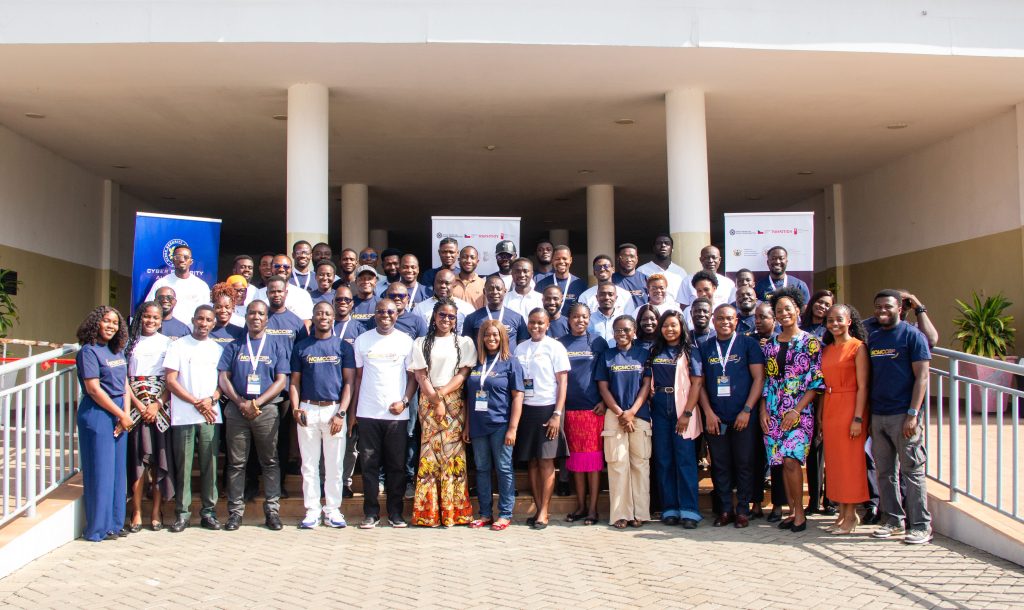
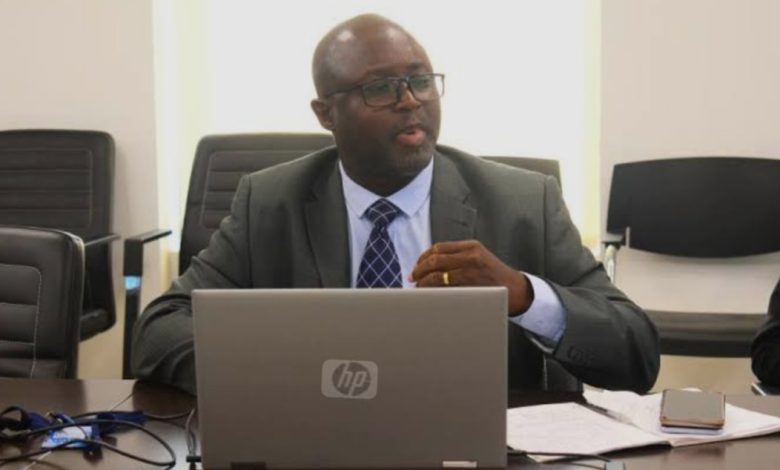
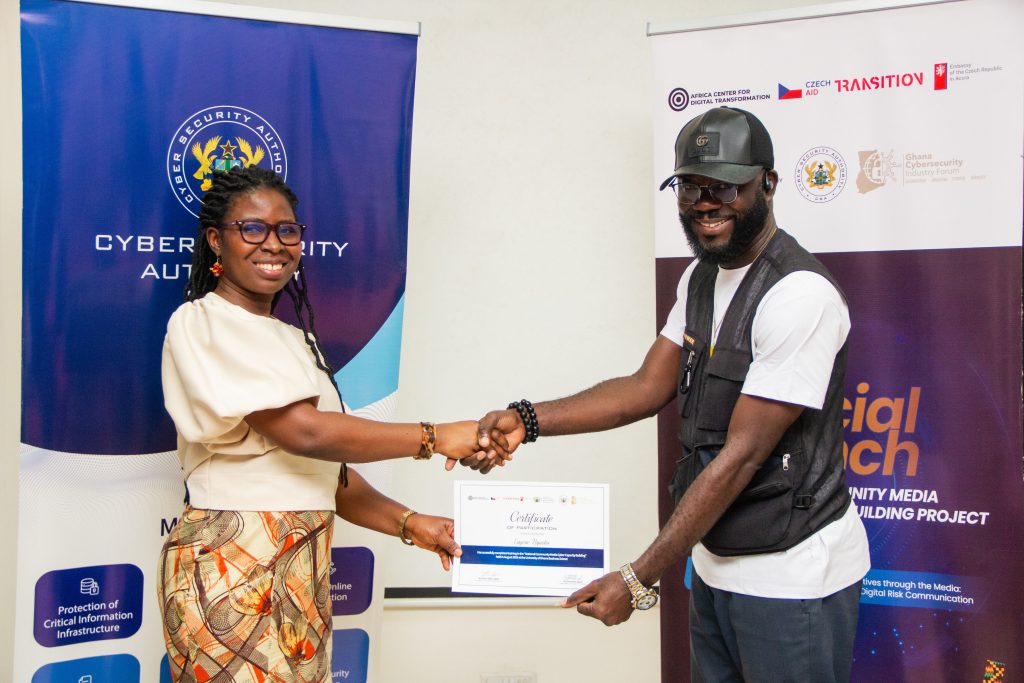
Principal Manager for Law Enforcement Liaison at the CSA, Mr. Theophilus Botchway, made the call during a presentation at the maiden edition of a three-day National Community Media Cyber Capacity Building Project (NCMCCBP) workshop organised by the Cyber Security Authority at the National Communications Authority (NCA) Conference Room in Accra.
Speaking on the topic “Reporting Responsibly Without Compromising Investigations,” Mr. Botchway said journalists played an important role in Ghana’s cybersecurity ecosystem because they were often among the first people to receive information about cybercrime incidents and subsequently communicate such information to the public.

He said responsible reporting was critical to protecting victims, supporting investigations and maintaining public confidence in institutions responsible for fighting cybercrime.
Mr. Botchway identified various forms of cybercrime confronting individuals, businesses and institutions, including online fraud, mobile money fraud, business email compromise, identity theft, social media impersonation, child online exploitation, sextortion, ransomware, hacking and cyber terrorism.
He explained that law enforcement agencies had several responsibilities when dealing with cybercrime cases, including receiving complaints, securing evidence, tracing suspects, obtaining court orders, collaborating with telecommunications companies, banks and international partners, arresting offenders and supporting prosecution.
Early reporting
Mr. Botchway encouraged journalists and members of the public to report cybercrime incidents as quickly as possible, saying early reporting could help authorities freeze fraudulent transactions, preserve digital logs, block malicious infrastructure, identify victims and recover critical evidence.
He said persons reporting cybercrime should provide as much relevant information as possible, including details of what happened, when the incident occurred and who was involved.
Other useful information, he said, included screenshots, URLs, telephone numbers, email addresses, wallet addresses, transaction identification numbers and relevant device details.

According to him, cybercrime complaints could be reported to the Cyber Security Authority, Ghana Police Service, banks, mobile network operators, National CERT, platform providers and the Financial Intelligence Centre, depending on the nature of the incident.
Protect digital evidence
Mr. Botchway also cautioned journalists against tampering with digital evidence when covering cybercrime cases.
He identified mobile phones, computers, emails, WhatsApp conversations, CCTV footage, cloud storage, social media content, call logs and metadata as examples of digital evidence that could become important to investigations.
He advised media practitioners not to alter evidence, crop or edit screenshots and files, or reset devices containing potentially relevant information.
“Do not delete messages, click suspicious links, edit files, reset devices or share evidence publicly,” he cautioned, stressing the need to maintain the integrity of digital evidence.
He urged journalists to record relevant details such as the time, source, device and location associated with evidence and to preserve such material in its original form.
Journalists must verify information
Mr. Botchway further advised media practitioners to verify information before publication, contact official spokespersons, protect evidence and respect ongoing investigations.
He cautioned journalists against publishing leaked evidence, revealing investigative techniques or operational plans and interfering with investigations.
He said journalists should also avoid publishing confidential evidence, identities of witnesses, surveillance details and other information that could undermine law enforcement operations.
“Responsible reporting builds trust, supports investigations, protects victims, preserves evidence and strengthens national security,” he said.
Protect victims and vulnerable persons
The CSA official also called on journalists to protect victims, particularly children and other vulnerable persons, when reporting cybercrime.
He advised media practitioners against unnecessarily publishing children’s identities, intimate images, residential addresses, bank details or authentication codes.
He said journalists must strike a balance between the public’s right to information and the privacy and safety of individuals affected by cybercrime.
Mr. Botchway said responsible journalism required practitioners to ask themselves five key questions before publishing sensitive cybercrime information: Is it true? Is it verified? Is it lawful? Is it fair? And could it compromise an investigation?
He also urged journalists to avoid sensationalism, respect victims, protect vulnerable persons, verify sources and correct mistakes when inaccurate information was published.
Strengthening collaboration
Mr. Botchway stressed that tackling cybercrime required effective collaboration among law enforcement agencies, regulators, financial institutions, telecommunications companies, Internet service providers, international partners and the media.
He identified key institutions within Ghana’s cybersecurity ecosystem as the Cyber Security Authority, Ghana Police Service, Attorney-General’s Department, National Intelligence Bureau, Financial Intelligence Centre and Bank of Ghana.
He also touched on cyber terrorism, noting that attacks could target critical sectors such as energy, banking, healthcare, government and communications.
He cautioned journalists against amplifying fear or unnecessarily exposing security weaknesses when reporting cyberterrorism incidents.
Mr. Botchway further reminded media practitioners of the need to understand Ghana’s legal framework governing cybercrime, data and digital evidence, including the Cybersecurity Act, 2020 (Act 1038), Electronic Transactions Act, 2008, Data Protection Act, 2012, Evidence Act, 1975, and Criminal Offences Act, 1960.
He said media practitioners had digital rights, including privacy, fair process, freedom of expression and data protection, but those rights should be exercised responsibly.
The three-day NCMCCBP workshop is aimed at strengthening the capacity of community media practitioners to understand Ghana’s cybercrime ecosystem, identify appropriate reporting channels, preserve digital evidence, appreciate their legal obligations and report cybercrime in ways that support rather than compromise investigations.