

Story by Eugene Nyarko Jnr. l Sunlodge Hotel, Accra l Friday, September 25, 2026 —
The Acting Director of the Tobacco and Substance Abuse Directorate of the Food and Drugs Authority (FDA), Dr Martin Kusi, has highlighted enforcement and whistleblower protection as key considerations in the proposed Code of Conduct for public officials dealing with the tobacco industry.
Dr Kusi said the Code was intended to establish clear standards for public officials and help identify instances where officials might compromise their positions through dealings with tobacco industry players.
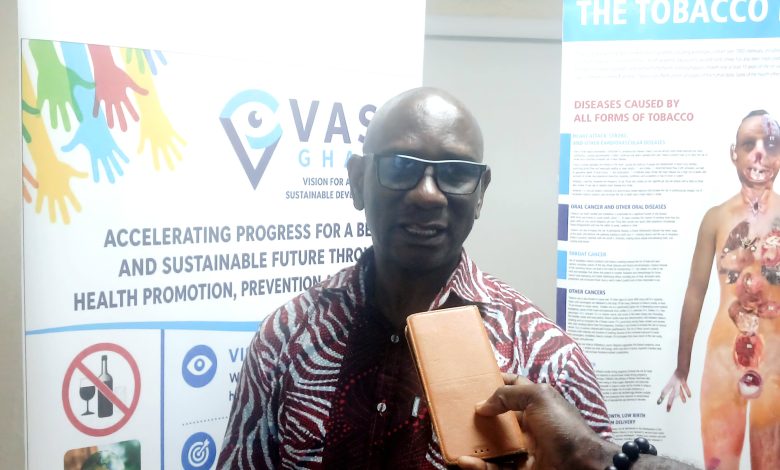
He made the remarks during a media engagement following a strategic stakeholder meeting on the development and institutionalisation of the Code of Conduct at the Sunlodge Hotel, Tesano, Accra.
Dr Kusi said Ghana had recorded progress in tobacco control, citing a smoking prevalence of about 4.6 per cent, but said challenges remained regarding interactions between public officials and the tobacco industry.

He said the industry could use sponsorships and other forms of support to influence public officials and government programmes.
According to him, the proposed Code would make it possible to identify officials who directly interacted with or benefited from tobacco industry sponsorship.
He said the Code would therefore provide a basis for accountability when public officials failed to comply with the required standards.
Dr Kusi also stressed the importance of protecting whistleblowers who provided information on possible tobacco industry interference.

He said protecting the identity of whistleblowers was essential because exposing their identities could discourage people from coming forward with information.
“It is essential to protect the identity of the whistleblower,” he said.
He explained that the protection of whistleblowers could encourage more people to provide information about possible improper dealings with the tobacco industry.
Dr Kusi, however, identified enforcement as a critical issue in ensuring the effectiveness of the proposed Code.

He said having laws and regulations on the books was not enough if the authorities lacked the mechanisms or commitment to enforce them.
He said the relevant institutions would need to monitor compliance, identify gaps and take corrective action to ensure that the Code achieved its intended purpose.
Dr Kusi said tobacco use was a major risk factor for non-communicable diseases, including cancer, stroke, hypertension and diabetes.
He said those diseases affected not only individuals but also communities and the national economy because people suffering from them could become less productive.

He explained that the stakeholder engagement was therefore important because public officials were responsible for formulating and implementing policies that could have a direct impact on tobacco control.
Dr Kusi said the proposed safeguards were intended to reduce opportunities for tobacco industry players to influence policymakers through sponsorships, finances and other forms of engagement.
He urged public officials to remain focused on their responsibility to protect public health when formulating and implementing tobacco-control policies.
Ghana’s Tobacco Control Regulations, 2016 already contain provisions addressing interactions between the tobacco industry and public authorities, as well as a specific provision on a Code of Conduct.