

Story by Eugene Nyarko Jnr. l Accra l Tuesday, November 3, 2026 —
The Volta Aluminium Company Limited (VALCO) is targeting an annual aluminium production capacity of 1.5 million metric tonnes within the next decade, subject to an estimated investment of between $2.5 billion and $4 billion to transform its operations.
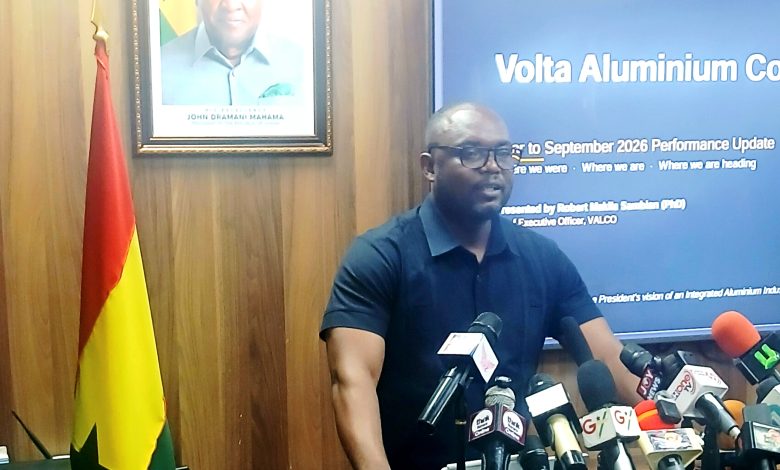
The Chief Executive Officer (CEO) of VALCO, Dr Robert Makila Sambian, said the expansion plan would involve the development of a new, modern smelting line, the rehabilitation of existing facilities and the gradual introduction of advanced production technology.
He said the proposed expansion was expected to generate thousands of direct jobs, increase export earnings, strengthen local manufacturing and support the development of an integrated aluminium industry in Ghana.
Speaking during a media engagement organised by the Ministry of Lands and Natural Resources in Accra on November 3, 2026, Dr Sambian said VALCO was pursuing a two-phase recovery strategy involving the optimisation of existing operations and a longer-term transformation programme.
The engagement formed part of the ministry’s initiative to update the public on the activities, achievements and challenges of agencies under its jurisdiction.
Financial performance
Dr Sambian disclosed that VALCO generated revenue of $103.85 million and recorded an earnings-before-interest, taxes, depreciation and amortisation (EBITDA) profit of $1.4 million for the first nine months of 2026.
During the period, the company produced 29,590 metric tonnes of aluminium, a performance the CEO described as a significant improvement in its financial position.
He explained that profitability depended not only on production volumes but also on operational efficiency and cost management.
According to him, the company’s recent performance demonstrated that it could improve its financial sustainability by addressing longstanding operational challenges and making better use of its existing assets.
Operational recovery
Dr Sambian said VALCO had inherited significant operational difficulties, including ageing equipment, frequent breakdowns, unstable electricity supply and low production capacity.
He explained that the company was operating substantially below its installed capacity, producing approximately 40,000 tonnes annually against an original design capacity of 200,000 tonnes.
Management had subsequently adopted a five-year strategic plan to restore production, improve efficiency and reposition the company for sustainable growth.
As part of the immediate recovery programme, VALCO is seeking to increase the number of operational potlines to 200 in 2027, from the 114 it had inherited.
Dr Sambian said the company had made progress before a heavy rainstorm disrupted the national electricity grid, resulting in a power outage that reduced its operating cells from 124 to approximately 90.
He said measures had since been introduced to restore production, including the importation of anodes to support operations while maintenance work was undertaken at one of the company’s buildings.
The CEO expressed optimism that the measures would enable the company to resume its production expansion and work towards its 2027 target.
New equipment
To address equipment shortages and reduce operating costs, Dr Sambian said management had replaced the previous equipment-rental arrangement with a payment-to-own model.
Under the arrangement, the company negotiated deferred payment terms with key equipment suppliers, allowing it to acquire machinery instead of continuing to incur substantial rental expenses.
He said the initiative had resulted in the acquisition of 16 new lift trucks, two payloaders, a dump truck, two articulated tractor heads, a tow tractor and melting furnaces, among other equipment.
The company had also secured three replacement cranes, which are critical to its operations at the carbon plant and smelting lines.
According to Dr Sambian, the first crane had been inspected and certified for shipment, with delivery expected within six weeks of the presentation. The other two cranes required further inspections.
He said the new equipment would improve operational uptime, increase efficiency and reduce production costs.
The immediate optimisation programme is estimated to require approximately $70 million, while the broader transformation would involve substantially larger investments.
Value addition
Dr Sambian identified value addition as one of the most significant achievements of the current management, saying VALCO had begun moving away from a business model focused primarily on selling primary aluminium.
He disclosed that the company had introduced a value-addition project, identified in his presentation as Rodmin, which had commenced production and was supplying local and international markets.
According to him, the initiative would support downstream manufacturing, reduce reliance on imported aluminium products, create sustainable employment and improve Ghana’s export earnings.
He added that the project was also supporting the government’s 24-hour economy policy because of the demand for its products.
To meet that demand, he said VALCO had implemented a four-shift arrangement involving four workers for each job position, allowing operations to continue around the clock.
Dr Sambian further emphasised that the company’s operations were being undertaken entirely by Ghanaian workers, without expatriate employees.
Long-term expansion
Looking beyond the immediate recovery programme, Dr Sambian said VALCO was considering the development of a new, state-of-the-art production line, referred to as Line 6, alongside the modernisation of existing facilities.
He explained that the proposed expansion could be implemented in phases, with the initial stage designed to produce 250,000 tonnes annually before capacity was scaled up.
The longer-term plan would ultimately increase annual production to 1.5 million tonnes.
He said the project could generate annual revenues exceeding $3 billion when fully realised, while creating more than 5,000 direct jobs and stimulating employment across supporting industries.
The expansion would also create opportunities for businesses involved in supplying industrial inputs, including salt and lime, while strengthening linkages across the domestic economy.
Dr Sambian said the full transformation would require strategic investment and sustained commitment, adding that the company was exploring investment opportunities to support the programme.
He disclosed that Cabinet had approved negotiations with prospective strategic investors, with a team constituted by the minister expected to present a report to Cabinet for a decision on attracting investment into VALCO.
He clarified that the ongoing discussions were part of the broader transformation agenda and did not mean the company had resolved all its challenges.
Government commitment
In his welcoming remarks, the Deputy Minister of Lands and Natural Resources, Hon. Dr Alhaji Yusif Sulemana, said the ministry had introduced the media engagement platform to improve public understanding of its policies, achievements and challenges.
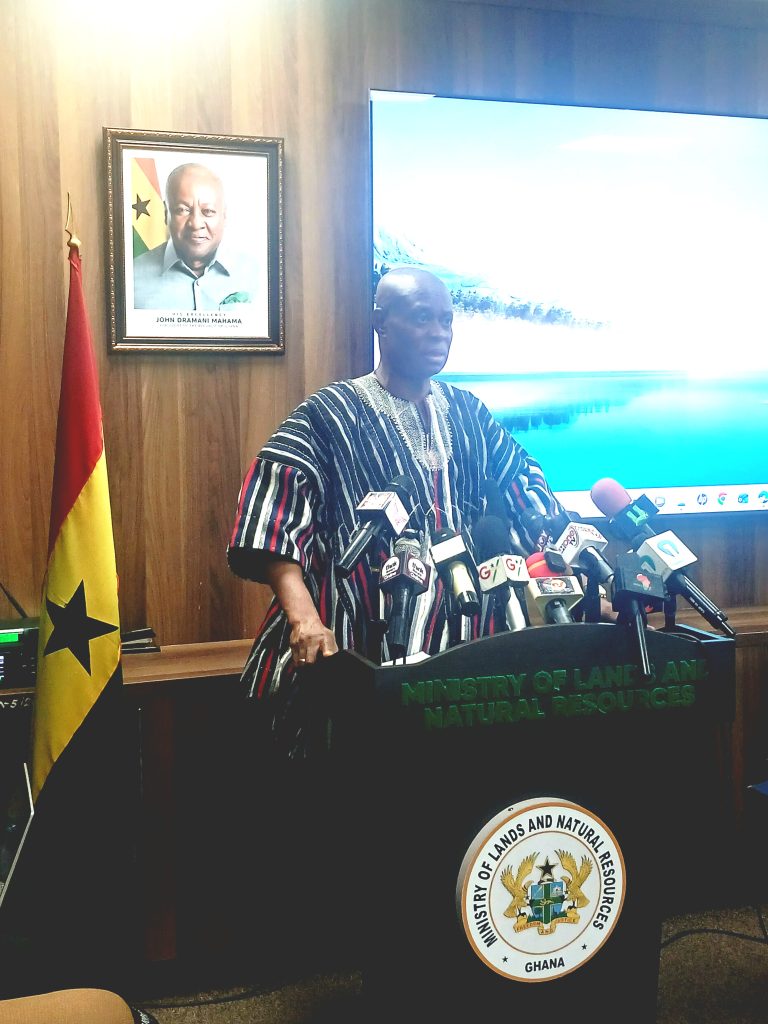
He said the initiative was intended to provide Ghanaians with accurate information about the work of agencies under the ministry’s supervision and the measures being implemented to address outstanding concerns.
He urged journalists to report the presentations accurately and take advantage of the opportunity to ask questions to clarify issues.
Dr Sulemana said the ministry was committed to ensuring that Ghanaians, regardless of their location, were informed about developments within the ministry and its agencies.
VALCO, which is approaching its 60th anniversary in March 2027, was established with an original production capacity of 200,000 metric tonnes of primary aluminium annually.
Dr Sambian said the company’s recovery and expansion plans were intended to restore its operational capacity and position it as a key driver of Ghana’s industrialisation and value-addition agenda.