
Story by Eugene Nyarko Jnr. l Accra l Wednesday, November 18, 2026 —
The Ghana Institution of Surveyors (GhIS) has called for comprehensive reforms in Ghana’s land acquisition and compensation processes, citing persistent delays in compensation payments, disputed valuations, competing ownership claims and inadequate funding arrangements that continue to affect development projects across the country.
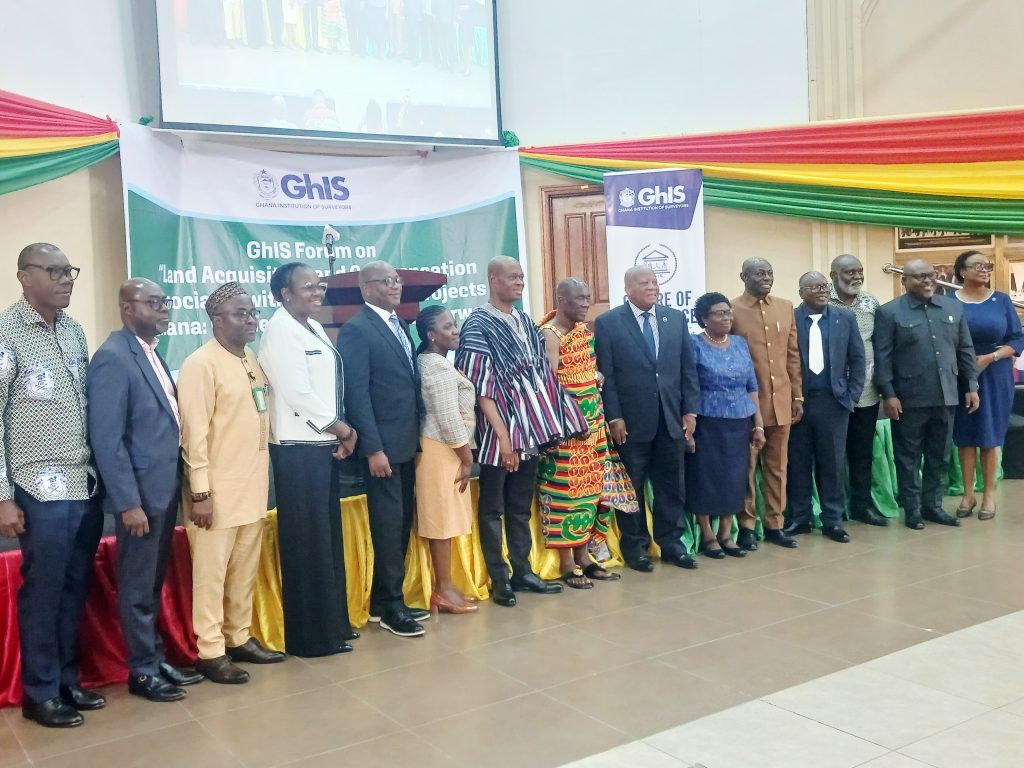
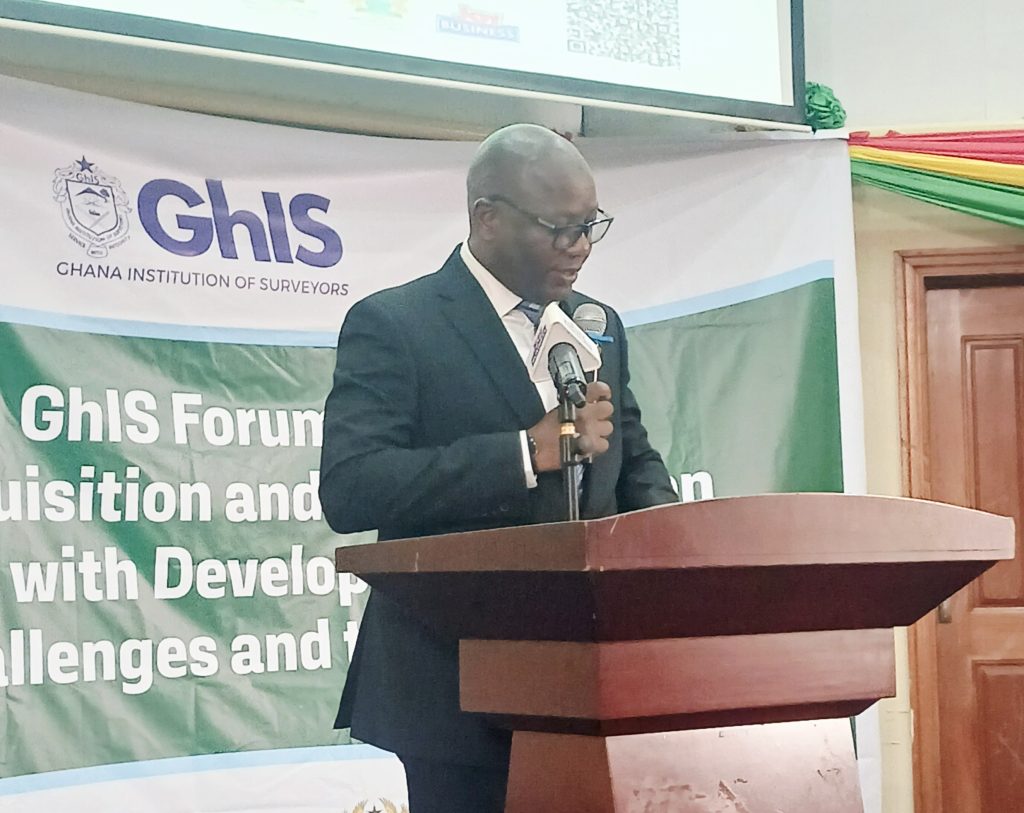
The President of the Ghana Institution of Surveyors, Surveyor Emmanuel Kofi Cobbold, made the call during the opening of a two-day conference on “Ghana’s Compensation Process and Its Challenges” organised by the institution in collaboration with the Ministry of Lands and Natural Resources, the Ministry of Roads and Highways and the Lands Commission.
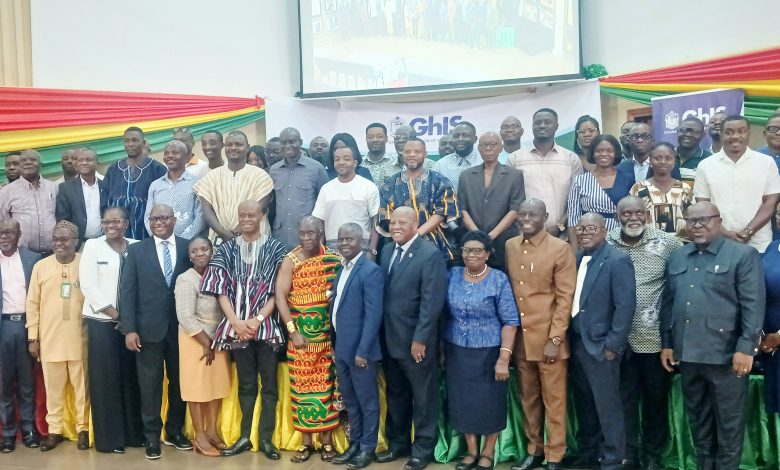
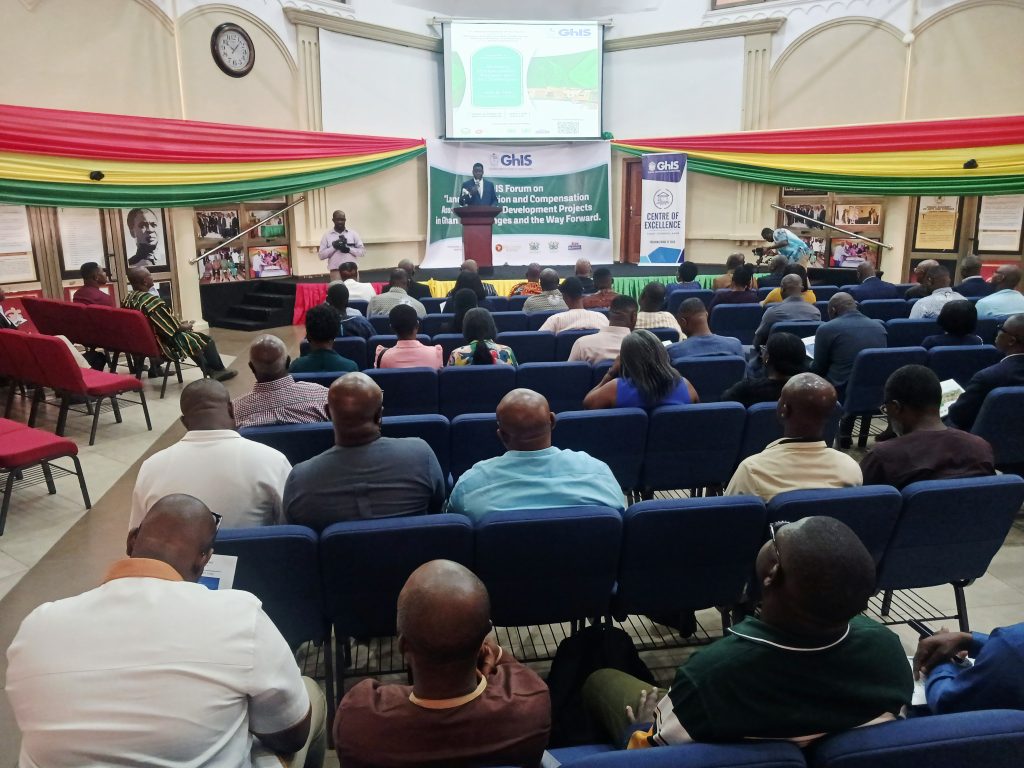
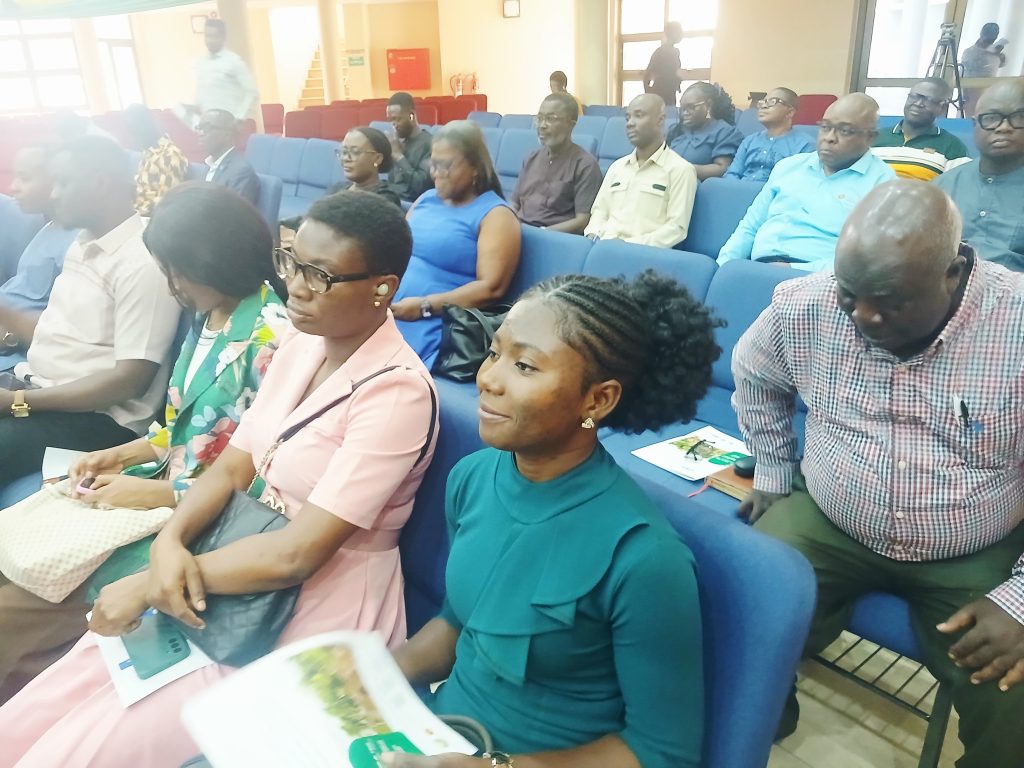
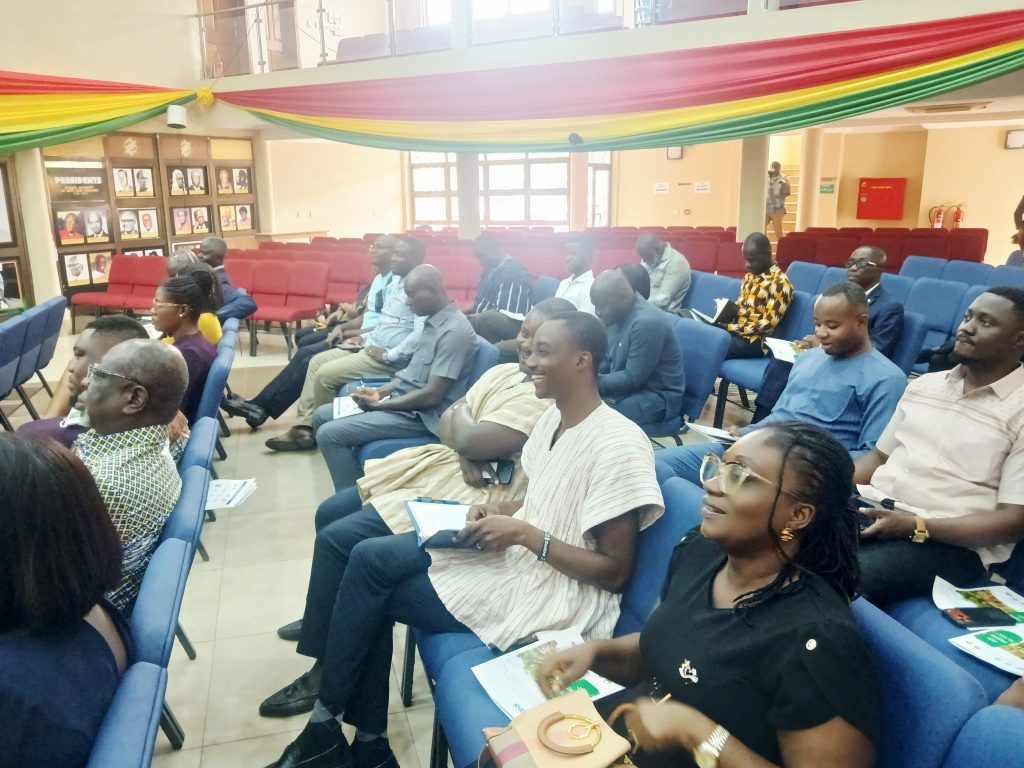
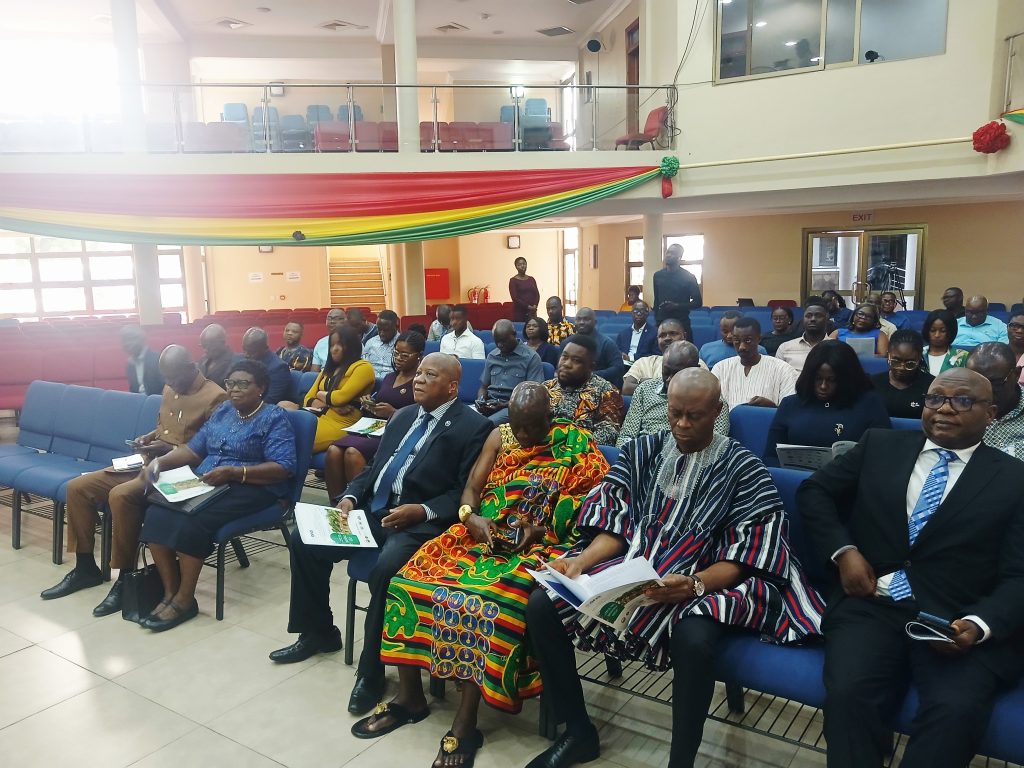
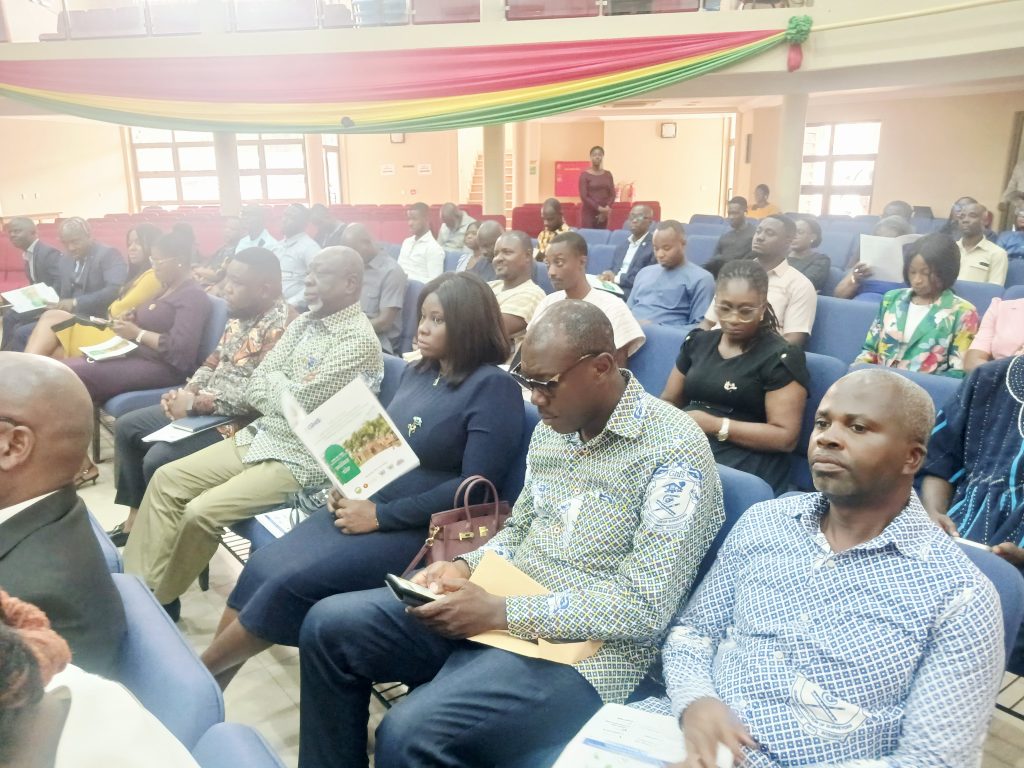
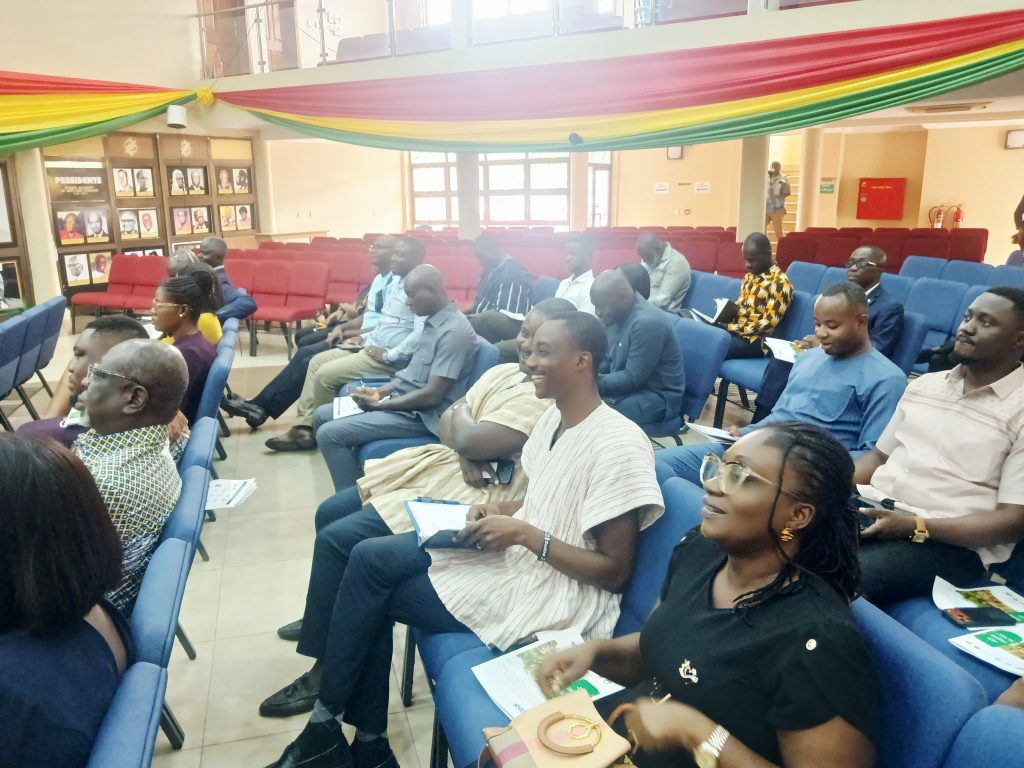
The conference, held at the Ghana Academy of Arts and Sciences Conference Hall in Accra on Wednesday, November 18, 2026, brought together stakeholders from government institutions, the mining industry, utility companies, infrastructure development agencies, traditional authorities, civil society organisations, academia and the legal profession to examine challenges associated with land acquisition and compensation for development projects.
In his welcome address, Surveyor Cobbold stressed that land acquisition and compensation were not merely administrative exercises but fundamental issues involving fairness, governance, property rights and sustainable national development.
He observed that land carried different meanings for different stakeholders, describing it as a source of livelihood for farmers, an inheritance for families, a heritage for communities, a resource for government development initiatives and an investment opportunity for the private sector.
He noted that although land acquisition was necessary for mineral extraction, utility services, road construction, bridges and other infrastructure projects, the interests of affected individuals, businesses and communities must be adequately protected.
According to him, the situation where farmers and other landowners lose their properties to public projects but wait several years for compensation undermines public confidence and raises questions about the fairness of Ghana’s development processes.
He identified competing ownership claims, disputed assessments, inadequate documentation and financial constraints as some of the major challenges confronting the country’s compensation system.
Surveyor Cobbold expressed particular concern about the backlog of compensation claims that had already been assessed and approved but remained unpaid, in some instances for several years.
He questioned the value of conducting fair assessments when approved compensation remained unsettled, insisting that government and relevant institutions must establish the actual extent of outstanding liabilities and develop credible, accountable funding arrangements to settle them.
He further maintained that compensation should be treated as an integral cost of development rather than an afterthought, arguing that the financial requirements for acquiring land and associated property rights must be incorporated into project planning and budgeting.
On professional standards, the GhIS President raised concerns about individuals presenting themselves as compensation experts without the requisite technical competence and professional accountability.
While acknowledging the right of affected persons to seek representation, he stressed that specialised valuation and surveying assessments must be undertaken by appropriately qualified professionals.
He therefore highlighted the importance of the Survey Council Bill, which he said had received Cabinet approval, expressing hope that it would successfully complete the remaining legislative processes and become law.
He explained that the proposed legislation was not merely intended to protect the surveying profession but also to safeguard the public, protect national resources and ensure that compensation assessments were conducted by competent and accountable professionals.
Another major concern he raised was inadequate record-keeping and documentation, warning that poor records could create disputes decades after the acquisition of land, particularly when the original officials responsible for the transactions had retired.
He consequently called for an integrated land acquisition and compensation records management system that would provide reliable information on affected properties, ownership interests, assessments, negotiations, agreements and payments.
He urged stakeholders to work towards a system that ensures that legitimate claims are properly documented, fairly assessed and settled through transparent processes.
Delivering the keynote address, the Deputy Minister for Lands and Natural Resources, Hon. Alhaji Yusif Sulemana, who represented the sector minister, Hon. Emmanuel Armah-Kofi Buah, acknowledged the importance of land acquisition and compensation to national development and effective public financial management.
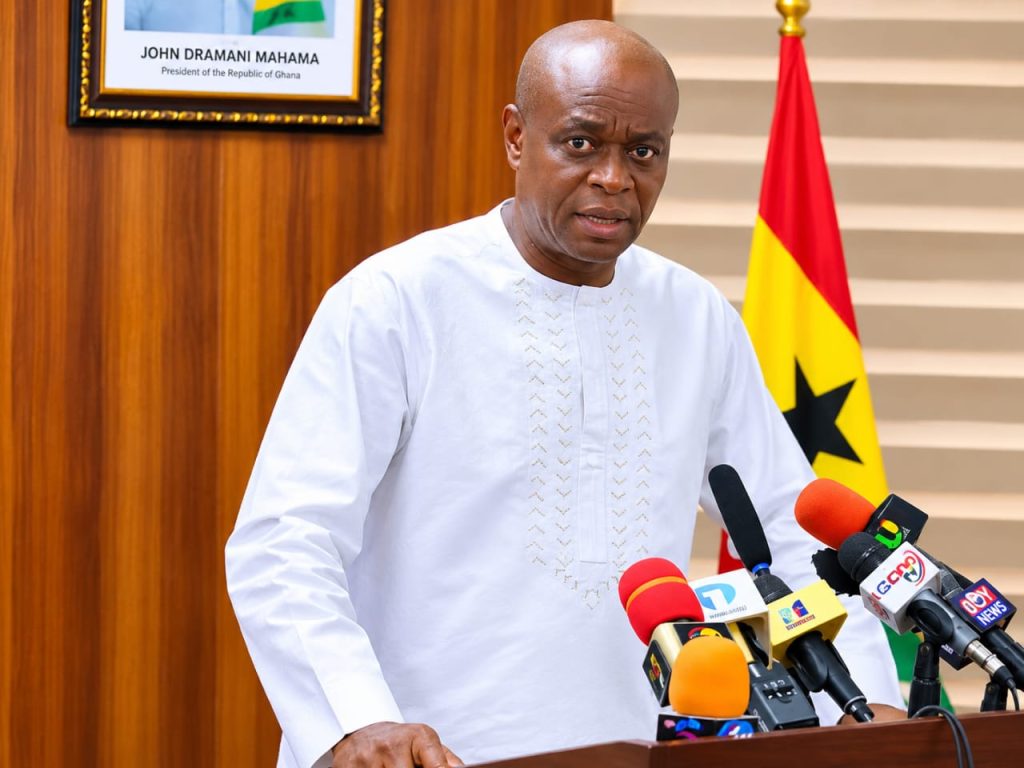
He said government’s ability to implement infrastructure, housing, agricultural, industrialisation and other public development projects depended significantly on its capacity to acquire land lawfully, transparently and efficiently while protecting the rights and interests of affected persons and communities.
The Deputy Minister observed that persistent challenges associated with land acquisition and compensation payments had resulted in prolonged disputes, multiple ownership claims, unpaid compensation, litigation and significant financial liabilities for the state.
According to him, these challenges not only affect project implementation but also undermine public confidence and expose public institutions to avoidable financial risks.
Referring to the legal framework governing compulsory land acquisition, Hon. Sulemana cited the 1992 Constitution of Ghana and Chapter Seven of the Land Act, 2020 (Act 1036), which provides the framework for compulsory acquisition of land for public purposes.
He specifically referenced Section 233 of Act 1036, which provides for compulsory acquisition where land is required for purposes including national defence, public safety, public order, public morality, public health and town and country planning.
He emphasised that compulsory acquisition must be undertaken through the appropriate legal procedures, including the publication of an Executive Instrument specifying the nature, extent, location and purpose of the land acquisition.
He cautioned that some public projects commenced without the necessary Executive Instruments, creating situations where infrastructure development proceeded even though the legal acquisition process had not been completed.
According to him, such practices could generate serious legal and compensation difficulties in the future.
The Deputy Minister also identified delays in compensation assessments and the failure to make adequate financial provisions for compensation in project budgets as major challenges.
He explained that in some instances, compensation assessments were undertaken after projects had commenced, resulting in increased project costs, delays and, occasionally, the suspension of development activities.
To address these challenges, he called for land requirements for public projects to be identified and investigated at the planning stage, before implementation begins.
He further urged government institutions and project-implementing agencies to make adequate financial provisions for compensation before commencing projects, stressing that compensation obligations must be properly factored into project budgets.
Hon. Sulemana also called for stronger collaboration between the Ministry of Lands and Natural Resources, the Lands Commission, project-implementing agencies, traditional authorities, affected communities and professional institutions, particularly the Ghana Institution of Surveyors.
He urged the GhIS to leverage its professional expertise to support the identification of land interests, authentication of site plans and application of consistent professional standards in compensation assessments.
He added that professional competence, ethical conduct, quality assurance and continuous professional development were essential to ensuring that compensation assessments were credible, consistent and defensible.
Addressing the problem of outstanding compensation claims, the Deputy Minister noted that some affected landowners continued to demand interest on payments that had remained unsettled for several years, creating additional financial obligations for the state.
He said professional involvement and improved documentation could help address disagreements over the amounts assessed, payments made and liabilities remaining outstanding.
He consequently advocated the establishment of a comprehensive compensation register to capture all land acquisitions, affected ownership interests, assessed compensation, payment dates and outstanding liabilities.
He explained that such a system would enable government and affected persons to establish the exact amounts owed and payments already made, thereby reducing disagreements and preventing future disputes.
The Deputy Minister further stressed that the success of public development projects should not be measured solely by the completion of physical infrastructure but also by whether the rights of affected landowners had been respected and compensation obligations fulfilled.
He cited instances where completed public facilities, including schools, could remain unused because compensation had not been paid to the landowners, arguing that such projects could not be considered fully delivered.
Both speakers called for stronger institutional collaboration, improved professional regulation, adequate compensation funding and transparent documentation to address longstanding challenges in Ghana’s land acquisition and compensation system.
The two-day conference is expected to provide a platform for stakeholders to examine existing institutional and legal challenges and develop practical recommendations towards a fairer, more transparent, accountable and efficient land acquisition and compensation framework in Ghana.