
NADMO Marks International Day for Disaster Risk Reduction — Calls for Investment in Resilience over Disaster Response

Accra, October 13, 2025
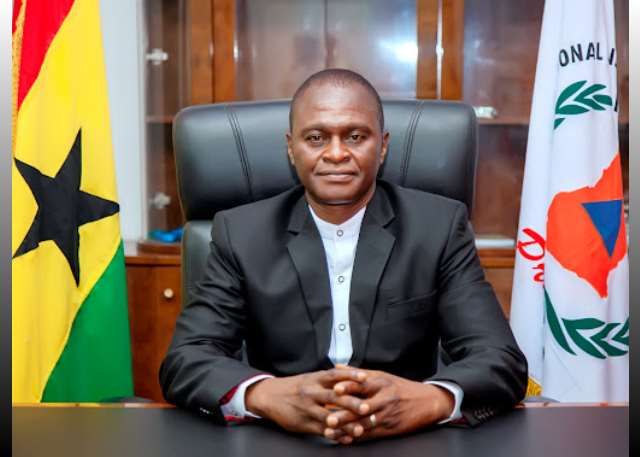
The Director General of the National Disaster Management Organization (NADMO), Major (Rtd) Dr. Joseph Bikanyi Kuyon, has emphasized the urgent need for Ghana and the global community to prioritize funding resilience rather than disasters. He made this call during a media encounter at the Mensvic Hotel, Accra, as part of activities marking the International Day for Disaster Risk Reduction (IDDRR) celebrated under the theme “Fund Resilience, Not Disasters.”
Dr. Kuyon underscored the importance of proactive measures to prevent disasters, rather than waiting to respond after they occur. “The emphasis is on how to reduce disasters rather than how to manage them,” he said, referencing the Sendai Framework for Disaster Risk Reduction as the global roadmap guiding these efforts.
He noted that disaster prevention is far more cost-effective than post-disaster management, adding that communities and citizens have a crucial role to play. “It is cheaper to prevent because the destruction of disasters cannot be estimated. We must all act—stop illegal mining, protect our forests, and avoid building on waterways. These are the things that fuel disasters,” he cautioned.
The NADMO boss also lamented the lack of implementation of Ghana’s existing disaster management structures, despite the presence of well-crafted laws. “We make beautiful laws, but they don’t work,” he stated. “What I’ve done since assuming office is to reactivate the laid-down structures—National, Regional, and District Disaster Management Committees—so that communities can take ownership and plan towards reducing disaster risks.”
Commenting on resource constraints often cited as an excuse for institutional inefficiency, Dr. Kuyon stressed that effective work ethics are equally critical. “It’s not always about money. If you are given a responsibility, do the work with what you have. The problem is that people are not willing to do the work they’ve been assigned. Let’s give ‘lack of resources’ a rest and be honest with ourselves—we are not working,” he said emphatically.
On her part, Hajia Amina Sammo (PhD), National Coordinator for Inclusive Insurance and Risk Financing at the United Nations Development Programme (UNDP), commended NADMO’s leadership and reiterated the economic wisdom in investing in preparedness.
She revealed that globally, disasters cause over US$202 billion in direct losses annually, with the broader socio-economic cost rising to US$2.3 trillion, yet less than 1% of public budgets are allocated to prevention and risk reduction. “Evidence shows that every dollar invested in resilience saves up to four dollars in avoided losses,” she said.
Dr. Sammo added that Ghana loses about US$300 million annually to disasters—primarily floods and droughts—with Greater Accra alone losing over US$200 million yearly to flood damage. She highlighted UNDP’s ongoing collaboration with NADMO, the Ministry of Finance, and the National Insurance Commission to develop a Disaster Risk Finance Strategy Framework and innovative insurance solutions to strengthen community resilience.
“As we say in UNDP, we cannot stop the storms, but we can stop them from becoming disasters by investing ahead of the crisis,” she concluded.
This year’s IDDRR celebration, therefore, serves as a strong reminder to policymakers, institutions, and citizens alike: fund resilience today, to prevent disasters tomorrow.
Story by Eugene Kwasi Nyarko