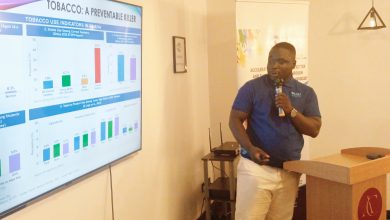


Story by Eugene Nyarko Jnr. | Accra City Hotel, Accra | July 24, 2026
The Assistant Commissioner in charge of Research and Policy at the Ghana Revenue Authority (GRA), Dr Alex Kombat, has backed the use of excise taxation as a tool to discourage the consumption of harmful products and support public health.
He said taxation could be used to increase the prices of products such as tobacco, alcohol and sugar-sweetened beverages, thereby reducing consumption.
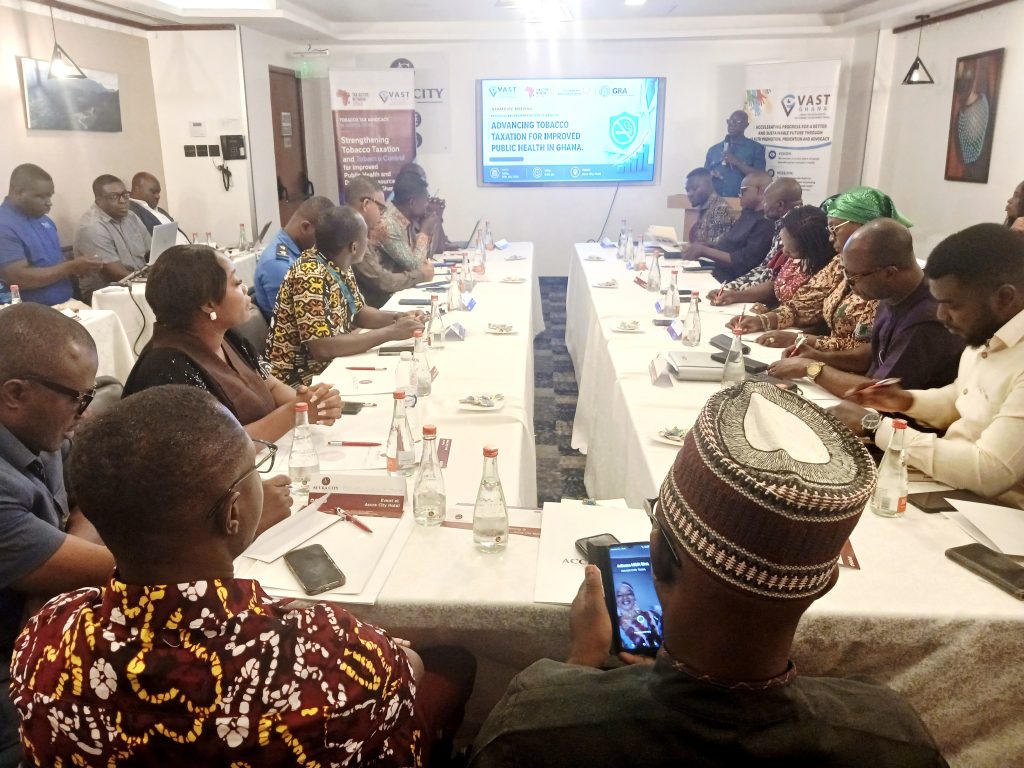
Dr Kombat made the remarks during a strategic meeting to discuss and present findings from a report titled “Advancing Tobacco Taxation for Improved Public Health in Ghana,” held at the Accra City Hotel on Friday, July 24, 2026.
The meeting was organised by Vision for Accelerated Sustainable Development Ghana (VAST Ghana) in partnership with the GRA, Tax Justice Network Africa and Global Health Advocacy Incubator.
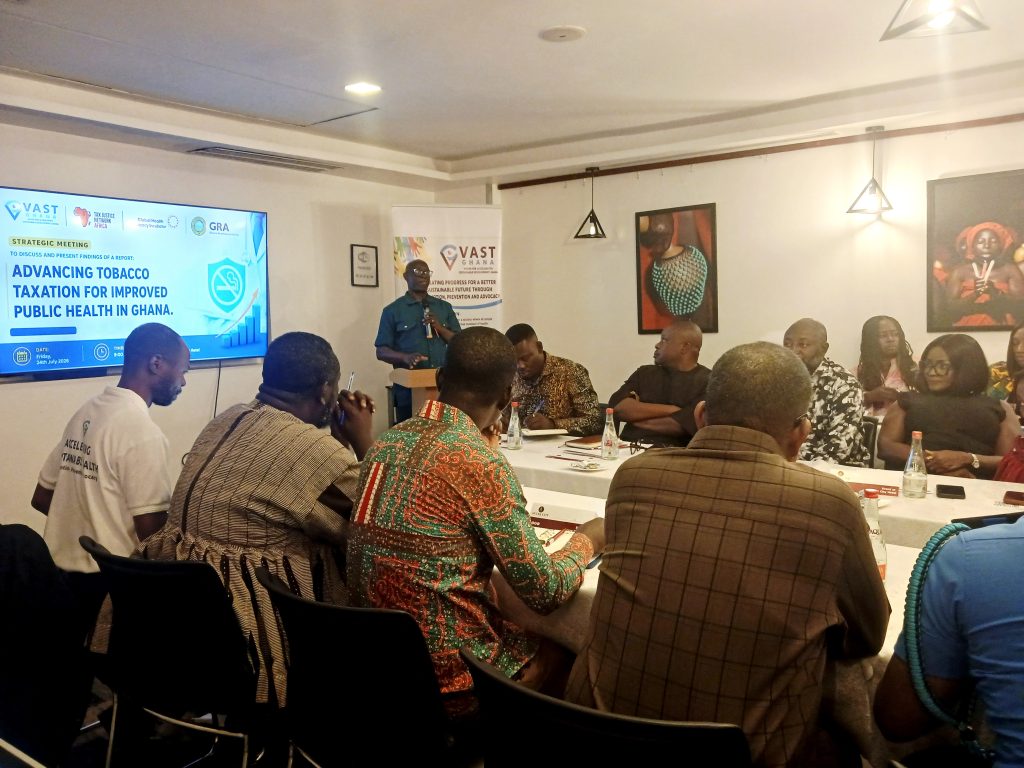
According to Dr Kombat, the research was commissioned to examine how tobacco taxation could contribute to improved public health.
He said the findings were presented to officials of the GRA to facilitate discussions on the relationship between taxation and public health.
Dr Kombat said the GRA worked with the Ministry of Finance on taxation policy and supported the consideration of excise taxes based on the sugar content of beverages and the alcohol content of alcoholic products.
He also suggested that a portion of excise tax revenue could be earmarked to support healthcare financing.
On calls for an outright ban on tobacco products, Dr Kombat said such a measure would not be feasible because tobacco was an internationally traded product.
He said Ghana could not simply ban tobacco production and consumption without creating significant economic and international trade challenges.
According to him, the focus should instead be on using taxation and other regulatory measures to discourage consumption.
Dr Kombat explained that when taxes caused the prices of products to rise, consumers were likely to reduce the quantity they purchased or consumed.

“If you are consuming two bottles and the price was 10 cedis and now the price is 15, you may consume one,” he said.
He said taxation should, however, be combined with public education to ensure that consumers understood the health risks associated with harmful products and could make informed decisions.
Dr Kombat stressed that the Ministry of Finance, rather than the GRA, was responsible for introducing taxes, noting that the GRA’s role was to administer and implement tax policies.
He said a combination of taxation, regulation and public education could help Ghana reduce the consumption of harmful products while supporting healthcare and public health objectives.