
GAND Launches National Nutrition Month, Warns of Growing Food Safety Threats

By Eugene Nyarko Jnr. | Accra | July 1, 2026
The Ghana Academy of Nutrition and Dietetics (GAND) has officially launched the 2026 National Nutrition Month (NNM), calling for collective national action to address what it describes as a growing food safety crisis driven by environmental pollution, unsafe food handling and the increasing consumption of ultra-processed foods.
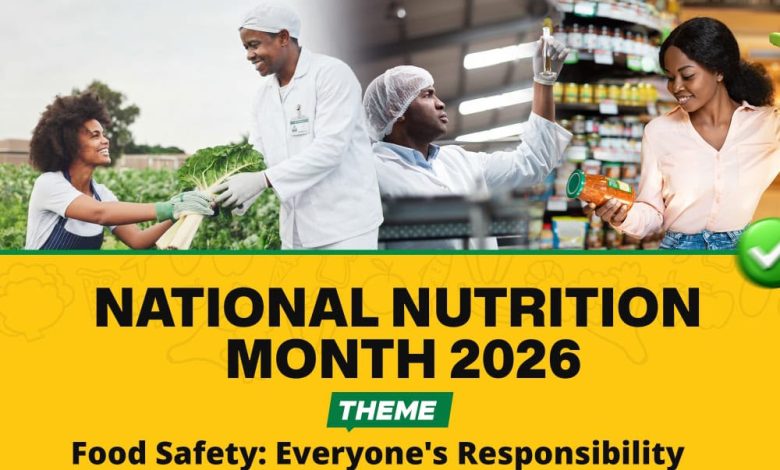
The month-long campaign, which coincides with GAND’s seventh anniversary, is being observed throughout July under the theme, “Food Safety: Everyone’s Responsibility.”
Launching the campaign in Accra on Wednesday, GAND said ensuring food safety requires the active involvement of individuals, communities, food producers, health professionals, regulators, policymakers and consumers.
The Academy stressed that every Ghanaian has the right to consume food that is safe and nutritious, adding that food safety should become a shared national responsibility rather than the sole duty of regulatory institutions.
According to GAND, foodborne illnesses remain a major public health challenge globally, with the World Health Organization estimating that about 600 million people—nearly one in every ten people worldwide—fall ill annually after consuming contaminated food, resulting in about 420,000 preventable deaths. Children under five account for approximately 125,000 of those deaths each year.
The Academy noted that Africa bears the highest burden of foodborne diseases, recording an estimated 91 million illness cases and about 137,000 deaths annually.
In Ghana, GAND said diseases such as typhoid, cholera, dysentery and viral hepatitis continue to place enormous pressure on the country’s healthcare system, while diarrhoeal diseases linked to contaminated food and water remain among the leading causes of death.
The Academy further expressed concern over the growing impact of illegal mining, popularly known as galamsey, on food safety.
It explained that mercury, arsenic, lead and cadmium released into rivers and farmlands through illegal mining activities contaminate irrigation water and agricultural soils, allowing harmful heavy metals to accumulate in crops and fish consumed by the public.
According to GAND, studies conducted on rivers including the Pra, Offin, Ankobra and Birim have detected heavy metal concentrations exceeding internationally accepted safety standards, posing long-term health risks such as neurological disorders, kidney disease, reproductive complications and certain cancers.
Beyond environmental contamination, the Academy warned that the rapid spread of ultra-processed foods high in sugar, salt and unhealthy fats is contributing significantly to the rising burden of non-communicable diseases (NCDs) in Ghana.
It argued that food safety should no longer be viewed only from the perspective of microbial contamination but should also include nutritional safety through transparent food labelling.
GAND therefore renewed its call for the introduction of mandatory Front-of-Pack Warning Labels (FOPWL) to help consumers easily identify foods containing excessive amounts of sugar, salt and unhealthy fats before purchasing them.
The Academy cited data from the Ghana Health Service indicating that non-communicable diseases, including hypertension, diabetes, obesity and cardiovascular diseases, now account for more than 43 per cent of deaths in Ghana and have become the leading cause of adult hospital admissions.
It also expressed concern over increasing cases of childhood obesity, adolescent hypertension and early-onset diabetes.
As part of the campaign, GAND urged farmers to use safe water sources and adopt good agricultural practices, while encouraging food manufacturers to improve product labelling and eliminate misleading health claims.
The Academy also called on government agencies, including the Food and Drugs Authority, the Ghana Standards Authority and the Ministry of Health, to strengthen enforcement of food labelling regulations, introduce mandatory Front-of-Pack Warning Labels, restrict the marketing of ultra-processed foods to children and develop a national strategy to reduce sugar, salt and unhealthy fats in processed foods.
Throughout July, GAND will embark on nationwide activities including social media campaigns, television and radio discussions in multiple local languages, school and market education programmes, corporate wellness engagements, faith-based outreach programmes and public demonstrations on hygienic food handling and storage.
The Academy encouraged all Ghanaians to support National Nutrition Month by adopting safer food practices, reading food labels, demanding accountability from food producers and participating in awareness activities organised across the country.