
Story by Eugene Nyarko Jnr. l Arusha, Tanzania l Sunday, October 18, 2026 —
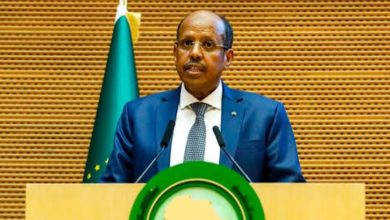
The Speaker of Ghana’s Parliament, Alban Sumana Kingsford Bagbin, has warned that electoral pressures are pushing African politicians towards short-term projects at the expense of sustainable national development, calling for stronger parliamentary cooperation and institutional reforms to secure the continent’s economic future.
He said the pressure on elected representatives to retain their seats often prioritises immediate and visible achievements over long-term investments that could transform national economies.
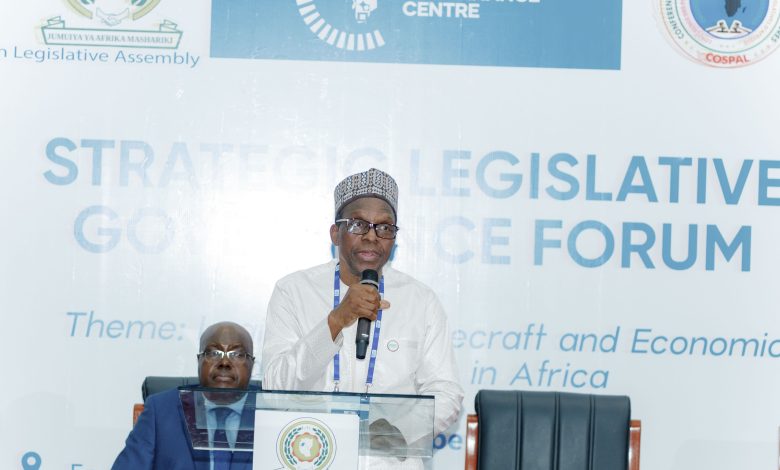
Mr Bagbin made the remarks at the Strategic Legislative Governance Forum organised by the Africa Governance Centre (AGC) in partnership with the East African Legislative Assembly (EALA) and the Conference of Speakers and Presidents of African Legislatures (CoSPAL) at the EALA Chambers in Arusha, Tanzania.
The forum examined the challenges electoral incentives pose to sustained legislative, budgetary and oversight efforts required to achieve economic transformation across Africa.
Mr Bagbin offered a candid assessment of the personal and political demands confronting Members of Parliament, explaining that many legislators face constant expectations from constituents to provide financial and other forms of personal assistance.
According to him, such demands often require parliamentarians to commit their personal resources to maintaining political support, creating financial and family pressures while limiting the time and attention they can devote to policymaking.
He observed that the desire to win the next election could influence political decisions, encouraging representatives to prioritise projects that produce immediate results rather than policies whose benefits may take several years to materialise.
The Speaker stressed that the problem extended beyond the conduct of individual politicians, arguing that the political systems within which legislators operate must also be examined and reformed.
He called on African parliamentarians to work collectively to address these structural challenges, emphasising that differences in political backgrounds, education and perspectives should not prevent them from pursuing common continental objectives.
Continuity in national development
Mr Bagbin highlighted the importance of maintaining consistent national development strategies beyond individual electoral cycles, pointing to Botswana’s experience following independence as an example of the value of sustained political direction and institution-building.
He argued that investments in education, productive capacity, infrastructure and institutional reforms often require long-term commitment, which can be undermined when political leaders focus primarily on the next election.
He, however, acknowledged the importance of democratic accountability, noting that governments must remain responsive to citizens’ immediate needs while creating the conditions for sustainable economic growth.
The challenge, he suggested, was to establish political and institutional arrangements that allow elected representatives to balance short-term public expectations with investments that deliver lasting benefits.
His remarks also raised questions about the financial demands associated with parliamentary contests and how those pressures could affect legislators’ ability to undertake effective policy scrutiny and oversight.
Africa must strengthen economic integration
Beyond electoral politics, Mr Bagbin urged African countries to identify their comparative advantages, specialise in areas where they possess economic strengths and develop production systems capable of serving a larger continental market.
He said Africa’s population of approximately 1.5 billion people represented a significant economic opportunity that could be harnessed through greater cooperation among countries.
According to him, African states could improve their economic prospects by coordinating industrial development, strengthening regional trade and expanding opportunities for producers to access markets across the continent.
He cautioned that fragmented national approaches could limit Africa’s ability to exercise its collective economic influence, particularly in global commodity markets where individual countries may have limited bargaining power.
Mr Bagbin argued that stronger cooperation could help African countries move beyond the export of raw materials towards greater processing, industrial production and employment creation.
However, he noted that achieving these objectives would require sustained political commitment, infrastructure development, technical expertise and coordinated economic planning.
He maintained that decisions concerning industrial priorities, regional production networks and the distribution of the benefits of economic integration could not be addressed effectively by countries acting in isolation.
Speaker advocates stronger continental institutions
Mr Bagbin consequently called for stronger continental parliamentary institutions capable of supporting common legislation and sustaining shared development priorities across successive national administrations.
He advocated a more integrated African political arrangement, including a federation with a continental president while national governments retained substantial responsibilities.
“Our individual parliaments alone cannot make it,” he said, underscoring the need for African legislatures to strengthen cooperation in addressing the continent’s political and economic challenges.
His proposal reflected his position that greater continental coordination was necessary to overcome the limitations of fragmented national policies and enable Africa to exercise greater collective influence.
Although the proposal was presented as his political vision rather than an adopted resolution of the forum, it reinforced his call for more effective continental institutions to support Africa’s integration agenda.
He also expressed support for strengthening the Pan-African Parliament, arguing that it should assume a more consequential role in shaping Africa’s legislative future.
He said the continent’s integration efforts required institutions with the capacity to translate shared political commitments into practical legislative and economic outcomes.
Call for greater parliamentary cooperation
Mr Bagbin further urged African legislators to cultivate a culture of dialogue, mutual understanding and cooperation, despite differences in their political experiences and national circumstances.
He said parliamentary leaders must be prepared to listen to one another, acknowledge the constraints confronting their colleagues and work towards common objectives rather than allow disagreements to obstruct progress.
The Strategic Legislative Governance Forum was convened by the Africa Governance Centre in collaboration with EALA and CoSPAL to examine how African legislatures could strengthen governance and support sustainable development.
The gathering also introduced the Strategic Legislative Governance Platform, designed to promote continued cooperation among African legislatures beyond the forum.
Mr Bagbin’s intervention highlighted a fundamental challenge confronting African governance: while national development often requires decades of sustained investment and policy consistency, the political incentives facing elected representatives frequently operate within shorter electoral cycles.
His argument was that addressing this imbalance would require more than appeals for individual politicians to exercise restraint. It would demand institutional reforms, stronger parliamentary cooperation and a shared commitment to development priorities capable of surviving changes in political leadership.
He maintained that a stronger continental market, coordinated economic policies and more effective legislative institutions could help African countries pursue long-term transformation while responding to the immediate needs of their citizens.