

Story by Eugene Nyarko Jnr. l UG, Accra l Tuesday, October 20, 2026 —
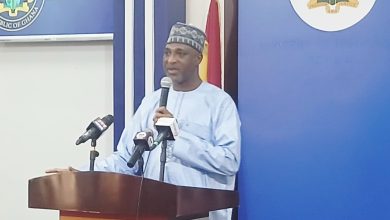
The Chief Justice of the Republic of Ghana, Justice Paul Baffoe-Bonnie, has called for stronger collaboration between the judiciary and academia, urging legal scholars to subject court decisions to rigorous, independent scrutiny to strengthen jurisprudence and promote accountability in the administration of justice.
He said the authority of the courts must not be mistaken for immunity from criticism, stressing that scholarly examination of judicial decisions was essential to the development of the law and the preservation of public confidence in the judiciary.
Justice Baffoe-Bonnie made the call when he delivered the keynote address at the launch of the Ghana Supreme Court Review and the University of Ghana School of Law (UGSoL) Book Series at the University of Ghana School of Law Auditorium on Tuesday, October 20, 2026.
The event brought together legal practitioners, academics, students and other stakeholders to promote legal scholarship and encourage deeper engagement with Ghana’s judicial and administrative systems.
Addressing the significance of the two publications, the Chief Justice explained that while the Ghana Supreme Court Review would focus on the work of the country’s highest court and the development of jurisprudence, the UGSoL Book Series would contribute to a broader understanding of public power and its consequences for ordinary citizens.
He said both initiatives addressed a fundamental question concerning the relationship between law, authority and institutional accountability.
Supreme Court decisions must withstand scrutiny
Justice Baffoe-Bonnie observed that the Supreme Court, as the final judicial authority of the Republic, played a critical role in settling disputes, determining rights, interpreting the Constitution and guiding the development of Ghanaian law.
However, he emphasised that the finality of a court’s decision did not bring an end to intellectual inquiry into its reasoning, assumptions and wider implications.
According to him, although judgments may conclude litigation, they should remain open to scholarly analysis that tests their legal foundations and considers their consequences for future cases.
“Such interpretation does not diminish the authority of the court. Properly undertaken, it strengthens the foundations of public authority,” he said.
The Chief Justice cautioned against an institutional culture in which criticism was treated as hostility and silence was mistaken for approval.
He noted that institutions accustomed only to praise and agreement risked becoming less capable of identifying their weaknesses and correcting their mistakes.
“We who sit on the bench must never become so enamoured by the authority of our judgments that we lose interest in the quality of their reasoning,” he said.
He maintained that judicial authority did not exempt judges or their decisions from rational examination, adding that constructive criticism was necessary to improve the quality and consistency of judicial reasoning.
Beyond political interpretations of judgments
The Chief Justice expressed concern that public discussions of court decisions in Ghana were often dominated by partisan political interpretations, with attention focused largely on which party had won or lost a case.
He said such discussions frequently failed to address the deeper legal questions that should inform public understanding of judicial decisions.
He urged scholars to examine the principles established by judgments, their consistency with the Constitution and existing precedents, and their implications for future adjudication.
Justice Baffoe-Bonnie said the Ghana Supreme Court Review offered an opportunity to bring together academics, legal practitioners and other scholars to undertake such independent assessments.
He called on contributors to ensure that their praise or criticism of judicial decisions was guided by legal reasoning rather than the identities of the parties involved or the popularity of a particular outcome.
“A strong judiciary has the need of a strong legal academy,” he said, emphasising the importance of an independent academic community that could contribute meaningfully to the development of the law.
He expressed the hope that the publication would grow into a respected platform for rigorous examination of Ghanaian jurisprudence.
Administrative justice and the ordinary citizen
Turning to the UGSoL Book Series and the importance of administrative law, the Chief Justice said the subject deserved greater attention because of its direct impact on the daily lives and rights of citizens.
He explained that while constitutional law establishes the framework of government and determines how public authority is organised, administrative law examines how that authority is exercised in practice.
He said administrative law was particularly important in ensuring that public institutions acted lawfully, fairly and reasonably when making decisions affecting individuals.
“If constitutional law designs the house of government, administrative law determines who inhabits the house of government and how those who exercise authority must conduct themselves towards the people who stand at its doors,” he said.
Justice Baffoe-Bonnie stressed that the rule of law must be demonstrated not only in major constitutional disputes but also in routine administrative decisions that could determine a person’s education, employment, dignity and future opportunities.
To illustrate the point, he referred to a case involving students whose examination results were cancelled by the West African Examinations Council (WAEC), with the affected candidates reportedly facing a three-year restriction from taking examinations without a proper opportunity to respond to the allegations against them.
He explained that examination results represented years of academic effort, parental sacrifice and the aspirations of young people seeking better opportunities.
For some students, he said, educational qualifications could provide a pathway out of poverty, making arbitrary administrative decisions particularly damaging.
The Chief Justice said judicial intervention in such matters demonstrated the importance of ensuring that public and administrative power remained subject to legal standards.
He warned that without effective safeguards, a single administrative decision could undermine opportunities that individuals and their families had spent years working towards.
Constitutional safeguards against arbitrary power
Justice Baffoe-Bonnie drew attention to Articles 23 and 17 of the 1992 Constitution, which respectively require administrative bodies and officials to act fairly and reasonably and prohibit discrimination on specified grounds.
He said these constitutional protections served as reminders that public officials must exercise their responsibilities in accordance with the law and respect the rights and dignity of citizens.
According to him, a country could possess a well-designed constitutional framework and still fail its citizens if public institutions administered their responsibilities unfairly.
He argued that legal education must therefore extend beyond the study of constitutional structures to examine how government institutions operate and how their decisions affect individuals.
The Chief Justice said the UGSoL Book Series could help address the need for more sustained, locally grounded scholarship on administrative law and its application in Ghana.
He expressed the hope that the initiative would make legal knowledge more accessible and useful to students, practitioners and public officials while strengthening public debate on the exercise of governmental authority.
Call for stronger partnership between the bench and academia
The Chief Justice further called for closer engagement between judges, lawyers, legislators and academic researchers, describing the development of the law as a shared responsibility.
He said judges decided cases, lawyers advanced arguments, legislators enacted laws, and scholars examined legal principles and their implications for society.
He maintained that these roles should complement one another through open intellectual engagement and mutual respect for institutional independence.
Justice Baffoe-Bonnie said disagreement was an essential feature of legal development, noting that lawyers challenged existing interpretations, dissenting judges questioned majority opinions, and scholars tested judicial reasoning.
Through these processes, he said, legal principles could be refined and strengthened.
He cautioned against attempts to intimidate scholars for expressing critical views on judicial decisions, stressing that the appropriate response to academic criticism was reflection rather than hostility.
Message to law students and young lawyers
Addressing law students and young practitioners, the Chief Justice urged them not to limit their intellectual ambitions to popular constitutional controversies at the expense of other important areas of legal practice.
He said preventing an unlawful dismissal of a public servant or protecting an individual’s rights against arbitrary administrative action could be as significant to the advancement of justice as resolving a major constitutional dispute.
He encouraged the younger generation to become active contributors to legal scholarship rather than passive consumers of existing legal knowledge.
“Question what you read. Examine what you have been taught,” he urged.
Justice Baffoe-Bonnie said the future development of Ghanaian law could not be left to judges alone, noting that students, researchers, practitioners and other members of the legal community also had important contributions to make.
He congratulated Professor Peter and his team for their work on the publications, describing the initiatives as valuable contributions to legal scholarship in Ghana.
He expressed confidence that the Ghana Supreme Court Review and the UGSoL Book Series would provide platforms for sustained engagement with the country’s jurisprudence and administrative law, ultimately strengthening the lawful and fair exercise of public authority.
The launch underscored the importance of independent legal scholarship, judicial accountability and a legal system that not only interprets the law but also protects the rights, dignity and opportunities of ordinary citizens.