
Story by Eugene Nyarko Jnr. l Arusha, Tanzania l Wednesday, October 7, 2026 —
The Speaker of Ghana’s Parliament and President of the Conference of Speakers and Presidents of African Legislatures (CoSPAL), Rt. Hon. Alban Sumana Kingsford Bagbin, has called for a new political order anchored in stronger continental institutions, coordinated industrialisation and deeper African integration to accelerate economic transformation.
He argued that individual African countries and their national parliaments lacked the collective influence needed to fundamentally reshape the continent’s position in the global economy, urging political leaders to reconsider the founding vision of African unity, including the possibility of a federation with a continental president.
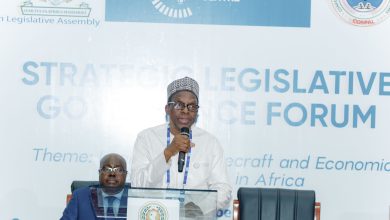
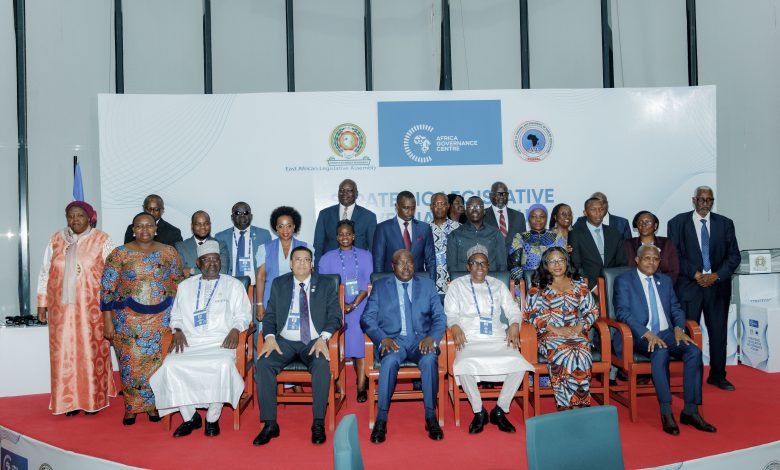
Mr Bagbin made the call at the Strategic Legislative Governance Forum held in Arusha, Tanzania, on October 7, 2026, where parliamentary leaders and governance experts examined how legislation, public finance and oversight could support sustainable economic development.
The forum was convened by the Africa Governance Centre (AGC) in partnership with the East African Legislative Assembly (EALA) and CoSPAL. It also introduced the Strategic Legislative Governance Platform to promote continued cooperation among African legislatures.
Mr Bagbin maintained that Africa’s vast agricultural and mineral resources had not translated into sufficient influence over global production, processing and trade, leaving many countries dependent on exporting raw materials while higher-value industrial activities take place elsewhere.
Using cocoa as an example, he questioned an economic structure in which West African countries supply a critical raw material to the global chocolate industry but capture a comparatively limited share of the value generated through processing, branding, distribution and retail.
He argued that African countries needed to coordinate their production and industrialisation strategies rather than pursue economic development in isolation.
According to him, stronger cooperation could help countries identify their comparative advantages, avoid unnecessary duplication of expensive industrial investments and build production networks capable of competing in larger international markets.
Such an approach, he indicated, would require political commitment to coordinate infrastructure, regional trade and industrial priorities while addressing national interests in the distribution of economic benefits.
Calls for stronger continental parliament
Mr Bagbin also expressed concern about the limited influence often afforded to African legislatures in major political and economic decisions.
He said parliaments were frequently treated as peripheral institutions, brought into discussions only after critical decisions had effectively been taken.
He therefore advocated stronger cooperation among national legislatures and a more consequential role for the Pan-African Parliament in shaping the continent’s development agenda.
He argued that elected representatives needed greater opportunities to influence policies governing trade, industrialisation, investment and public expenditure, particularly as economic decisions increasingly transcend national borders.
The Speaker’s proposal raises questions about the relationship between national sovereignty and continental authority, including how responsibilities for legislation, budgeting and oversight could be shared under a more integrated political arrangement.
While national parliaments exercise authority within their respective jurisdictions, Mr Bagbin suggested that the scale of Africa’s economic challenges required institutions capable of supporting common priorities across countries.
“Our individual parliaments alone cannot make it,” he said, reiterating the need for stronger continental cooperation.
His proposal for a federation with a continental president was presented as a political vision for discussion, rather than an adopted decision of the forum.
Industrialisation and economic sovereignty
Mr Bagbin’s call for political integration was closely linked to his argument that Africa needed to strengthen its capacity to produce finished goods and retain more value from its natural resources.
He questioned why countries endowed with substantial agricultural and mineral resources continued to have limited influence over the industrial processes that determine the value and competitiveness of their exports.
He maintained that coordinated industrial development could help African countries build stronger domestic industries, expand employment opportunities and improve their bargaining position in international markets.
However, achieving those objectives would require more than political declarations. Countries would need to invest in infrastructure, technical skills, productive capacity and regional market connections, supported by consistent policies over time.
Mr Bagbin also highlighted the importance of developing African expertise and institutions capable of designing and implementing policies suited to the continent’s circumstances.
He questioned the continued dependence on imported ideas and educational approaches that, in his view, did not always equip African societies adequately to address their own development challenges.
He stressed the need for education systems to support practical problem-solving, institutional development and the expertise required to negotiate and implement policies in Africa’s long-term interests.
A challenge to African leadership
The Speaker’s intervention addressed a longstanding question surrounding African integration: whether governments are prepared to exercise greater collective authority over economic priorities while retaining their national responsibilities.
His argument was that Africa’s combined resources and market potential could provide greater economic influence if countries coordinated their production, strengthened regional trade and established institutions capable of sustaining shared development objectives.
He challenged parliamentary leaders to match the scale of the continent’s economic difficulties with equally ambitious political cooperation and institutional reform.
The Strategic Legislative Governance Forum sought to examine how parliamentary lawmaking, budgetary decisions and oversight could support economic transformation beyond individual electoral and political cycles.
The newly introduced Strategic Legislative Governance Platform is intended to provide a framework for continued research, comparative learning and collaboration among African legislatures.
Mr Bagbin’s message was that Africa’s development ambitions would remain difficult to achieve if countries continued to act independently on challenges that increasingly require collective solutions.
He called for a stronger continental legislative framework and deeper political cooperation to help African countries move beyond dependence on raw-material exports towards greater industrial capacity, economic sovereignty and a more influential position in the global economy.