

Story by Eugene Nyarko Jnr. l Accra l Monday, October 26, 2026 —
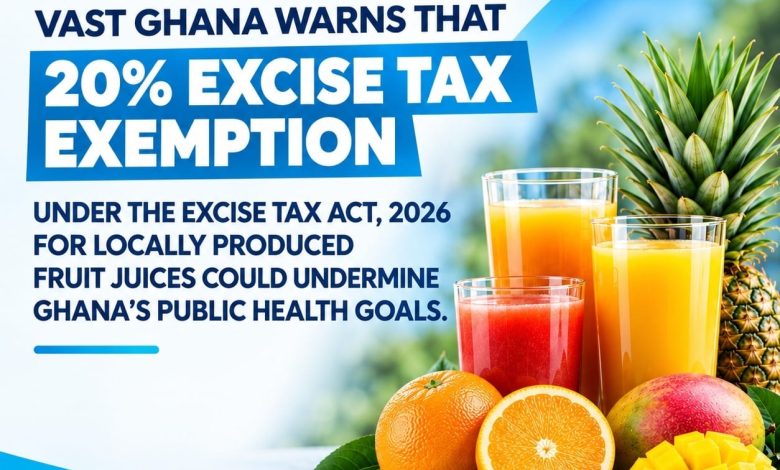
Vision for Accelerated Sustainable Development Ghana (VAST Ghana) has urged the Ministry of Finance to reconsider the 20 per cent excise tax exemption granted to locally produced fruit juices under the Excise Tax Act, 2026, warning that the policy could undermine efforts to prevent non-communicable diseases (NCDs).
The organisation said the exemption could encourage the consumption of beverages containing high levels of free sugars, weaken Ghana’s public health tax framework and reduce the effectiveness of fiscal measures designed to promote healthier diets.
In a press statement issued on Monday, October 26, 2026, VAST Ghana also called on the Ministry of Health to express concern about the policy, citing its potential implications for the government’s preventive healthcare agenda, including the Free Primary Health Care (FPHC) Policy and the Ghana Medical Trust Fund (GMTF).
While acknowledging the government’s intention to support local industries, increase domestic production and improve the competitiveness of locally manufactured products, VAST Ghana argued that economic incentives should not compromise public health objectives.
It maintained that fruit juices should not automatically be considered healthy alternatives to other sugar-sweetened beverages, explaining that their sugar content can vary depending on their composition and processing.
According to the organisation, excessive consumption of beverages containing free sugars can contribute to weight gain, overweight, obesity, type 2 diabetes and other diet-related NCDs.
It warned that exempting locally produced fruit juices solely on the basis of their origin, without adequately considering their sugar content, could create inconsistencies in the country’s public health taxation framework.
Calls for sugar-content-based taxation
VAST Ghana is advocating an evidence-based taxation system under which beverages would be taxed according to their free sugar content, irrespective of whether they are manufactured locally or imported.
The organisation said such an approach would align taxation with the health risks associated with excessive sugar consumption, promote fair competition among manufacturers and encourage the production of healthier beverages.
It added that a well-designed sugar-content-based tax could incentivise manufacturers to reduce sugar levels in their products while supporting domestic revenue mobilisation and national health priorities.
The organisation also cited the World Health Organisation’s (WHO) recommendations on taxing beverages containing free sugars as part of a broader strategy to reduce sugar consumption and prevent NCDs.
It referred to the WHO’s Global Report on the Use of Sugar-Sweetened Beverage Taxes 2025, which highlights weaknesses in the design and implementation of such taxes in several countries.
VAST Ghana further noted that the WHO’s 3 by 35 initiative calls on countries to increase the real prices of tobacco, alcohol and sugary drinks through effective taxation by 2035.
It argued that maintaining effective excise taxes on products associated with NCD risks was important not only for discouraging harmful consumption but also for generating revenue to support national development priorities.
Raises concerns over product classification
Beyond the public health implications, VAST Ghana questioned the clarity and robustness of the definition of fruit juice that the Ministry of Finance intends to use in implementing the exemption.
It said consumers and industry stakeholders needed clear criteria specifying which products would qualify for the tax relief, given the potential implications for public health, manufacturers’ profits and government revenue.
The organisation warned that some manufacturers could reformulate, relabel or market products as fruit juices to avoid health-related taxes, even when those products contain high levels of added sugars or only limited amounts of actual fruit.
To address these concerns, VAST Ghana called for clear product classification standards, stringent labelling requirements that accurately disclose sugar content and fruit composition, and regular compliance monitoring.
It said these safeguards would help prevent misleading product claims, reduce opportunities for tax avoidance and ensure that only products meeting clearly defined requirements benefit from the exemption.
Seeks review in upcoming national budget
VAST Ghana said it looked forward to opportunities to review the 20 per cent exemption in the upcoming national budget statement, while urging the government to establish robust regulatory and monitoring mechanisms in the meantime.
It called on the Ministry of Finance to work with the Ministry of Health, the Food and Drugs Authority and other relevant stakeholders to develop a beverage taxation framework that protects public health while supporting domestic industry.
The organisation stressed that fiscal incentives should encourage innovation, investment and the production of healthier nutritional options rather than make products associated with excessive sugar consumption more affordable.
“Ghana must not allow an industrial incentive to weaken the effectiveness of its public health protections,” VAST Ghana said in its statement.
It maintained that the country’s public health and economic development objectives should reinforce each other, with tax policies designed to support local businesses while advancing nutrition, disease prevention and sustainable healthcare financing.