


Story by Eugene Nyarko Jnr. | Accra City Hotel, Accra | July 24, 2026
Vision for Accelerated Sustainable Development Ghana (VAST Ghana) has called on the government to increase excise taxes on tobacco products and sugar-sweetened beverages as part of measures to discourage consumption and address the growing burden of non-communicable diseases (NCDs) in Ghana.
The organisation also urged the Ministry of Finance to remove taxes imposed on e-cigarettes, arguing that the taxation of the products creates a regulatory contradiction because Ghana’s Public Health Act prohibits e-cigarettes.
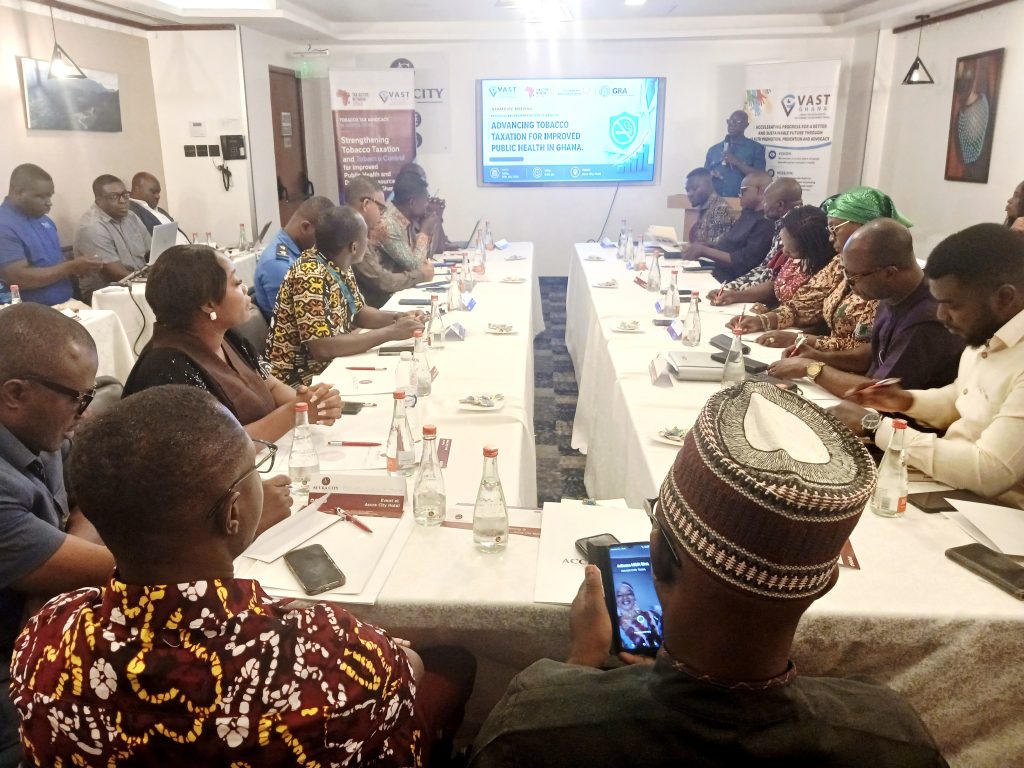
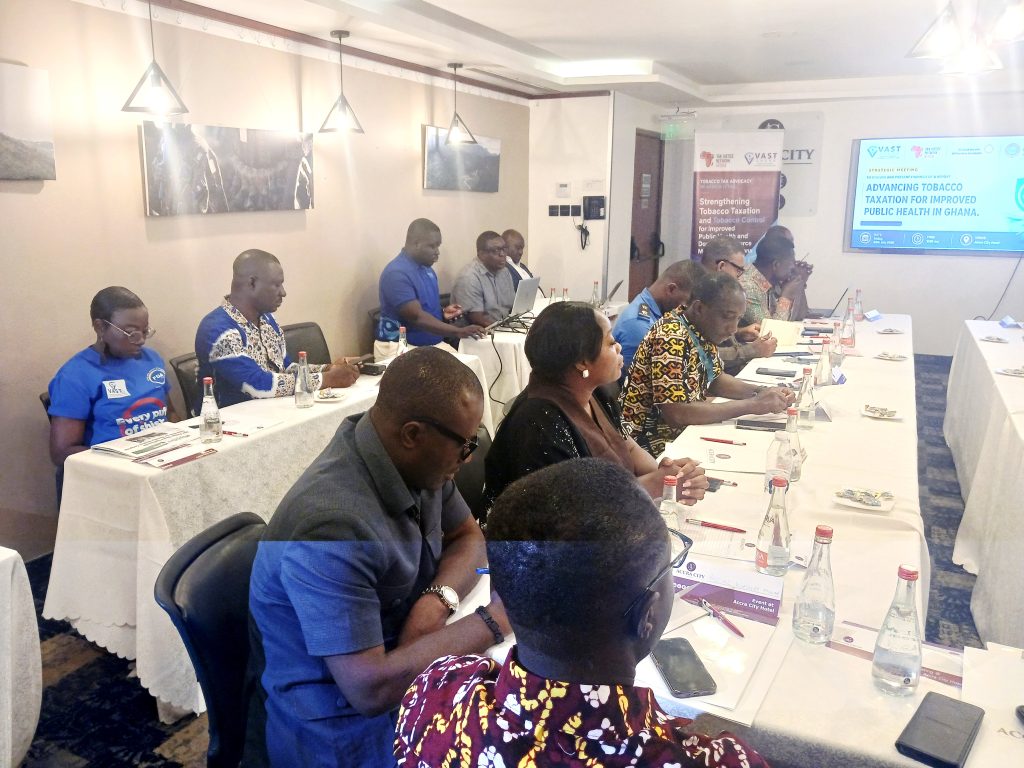
The call was made during a strategic meeting held at the Accra City Hotel on Friday, July 24, 2026, to discuss and present findings from a report titled: “Advancing Tobacco Taxation for Improved Public Health in Ghana.”
The meeting, organised by VAST Ghana in partnership with the Ghana Revenue Authority (GRA), Tax Justice Network Africa and the Global Health Advocacy Incubator, focused on the burden of NCDs, policy coherence and the role of fiscal policy in revenue generation and health financing.
Speaking to the media, the Executive Director of VAST Ghana, Mr Labram Musah Massawudu, said increasing taxes on tobacco products could help make them less affordable, particularly for young people and poor households.

He said although the government had maintained existing taxes on sugar-sweetened beverages, there was a need to consider further increases in excise tax rates on both sugar-sweetened beverages and tobacco products.
“We are hoping that they do at least some adjustment also on the tax rate for tobacco products as well,” he said.
According to Mr Massawudu, tobacco products were currently relatively cheap on the Ghanaian market, making them easily accessible to vulnerable groups.
He said higher prices through taxation could discourage young people and poorer sections of the population from consuming products that were harmful to their health.
On e-cigarettes, he said the government needed to harmonise its laws and policies, noting that one public institution was taxing the products while another was confiscating them.
“The Public Health Act of 2012 banned e-cigarettes and now we have GRA imposing taxes on them,” he said.
“One Ministry or one public health institution is taxing the product and then another public health institution is confiscating it. It doesn’t make sense for us as a country. We need to harmonise our regulations and laws.”
Mr Massawudu therefore called on the Ministry of Finance to remove the tax on e-cigarettes and ensure that the products remained prohibited in Ghana.
He further called for stronger enforcement of laws governing the cultivation and use of tobacco, particularly in communities where raw tobacco was used for cultural and traditional purposes.

He said tobacco products should be properly regulated, with raw tobacco produced for export or processed under the appropriate regulatory framework rather than being consumed directly.
Mr Massawudu stressed the need for stronger regulation rather than an outright ban on products such as tobacco and alcohol, saying effective measures should focus on protecting children, young people, poor households and other vulnerable groups.
He advocated higher prices, restrictions on marketing and measures to prevent products from being made attractive or easily accessible to children.
He also called for stronger controls on advertising across digital platforms, noting that existing restrictions were easier to enforce on traditional television and radio than on electronic and social media platforms.
NCD risk factors
The Policy and Research Manager at VAST Ghana, Mr Godfred Tweneboah Kodua, said Ghana was experiencing a growing burden of NCDs, including cancers, diabetes and hypertension.
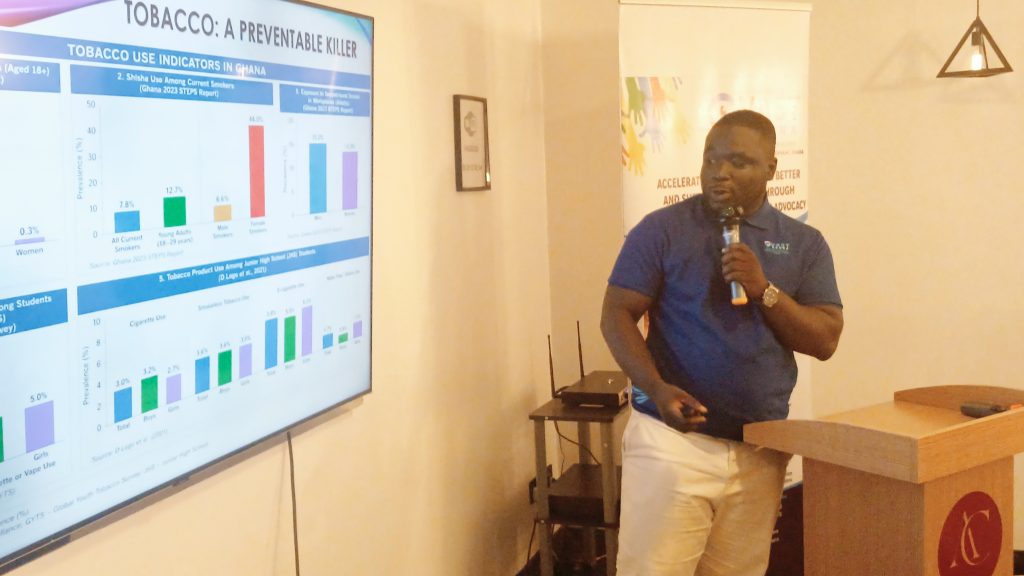
He identified tobacco use, unhealthy diets, alcohol consumption, physical inactivity and air pollution as five major risk factors contributing to the problem.
Mr Kodua said available research and health surveys showed that although the general prevalence of tobacco smoking might appear relatively low, the situation among young people was a growing concern.
He cited findings indicating that about 8.8 per cent of students aged between 13 and 15 were using e-cigarettes.
He also raised concerns about the increasing use of shisha among young people, particularly girls.
According to him, exposure to tobacco smoke and other harmful substances affects not only those who directly consume the products but also people who are exposed to the environment in which they are used.
He said the toxins could enter the body through different routes and contribute to systemic inflammation and damage to the body, increasing the risk of diseases such as cancer, diabetes and hypertension.
Mr Kodua said the effects of tobacco use and exposure should therefore be treated as a broader public health concern rather than a problem affecting only smokers.
GRA supports evidence-based taxation
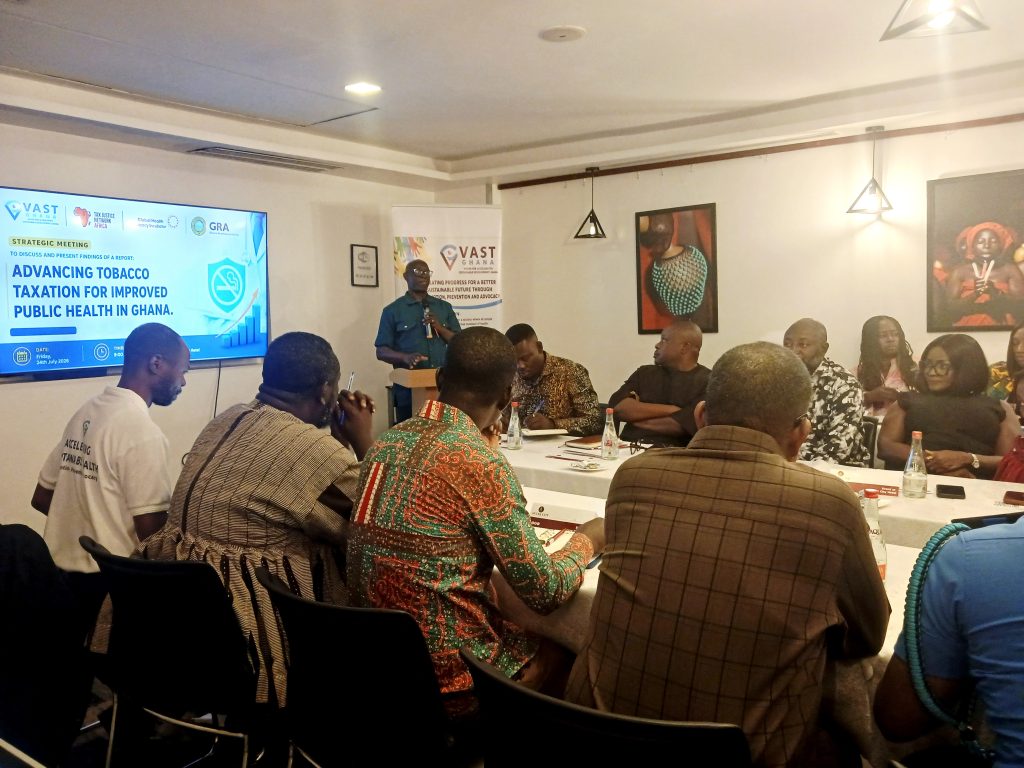
The Assistant Commissioner in charge of Research and Policy at the Ghana Revenue Authority, Dr Alex Kombat, said the meeting provided an opportunity for stakeholders to examine research findings on tobacco taxation and its potential contribution to public health.

He said the research had been commissioned to examine how tobacco taxation could be used to improve health outcomes.
Dr Kombat said the GRA worked with the Ministry of Finance on taxation policy and supported the consideration of excise taxes based on the sugar content of beverages and the alcohol content of alcoholic products.
He also recommended that a portion of excise tax revenue could be earmarked to support healthcare financing.
However, he cautioned against calls for an outright ban on tobacco products, arguing that such a measure would not be feasible within the international trading system.
According to him, tobacco is an internationally traded product, and Ghana could not simply ban its production and consumption without creating significant economic and international trade complications.
He said taxation could instead be used as a tool to discourage consumption by making the products more expensive.
“If the prices go up because of the tax, the quantity that you consume reduces,” he said.
Dr Kombat explained that when the price of a product increased significantly, consumers could reduce the quantity they purchased and consumed.
He said taxation should therefore be combined with public education to enable consumers to understand the health risks and make informed decisions.

The strategic meeting formed part of ongoing efforts by stakeholders to strengthen tobacco control and fiscal policies in Ghana and explore ways of using taxation to reduce the consumption of harmful products while generating revenue to support public health.