
Story by Eugene Nyarko Jnr. | Accra | February 6, 2026
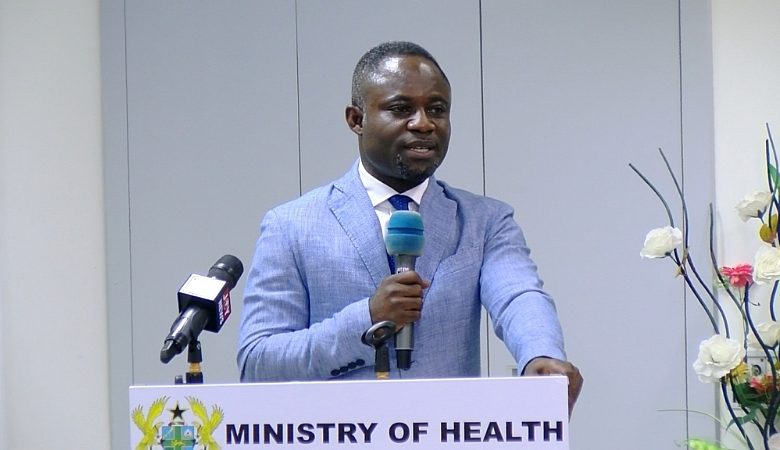
The Government is set to roll out a nationwide Free Primary Health Care policy by early April 2026 as part of broader reforms aimed at achieving Universal Health Coverage (UHC), the Minister for Health, Hon. Kwabena Mintah Akandoh, has announced.
Speaking during a stakeholder engagement with the media at the Ministry of Health Conference Room at Ridge, Accra, the Minister explained that the initiative forms part of a set of interconnected health policies being pursued by President John Dramani Mahama, stressing that “policies cannot work effectively in silos.”
He noted that key reforms such as Mahama Cares, the uncapping of the National Health Insurance Scheme (NHIS), and the proposed Free Primary Health Care policy are deliberately linked to address financing and access challenges that have long hindered the country’s health system.
According to Hon. Akandoh, President Mahama made a firm commitment during the 2024 election campaign to introduce free primary health care for all Ghanaians, recognizing that primary-level services account for nearly 80 per cent of the health needs of the average citizen.
“The rationale is simple,” he said. “Every Ghanaian contributes to the National Health Insurance Fund. Therefore, there should be a guaranteed minimum benefit for all, without having to pay out-of-pocket to access basic primary health care.”
Under the proposed policy, citizens and legally resident persons will be required only to identify themselves using valid documents such as a Ghana Card, Voter ID, NHIS card or any acceptable national identification to access primary health care services.
The Health Minister disclosed that the policy framework for the initiative is now ready, and the government is undertaking extensive stakeholder consultations to ensure broad-based support before implementation. He said consultations have already been held with professional bodies including the Ghana Medical Association, the Pharmaceutical Society of Ghana, manufacturers, development partners, donors and the media.
“We are not stopping here,” he added. “We will engage transport operators, market women, traditional rulers, Parliament and other key groups so that everyone is carried along and their views incorporated before rollout.”
Hon. Akandoh expressed optimism that the programme would be launched no later than the first week of April 2026, noting that significant preparatory work is currently underway.
Touching on the National Health Insurance Scheme, the Minister said improved and timely payment of claims by government has restored confidence among service providers, leading to a marked improvement in service delivery. He revealed that NHIS coverage has increased from about 56–57 per cent to approximately 66 per cent.
He explained that a strengthened NHIS, combined with free primary health care, would provide a solid foundation for addressing more complex health challenges, particularly non-communicable diseases (NCDs), which often push affected households into poverty.
In this regard, he described Mahama Cares as a critical intervention dedicated to funding the treatment of NCDs, while prevention efforts would be intensified through early screening, health education, lifestyle modification and community-based sensitisation.
“Our community health nurses will continue to engage people in communities, farms, churches, mosques and through local radio and national television on healthy eating habits, early detection and preventive care,” he said.
The Minister also called on citizens to play their part in ensuring the success of the reforms by enrolling on the NHIS, maintaining public health facilities and seeking medical care early rather than waiting until conditions worsen.
He reminded the public that enrolment onto the NHIS is compulsory by law, adding that while enforcement may be challenging, collective responsibility and public cooperation are essential to building a strong and resilient health system.
“Government will do its part,” Hon. Akandoh assured, “but citizens must also do theirs. Health services are improving, and with everyone on board, we can achieve a robust and inclusive health sector for Ghana.”