
By Irodili C. Iroegbu
INTRODUCTION
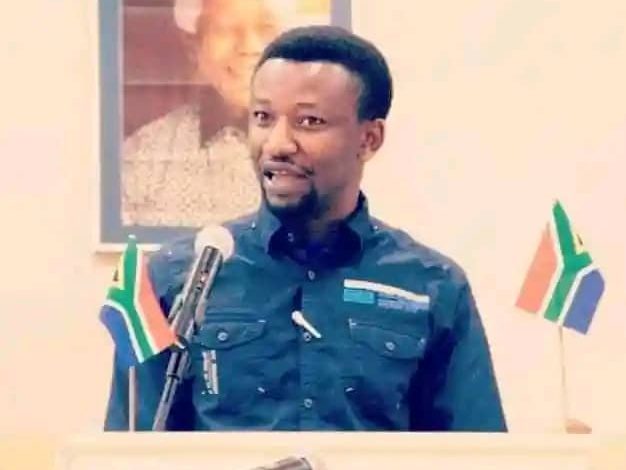
In this special investigative feature, I sat down with Mr. Ukachukwu Okorie, a prominent Biafran voice in the diaspora and founder of AfricaWorld Newspaper. Known for his uncompromising positions on self-determination, global power politics, and media freedom, Mr. Okorie has long been a controversial but influential figure within Pan-African and Biafran advocacy circles.
From the political tensions surrounding Nigeria’s security architecture to the global implications of Mazi Nnamdi Kanu’s imprisonment, Mr. Okorie speaks with intensity shaped by years of media activism and personal conviction. His views reflect the anger, hope, and resilience of many Biafrans at home and abroad.
This conversation explores his interpretation of former U.S. President Donald Trump’s statements on Nigeria, the role of diaspora media under pressure, and what he believes lies ahead for the Biafran self-determination movement.
INTERVIEW
Irodili C. Iroegbu:
As a Biafran living abroad and a pro-Trump media founder, how did you receive Trump’s recent threats toward Nigeria?
Ukachukwu Okorie:
I felt genuinely excited—especially for Nigerians who are Christians and for Biafrans. I do not see Trump’s words as a threat; I see them as a humanitarian intervention. Only a courageous leader would confront what is happening in Nigeria instead of hiding behind diplomatic niceties.
Nigeria claims to be secular, yet power is monopolized, elections are rigged, and terrorists operate with impunity. The government hides behind sovereignty while citizens are killed. Trump’s voice shines light into that darkness. Mainstream media may twist his intent, but independent media like mine stand on truth. History will judge him kindly. He is bold, unapologetic, and decisive—qualities missing in global leadership for too long.
Irodili:
Do Trump’s remarks create risks for IPOB, Biafrans, or the South-East when global powers speak on Nigeria’s security issues?
Okorie:
Absolutely not. In fact, IPOB has consistently called for international intervention—specifically an independent inquiry into Nigeria’s extrajudicial killings. Trump’s involvement is welcomed because it would expose facts, not bury them.
The real danger has always been Nigeria’s propaganda machine. Independent voices like ours are censored daily. Facebook shut down my primary page in 2018, spawning over 25 replacements—all targeted. IPOB has been demonized as terrorists, while armed groups like Fulani herdsmen kill freely, allegedly with state backing.
This intervention does not endanger us; it vindicates us. Biafrans have suffered in silence for decades. Trump’s stance offers a chance for truth to surface.
Irodili:
How did the jailing of Nnamdi Kanu affect you personally as a Biafran watching from abroad?
Okorie:
It cut deeply. Nnamdi Kanu is more than a man—he is a symbol of resistance and hope. Watching him jailed for demanding self-determination reminded me how far Nigeria is from justice.
Yet, paradoxically, it strengthened my resolve. His suffering reinforces the need for diaspora advocacy and independent media. If anything, it made my work more urgent.
Irodili:
Do you believe Kanu received a fair legal process, from the 2021 Kenya extradition to the life sentence?
Okorie:
No—there was no fairness at any stage. His abduction in Kenya was ruled illegal by a Kenyan court. Justice E.C. Mwita found that Kenyan authorities colluded with Nigeria, violating Kanu’s rights through illegal rendition, torture, and incommunicado detention. Damages were awarded because the law was broken.
In Nigeria, it became worse. He was held in DSS custody without due process, subjected to inhumane treatment. This is not democracy; it is state arbitrariness. Even many Nigerians know this conviction lacks moral and legal legitimacy.
Irodili:
Many describe his return as “extraordinary rendition.” What is your view?
Okorie:
That is precisely what it was—an extra-legal kidnapping across borders. Nigeria collaborated with foreign security agencies to bypass the law.
Historically, this fits a pattern. The Nigerian state has tolerated or enabled violence to maintain control over resources—especially in Biafra. Kanu challenged this system. That is why they broke every rule to silence him.
Irodili:
As a media founder abroad, what role do you play in shaping the Biafran narrative during crises like this?
Okorie:
A critical one. Through AfricaWorld Newspaper and the Biafra Nationalist Media Organization, we challenge the false idea that Biafra represents chaos. Biafrans are innovators, manufacturers, and traders. A restored Biafra would drive African industrialization and stability.
Media is a battleground. Whoever controls the narrative controls perception. My role is to ensure Biafra’s story is told truthfully and globally
Irodili:
Trump framed his warning around Christian persecution. Does that help or oversimplify Nigeria’s security crisis?
Okorie:
It helps—because it names a reality long ignored. Christians are being killed daily. Fulani militias operate freely. Borders are porous. Nigeria is sliding toward open conflict.
Trump’s framing is not exaggeration; it is overdue acknowledgment. Without intervention, this crisis will escalate into a full-scale catastrophe.
Irodili:
Do you fear foreign pressure could deepen tensions for Biafrans?
Okorie:
No. Nigeria needs pressure—moral pressure. Silence has enabled mass killings. China will never help; they only extract resources. Trump speaks because he believes in confronting injustice.
This pressure saves lives. Without it, the bloodshed continues unchecked.
Irodili:
After Kanu’s sentencing, is the Biafran movement weakening or evolving?
Okorie:
It is evolving—rapidly. His sentencing globalized the struggle. It made Biafra impossible to ignore.
A Biafran Republic would serve as a stabilizing buffer in West Africa, prioritizing people over power. That idea terrifies those who profit from chaos.
Irodili:
What responsibilities do diaspora Biafrans and independent media carry at this moment?
Okorie:
To tell our own story. AfricaWorld’s motto says it best: “Unless the hunted tells its story, the hunter’s version always wins.”
Our responsibility is truth, justice, and progress. Biafra is not about division—it is about dignity, rule of law, and prosperity. We seek partnerships, not isolation. The welfare of the people must always be the supreme law.
SUMMARY
Thank you, Mr. Ukachukwu Okorie, for sharing your voice and convictions in this critical conversation. As the saying goes, “He who does not know the path of the forest will get lost in the trees.” Your perspectives guide readers through the layered complexities of the Biafran struggle, the role of global powers, and the responsibility of independent media.
To our readers: “Knowledge is like a garden; if it is not cultivated, it cannot be harvested.” Thank you for engaging with this interview and for amplifying voices often pushed to the margins. Through informed dialogue and courageous storytelling, the story of Biafra—and the broader quest for justice and freedom—continues to reach the world.
ICN-GHANA l XCLUSIVE 9JA