

An Investigative Feature Interview by Irodili
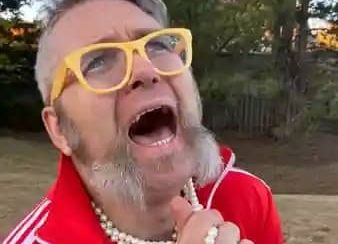
In an era where poetry is often pressured to explain itself, simplify its meanings, or compete for virality, Nicholas Ravniker stands deliberately apart. Midwest-based, deeply experimental, and profoundly committed to poetry as a daily discipline rather than a marketable product, Ravniker’s work resists closure. His poems invite difficulty, reward patience, and insist that ambiguity is not a weakness of language but its greatest strength.
With six published poetry books, decades of unpublished material, a background in journalism and academia, and deep roots in Midwestern literary communities, Ravniker represents a kind of poet rarely profiled in mainstream cultural conversations — one whose work is shaped as much by obsession and philosophy as by sound, ecology, and lived experience.
In this ICN-GHANA XCLUSIVE 9JA, poet and interviewer Irodili engages Ravniker in an extended, probing conversation that moves beyond biography into the deeper mechanics of creativity, influence, politics, and poetic meaning.
Early Beginnings: Poetry Before Purpose
Ravniker traces his first memory of poetry back to adolescence — a seventh-grade poem about “a flower that lost a fight.” He was barely 11 or 12 years old. Like many early works, the poem is lost, buried among countless drafts scattered across notebooks, folders, and plastic storage bins.
Yet for Ravniker, poetry was never motivated by ambition or even clarity of purpose.
“I don’t know if I have a particular motivation for writing poetry,” he admits. “Poetry has intrinsic value. Even if it didn’t give insight, promote creativity, or offer catharsis — I would still find value in it.”
For him, the act itself — marking words on paper, revising, rearranging — is a pleasure. A practice. A way of being attentive to the world.
But that attentiveness comes at a cost. Ravniker describes how his poetic awareness often fragments his presence, pulling him toward sounds, images, and abstractions even in everyday interactions.
Identity, Geography, and Community
Asked about his origins, Ravniker quickly deflates assumptions.
“I didn’t know Brits had a look,” he jokes, responding to speculation about a British background.
His ancestry spans Slovenia, Scotland, Holland, Poland, and Germany. Raised between Chicago and Milwaukee — primarily in Waukegan, Illinois, and Kenosha, Wisconsin — Ravniker’s sense of place is fluid but deeply Midwestern. Chicago, Boulder, New Orleans, Racine — each has felt like home at different times.
Now living in Racine, Wisconsin, he speaks passionately about the importance of local arts communities. Proximity to Chicago and Milwaukee has allowed him to remain connected to broader literary scenes, while cultivating grassroots networks of poets, musicians, and artists.
Community, for Ravniker, is not optional — it is formative.
Writing Every Day: Quantity, Failure, and Time
Ravniker writes poetry daily. As a result, the vast majority of his work remains unpublished — a reality he considers normal, even necessary.
For years, he followed poet Ted Berrigan’s advice to write three poems a day, regardless of quality.
“Sometimes the best way to meet that goal is to write a bad poem,” he says.
Boxes of poems dating back to the year 2000 remain unrevised. Others wait decades before finding their place in a collection. Poetry, he explains, often reveals its value only with time and distance.
One such long-term project is Polish Octaves, an invented poetic form using only the letters of an eight-letter word to construct eight-line poems, each line constrained by eight letters, syllables, or words. With over 100 written, the manuscript still resists completion.
Influence Beyond Literature
Ravniker’s early influences were not poets, but musicians — The Smashing Pumpkins, Pearl Jam, The Doors, Bob Dylan. These led him backward into Blake, Dylan Thomas, Baudelaire, Rimbaud, and eventually the Beats.
His formal education at Columbia College Chicago immersed him in both classical Western traditions and postmodern experimentation. Surrealism, Dada, Russian Futurism, Oulipo, the New York School, L=A=N=G=U=A=G=E poets, and Flarf all left lasting marks.
Equally influential were open mics, reading series, and conversations — the living culture of poetry in Chicago, Milwaukee, Kenosha, and Racine.
“There are too many influences to mention,” Ravniker concedes. “I’ve only skimmed the surface.”
Journalism, Politics, and Public Critique
Though no longer practicing journalism, Ravniker has written and edited for local newspapers, including the Kenosha News. His sharp political critiques, often shared publicly, stem not from professional obligation but civic frustration.
“They’re just the rantings of a disgruntled citizen,”* he says plainly.
His career has included teaching at multiple colleges, repairing bathtubs, and now exploring short plays and longer narrative forms. The throughline, however, remains language and thought.
Awards Without Illusions
Despite being described as “iconic” and “great,” Ravniker resists grand narratives of recognition. His most notable honor is the Robert Creeley Scholarship at Naropa University, where he earned his MFA. He also served as Writer-in-Residence for the City of Racine in 2023.
Beyond that, he shrugs.
“My poetry hasn’t been recognized in any official capacity.”
The absence of accolades does not trouble him.
Meaning, Ambiguity, and a Poem That Refuses Explanation
When questioned about a visually striking and enigmatic poem — one involving a scream, a woman’s name, monarch butterflies, and paradise — Ravniker offers not a simplification, but a meditation.
He describes his process as curatorial rather than declarative, relying on collage, chance, and found language. Meaning emerges not as instruction but as experience.
He connects the poem’s imagery to ecology, politics, spirituality, monarchy, Christ symbolism, pollinator plants, and philosophical ideas of nonduality — all while refusing to fix interpretation.
“I’m hesitant to impose my own meaning,” he explains. “The ambiguities work together to say something else.”
Paradise, in the poem, both invokes and erases itself. Desire creates what it seeks — and destroys it simultaneously.
Books, Collaboration, and Public Poetry
Ravniker has published six poetry books:
Imaginary Friends, Three Dirty Sunsets, Paranoise, Funky Tacos, How’s Things, and Dawn Pantomimes.
His collaborative work includes poetry workshops in Chicago Public Schools, youth camps, anthologies, chapbooks, and even poetry displayed on city buses in Racine.
For him, poetry belongs everywhere — not just on the page.
On Style, Difficulty, and Overthinking
Asked to choose a favorite poetic style, Ravniker refuses.
“That’s like asking my favorite color,” he says. “I’d be oversimplifying my own experience.”
What he values across styles is attention, thoughtfulness, and honesty. Difficulty, he insists, is not a flaw.
“I’d rather risk thinking too much than not thinking enough,” Ravniker concludes. “I put the ‘overt’ in overthinking.”
Summary
Nicholas Ravniker is a poet driven not by fame, but by obsession, curiosity, and a deep love of language. Writing since early adolescence, he approaches poetry as an ongoing practice — one that embraces ambiguity, experimentation, and intellectual rigor. Influenced by music, avant-garde traditions, and Midwest literary communities, his work explores impermanence, politics, ecology, and spirituality without settling for easy meanings. With six published books and decades of unseen work, Ravniker reminds us that poetry is not about answers — it is about learning how to pay attention.
ICN-GHANA l EXCLUSIVE 9JA