

Story by Eugene Nyarko Jnr. l Accra l Saturday, October 17, 2026 —
The Executive Director of Vision for Accelerated Sustainable Development Ghana (VAST Ghana), Mr Labram Musah Massawudu, has been re-elected to the International Board of Movendi International for a second term, extending his leadership role in the global movement for alcohol prevention and public health from 2026 to 2030.
His re-election took place during the 71st Session of the Movendi International World Congress, held in Kranjska Gora, Slovenia, from October 2 to 7, 2026.
Mr Musah, who first joined the board in 2022, will serve during a four-year period in which the international movement intends to strengthen alcohol control policies, challenge alcohol industry interference in policymaking and advance a proposed international framework for alcohol control.
The World Congress, the movement’s highest decision-making body, also adopted a new four-year strategic plan and elected the board that will lead the organisation towards 2030, as it marked its 175th anniversary.
In a statement issued on October 14, 2026, VAST Ghana said Mr Musah’s re-election reflected his longstanding involvement in public health advocacy, alcohol and tobacco control, taxation policy and community mobilisation in Ghana and internationally.
At the congress, Mr Musah also spoke on the topic, “Taking People Inside Change in Exposing Alcohol Industry,” presenting VAST Ghana’s work on monitoring and countering alcohol industry interference in Ghana.
Global alcohol control agenda
Commenting on his re-election, Mr Musah said he considered the new mandate a responsibility extending beyond his personal achievement to Ghana and the African continent.

“It is a privilege to be entrusted with this mandate again, and I take it as a mandate for Ghana and for Africa, not for myself,” he said.
He said the global conversation on alcohol had increasingly expanded beyond individual drinking habits to recognise the wider implications for public health and sustainable development.
According to him, alcohol must be considered in the context of cancer, other non-communicable diseases (NCDs) and the need to hold the alcohol industry accountable for its influence and practices.
He said the priority for the next four years would be to translate growing recognition of alcohol-related harm into enforceable obligations for governments in Ghana, across Africa and at the international level.
Under its Strategic Road Map for 2027–2030, Movendi International intends to advance a proposed Framework Convention on Alcohol Control, an international instrument that its advocates envisage could provide a coordinated global approach to alcohol-related harm.
The proposed framework draws inspiration from the World Health Organisation Framework Convention on Tobacco Control (WHO FCTC), which established an international framework for tobacco control.
The new road map identifies six areas of action: building a grassroots-driven people’s movement; advocating population-level alcohol policy solutions; exposing and counteracting alcohol industry interference; supporting communities from prevention to recovery; promoting alcohol-free environments; and shaping public discourse.
Two priorities underpin the strategy.
The first is to strengthen the movement by equipping member organisations, developing communities of practice and establishing regional hubs of excellence, with young people and people with lived experience expected to play leading roles.

The second is to ensure that communities affected by alcohol-related harm have a stronger voice in international and national policymaking, including deliberations at the World Health Assembly, post-2030 development negotiations, human rights processes, regional institutions, national parliaments and local communities.
Africa’s alcohol policy challenges
VAST Ghana said Africa’s growing population, rapid urbanisation, expanding retail markets and digital advertising had made the continent an important market for alcohol industry expansion.
The organisation expressed concern that weak or inadequately enforced alcohol policies in some countries could leave communities, particularly young people, exposed to alcohol-related harm.
It said Ghana’s experience was significant because the country had a National Alcohol Policy and a civil society movement capable of advocating stronger public health protections and holding policymakers and industry actors accountable.
The statement, however, argued that having a policy framework was not sufficient without effective implementation, enforcement and sustainable financing.
VAST Ghana also highlighted the wider social and economic consequences of alcohol consumption, including road traffic injuries, household expenditure, violence and the effects on children growing up in alcohol-affected homes.
It noted that the consequences extended beyond people who consumed alcohol, affecting families and communities.
The organisation called for public policy to account for these wider costs when assessing the economic implications of alcohol production, marketing, distribution and consumption.
Two decades of public health advocacy
Mr Musah’s re-election follows more than two decades of involvement in public health policy advocacy, taxation reforms, community mobilisation and efforts to strengthen accountability among industries whose products can contribute to health-related harm.
According to VAST Ghana, his work has included advocacy for the passage and implementation of tobacco control measures under the Public Health Act, 2012 (Act 851), and the Tobacco Control Regulations, 2016 (L.I. 2247).
He also played an instrumental role in the adoption of Ghana’s National Alcohol Policy in 2016, which was launched in 2017.
His work has included leadership and coalition-building within organisations promoting public health advocacy in Ghana and across Africa.
These include the NCD Alliance Ghana, Africa NCDs Network, Ghana Alcohol Policy Alliance and West Africa Alcohol Policy Alliance.
Through his involvement in national and international advocacy networks, Mr Musah has also supported campaigns addressing tobacco control, non-communicable diseases and the protection of public policymaking from commercial interference.
As National Coordinator of NCD Alliance Ghana, he has led civil society accountability efforts relating to national commitments on non-communicable diseases, including their integration into universal health coverage.

Role in taxation reforms
Another major component of his work has been the generation of Ghana-specific evidence to support public health policies and taxation reforms.
VAST Ghana cited reports including Alcohol Use in Ghana: A Situational Analysis and The Economics of Tobacco Taxation in Ghana, which have contributed to discussions on alcohol and tobacco regulation.
The organisation also highlighted Mr Musah’s advocacy surrounding the Excise Duty Amendment Act, 2023 (Act 1108), and engagements with the Ministry of Finance, Ghana Revenue Authority, Ministry of Health, Food and Drugs Authority, and parliamentary select committees responsible for health and finance.
According to the statement, these engagements contributed to a major excise tax reform in 2023.
The reforms increased excise duties on alcohol and sugar-sweetened beverages and introduced a hybrid excise system for tobacco products.
VAST Ghana said health-based taxation could help discourage the consumption of harmful products while supporting efforts to address the growing burden of non-communicable diseases.
Mr Musah has also contributed to industry accountability initiatives, including the Ghana Tobacco Industry Interference Index reports published in 2020, 2021, 2023 and 2025.
His work has further included contributions to civil society reporting on the implementation of the WHO Framework Convention on Tobacco Control in Ghana and tobacco industry mapping and monitoring.
During the COVID-19 pandemic, he advocated protection for people living with non-communicable diseases and restrictions on the sale and promotion of tobacco and alcohol.
Under his leadership, VAST Ghana has extended alcohol and tobacco control advocacy and NCD education to communities, schools and faith-based settings.
Calls for stronger enforcement in Ghana
Looking ahead, VAST Ghana said the immediate priority was to use the current legislative opportunity to strengthen alcohol control and improve the implementation of existing public health policies.
The organisation identified the passage and enforcement of alcohol control regulations, full implementation of the National Alcohol Policy and the application of health-based taxation to alcohol and tobacco as key areas requiring attention.
It also called for measures to regulate the availability and marketing of alcohol, address emerging nicotine products and protect policymaking from commercial interference.
Another priority is to earmark a portion of health-related tax revenue for non-communicable disease prevention and the Ghana Medical Trust Fund.
Mr Musah said Ghana had already made significant progress in generating evidence and building a civil society movement around alcohol and tobacco control, but argued that stronger implementation was now necessary.
“Ghana has done the hard part of building evidence and building a movement. What remains is enforcement and financing,” he said.
He added that he wanted Ghana to move beyond having an alcohol policy on paper to implementing measures that would influence the availability and marketing of alcohol products and the choices presented to young people.
“In the next four years I want Ghana to move from having a good alcohol policy on paper to having one that changes what is on the shelves, what is on the screens, and what young people are offered,” he stated.
Mr Musah said he would pursue the same agenda across Africa and internationally through collaboration with the Movendi International board, member organisations and relevant public health institutions.
Organisations welcome re-election
The re-election has also attracted commendation from public health advocates in Ghana, who say it provides an opportunity to strengthen the country’s contribution to international alcohol and tobacco control efforts.
The Programmes Manager of NCD Alliance Ghana, Mr Solomon Foli, said the development reflected confidence in Mr Musah’s leadership and the public health advocacy work undertaken in Ghana.
“The re-election of Labram Musah to the International Board of Movendi International is a vote of confidence not only in him, but in what Ghana has built,” he said.
He added that Mr Musah returned to the international decision-making table with experience in evidence-based policy advocacy and a record of work that Ghana could draw upon.
For his part, the Research and Policy Advocacy Manager of VAST Ghana, Mr Godfred Tweneboa Kodua, said the re-election reinforced the connection between local public health campaigns and international policy ambitions.
“Our work on alcohol and tobacco control has always been local at its root and global in its ambition,” he said.
He noted that the renewed international role also raised expectations for the organisation’s domestic advocacy efforts.
“It also raises the bar for us at home: the campaigns we run here will now be judged against the best practice in the world,” he added.
About Movendi International
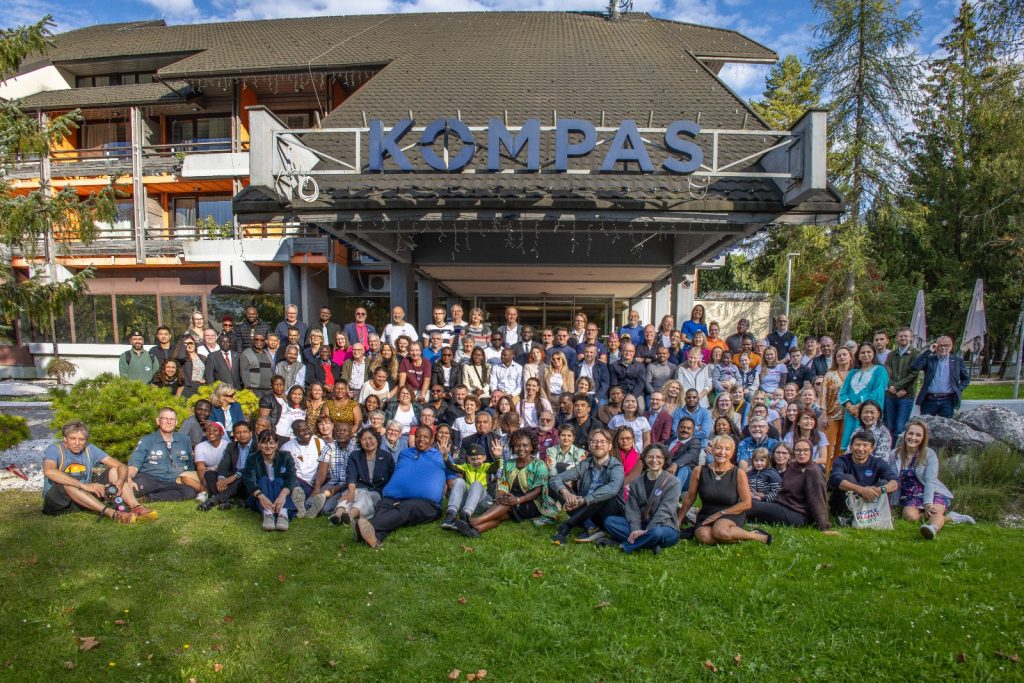
Movendi International is a global social movement focused on development through alcohol prevention, with a presence across Africa, Asia-Pacific, the Americas and Europe.
The organisation says it brings together approximately half a million people and builds on more than 175 years of community action.
Its work centres on preventing alcohol-related harm, promoting healthier communities and advocating policies that address the public health and social consequences of alcohol consumption.
With Mr Musah’s re-election, VAST Ghana says it intends to strengthen its contribution to the movement’s international agenda while continuing to advocate stronger alcohol and tobacco control measures, effective enforcement and sustainable financing for public health in Ghana.