
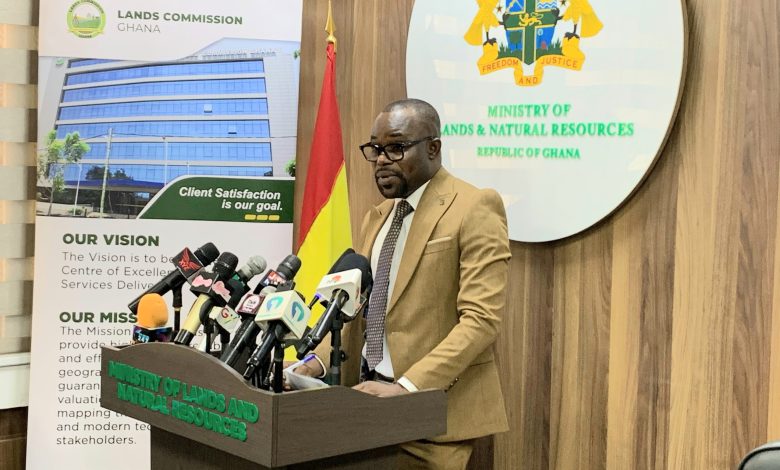
SLAP targets nationwide digitisation, district-level services and improved revenue mobilisation
Story by Eugene Nyarko Jnr. l Accra l Tuesday, October 27, 2026 —
The Lands Commission has reduced the turnaround time for official land searches from approximately one month to an average of seven working days following improvements to its digital land administration services.
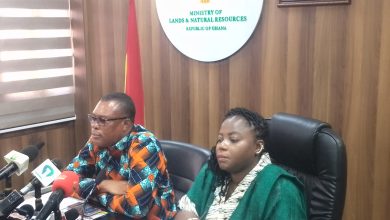
The Deputy Executive Secretary of the Lands Commission, Prof. Anthony Owusu Ansah, disclosed this during a media briefing at the Ministry of Lands and Natural Resources in Accra, where he outlined the Commission’s progress in implementing reforms to improve land administration, service delivery and revenue mobilisation.
He said the Commission was expanding the Enterprise Land Information System (ELIS), a digital platform designed to improve the efficiency, accessibility and effectiveness of land administration services.
As of September 2026, ELIS had been enhanced in the Greater Accra Region and extended to nine additional regions: Eastern, Western, Volta, Western North, Oti, Bono East, Savannah, North East and Ahafo.
Prof. Owusu Ansah said the platform had enabled members of the public to apply for official land searches online, reducing the need for physical visits to the Commission’s offices.
He announced that the Commission planned to launch ELIS at its Ashanti Regional Office before the end of November 2026, with full operationalisation across all regional offices expected by the end of 2027.
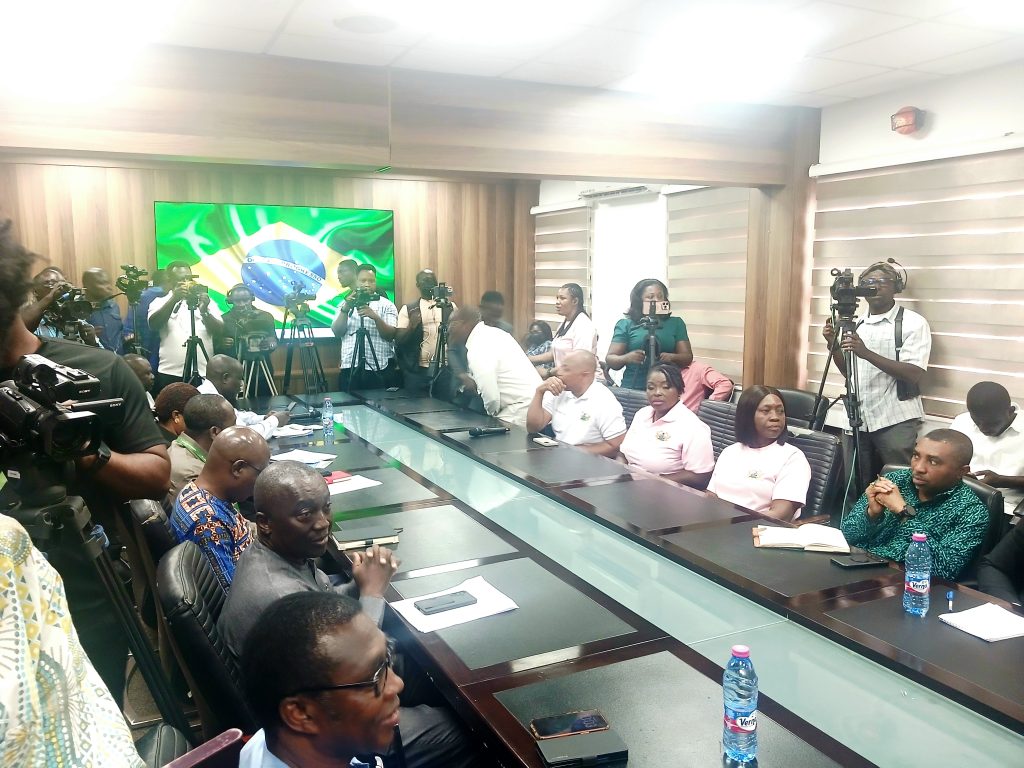
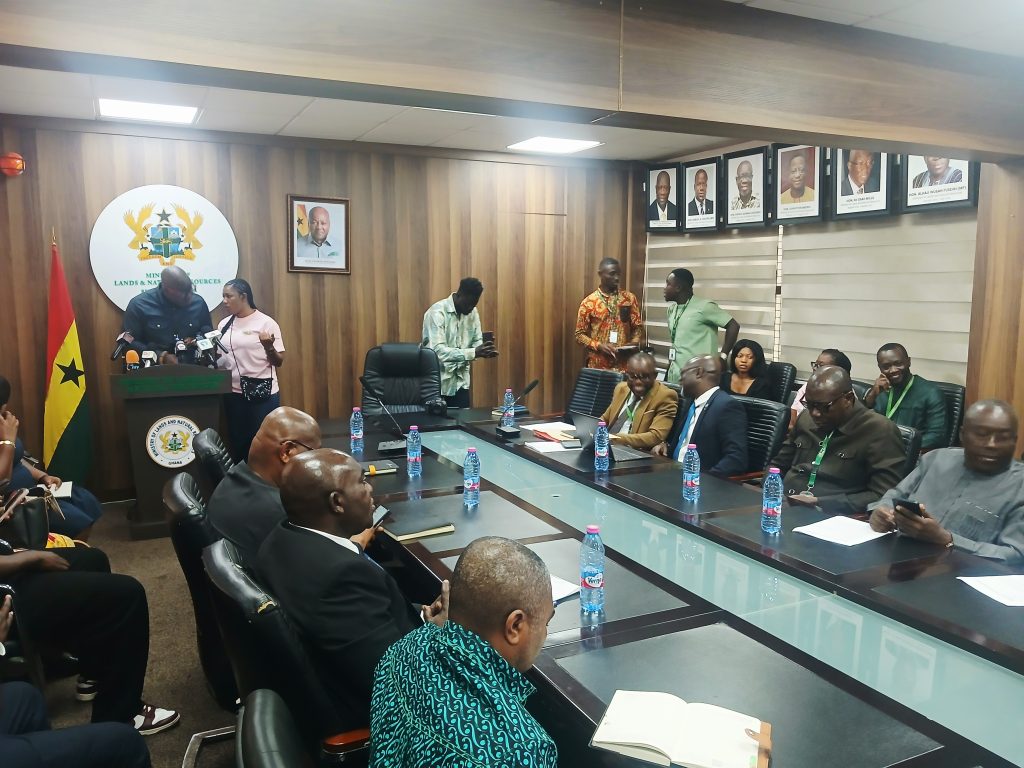
The briefing, organised under the auspices of the Ministry of Lands and Natural Resources, forms part of an initiative to provide the public with updates on the performance of agencies under the Ministry and create opportunities for media engagement on their programmes and activities.
In his opening remarks, the Deputy Minister of Lands and Natural Resources, Hon. Dr. Alhaji Yusif Sulemana, said the initiative was intended to strengthen transparency and accountability by allowing agencies to explain their progress and respond to questions from journalists.
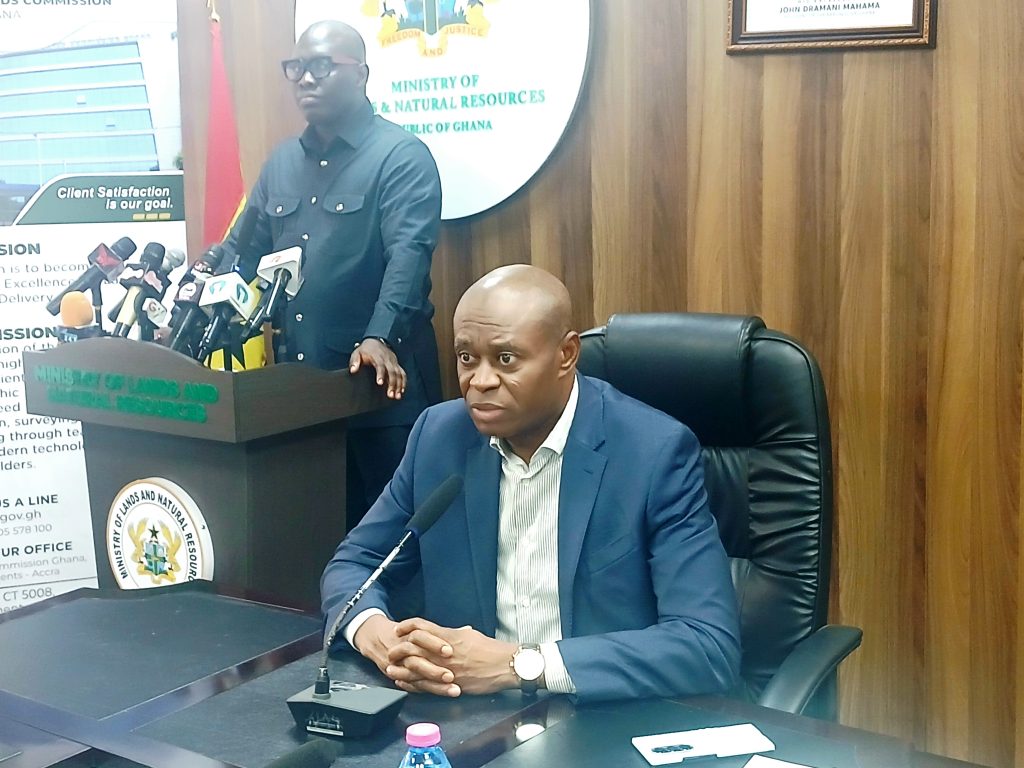
He said the Ministry considered it necessary to provide Ghanaians with relevant information on the work of its agencies and expressed confidence that the media would help communicate the information to the public.
New National Land Policy expected in 2027
Prof. Owusu Ansah said the Lands Commission, in collaboration with the Office of the Administrator of Stool Lands, was facilitating the review of the 1999 National Land Policy and the preparation of a new policy to reflect current national priorities and emerging land governance challenges.
He said an inception workshop held on October 6 and 7, 2026, brought together traditional authorities, metropolitan, municipal and district assemblies, ministries, departments and agencies, civil society organisations, academia, development partners, the media and other stakeholders.
Further consultations, he said, would be undertaken as the drafting process progressed to ensure that the new policy was inclusive and responsive to the needs of stakeholders.
The Commission anticipates completing the review in 2027.
He also disclosed that the process towards the enactment of regulations to facilitate the implementation of the Land Act, 2020 (Act 1036), was at an advanced stage.
According to him, revised draft regulations had been forwarded to Parliament for consideration and approval following consultations with key stakeholders, including Parliament’s committee responsible for subsidiary legislation.
The Commission expects parliamentary approval before the end of 2026 to pave the way for the effective operationalisation of the relevant provisions of the Act.
36 district offices being prepared
As part of efforts to decentralise land administration services, Prof. Owusu Ansah said the Commission was working to establish offices in selected metropolitan, municipal and district assemblies.
He explained that a needs assessment had been conducted to identify suitable locations and determine the requirements for establishing the offices.
Following engagements with selected assemblies, some of which had provided accommodation, the Commission was working to renovate and furnish 36 facilities for operational use.
The offices are expected to bring selected land administration services closer to residents and reduce the need for clients to travel to regional offices to conduct transactions.
The Commission is also investing in infrastructure to improve its operations and service delivery.
Prof. Owusu Ansah said construction of regional office buildings in the Savannah, Upper East and Western regions was ongoing, with an average completion rate of approximately 50 per cent at the time of the briefing.
He added that construction of the Central Regional Office, which had encountered initial challenges, had resumed following the resolution of the issues, with the projects expected to be completed by 2027.
The final phase of the Greater Accra Regional Office Complex had also been completed, while procurement processes were underway to prepare the facility for commissioning and operationalisation.
The complex will accommodate the Greater Accra Client Services and Assets Unit.
For the Tema office, he said the Commission had received commitment authorisation from the Ministry of Finance to continue construction, with procurement processes underway to engage a contractor for the next phase.
Ground rent collection reaches GH¢40.7 million
The Lands Commission recorded GH¢40.7 million in ground rent collections as of August 2026, representing approximately 90.4 per cent of its annual target of GH¢45 million.
Prof. Owusu Ansah said the amount exceeded the GH¢32 million collected in 2025, reflecting progress in efforts to improve revenue mobilisation from state-invested lands.
He disclosed that the Commission had developed a digital platform to strengthen ground rent administration, improve record management, monitor payments and facilitate follow-up on outstanding obligations.
The platform was being piloted in selected estates in the Greater Accra Region.
He reminded lessees of state-invested lands that they were required to pay ground rent annually in accordance with the terms of their leases, irrespective of whether they had received demand notices from the Commission.
He said the Commission had initiated legal procedures against lessees who had defaulted in their payments, with the measures expected to be fully rolled out in 2027.
He urged defaulters to settle their outstanding obligations to avoid potential legal proceedings and other consequences under applicable laws.
Lessees were also encouraged to visit the Commission’s official website to complete an online form to facilitate the updating of records.
Those whose leases had expired were advised to contact the Commission to initiate renewal processes where applicable.
51 reference stations established
Prof. Owusu Ansah further announced that 51 continuously operating reference stations had been established and observed as of September 2026 as part of efforts to develop a homogeneous national geodetic reference network.
The initiative, being undertaken in collaboration with the Lands Commission, the relevant surveying professional association and a private-sector partner, is expected to improve the accuracy and reliability of surveying and geospatial data.
He said the network would support cadastral surveying, land administration, infrastructure development and spatial planning across the country.
The Commission also remained involved in land acquisition for public infrastructure and strategic national development projects, including preparing cadastral plans and conducting interim and final evaluations to determine compensation for affected land interests.
SLAP targets comprehensive land administration reform
In a related presentation, Surveyor Jones Ofori Boadu, Project Coordinator of the Strategic Land Administration Reform Project (SLAP), outlined plans to modernise Ghana’s land administration system through digitisation, improved mapping, decentralisation and institutional integration.
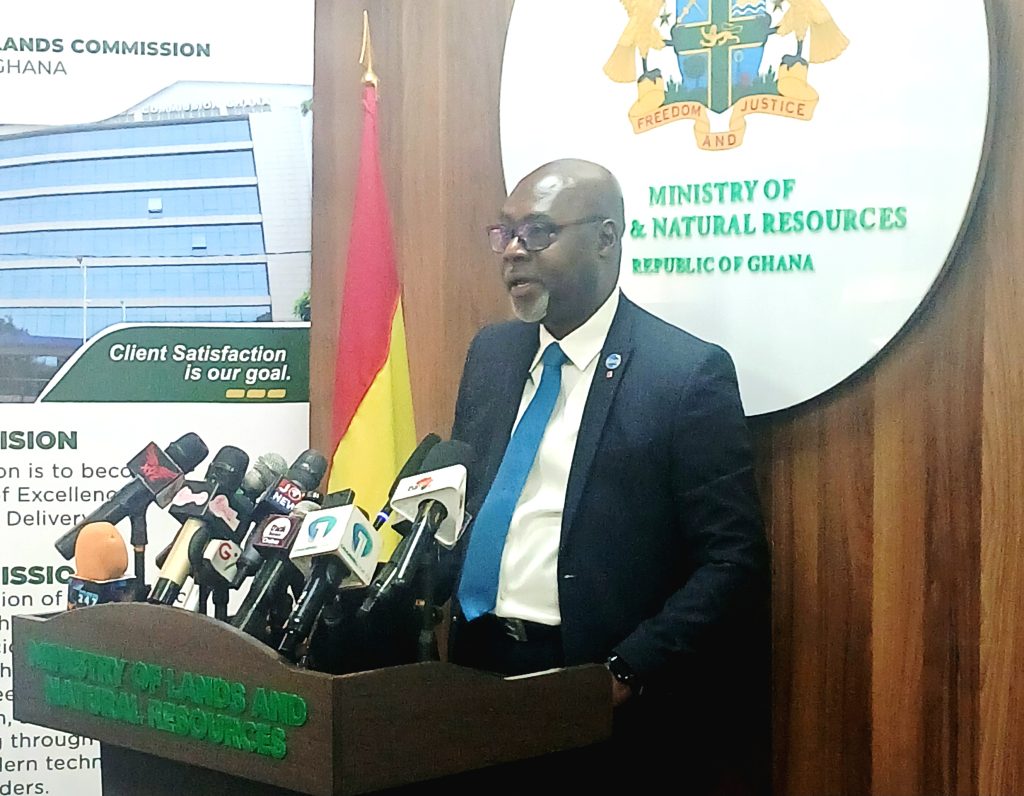
He said the project was designed to address longstanding challenges, including fragmented land agencies, manual records, outdated maps, disjointed service delivery, slow processing of documents, poor record tracking and inadequate revenue mobilisation.
According to him, previous Land Administration Projects had supported institutional reforms and mapping activities, but the geographical coverage remained limited.
He cited mapping coverage of approximately 25,000 square kilometres under the first project and 29,000 square kilometres under the second, compared with Ghana’s total land area of about 239,000 square kilometres.
He also noted that the country’s last topographic maps were produced in 1974, highlighting the need for updated national mapping.
Mr. Ofori Boadu explained that SLAP was intended to complete and scale up earlier reforms, including the establishment of the Lands Commission under the Lands Commission Act, 2008 (Act 767), the passage of the Land Act, 2020 (Act 1036), and the introduction of ELIS.
He said that although the Commission’s customer service access unit had improved front-office service delivery, many back-office processes and records remained manual.
He estimated that approximately 10 per cent of the records had been moved into the digital environment, underscoring the scale of work required.
Eight components to drive reforms
Mr. Ofori Boadu said SLAP comprised eight components designed to transform land administration into a modern, transparent, decentralised and digitally enabled public service.
The components cover improved national mapping and spatial data infrastructure; digitisation of the Lands Commission and the Office of the Administrator of Stool Lands; decentralisation of services to district level; systematic land titling and a national cadastre; the establishment and strengthening of customary land secretariats; customary and administrative boundary demarcation; the development of land banks for commercial agriculture; and capacity building for project staff.
He said the proposed national spatial data infrastructure would enable government agencies to share data instead of independently collecting similar information, thereby reducing duplication and the cost of data collection.
The digitisation programme would involve scanning, indexing, barcoding and digitally archiving paper records, maps and notebooks to improve retrieval and reduce cases of missing files.
The project would also automate business processes, improve ground rent collection and integrate the operations of the Lands Commission and the Office of the Administrator of Stool Lands.
A national cadastre, he explained, would combine spatial information with details about individual land parcels, including ownership, size and other relevant attributes.
This is expected to improve land information management, strengthen legal certainty and support more efficient title registration.
Government revenue to finance project
On financing, Mr. Ofori Boadu said the government had changed the revenue-retention arrangement for the Lands Commission, allowing the Commission to release all the revenue it generated, with 67 per cent ring-fenced to support the SLAP financing arrangement.
He projected revenue of US$1.8 billion over the five-year period to 2030 and cited a projected figure of US$203 million for 2026.
The project’s immediate priorities include digitising and archiving records, assessing and designing land information systems, re-engineering business processes, automating ground rent collection and integrating the systems of the beneficiary institutions.
He said the Project Management Unit was established on July 1, 2026, and work had begun on the project implementation manual, terms of reference for the eight components and the 2026 work plans.
Training had also been undertaken for staff on financial management and procurement procedures.
The project team had applied to the Ministry of Finance for commitment authorisation and was awaiting a response.
Mr. Ofori Boadu said the reforms were expected to improve access to land administration services, strengthen tenure security, enhance revenue mobilisation and increase public confidence in the management of land records.
The Lands Commission said the broader objective was to establish a modern, efficient and responsive land administration system capable of supporting investment, sustainable development and national prosperity.