
Story by Eugene Nyarko Jnr. l Accra City Hotel, Accra l May 15, 2026
Ghana has unveiled an ambitious climate action and development framework requiring an estimated investment of $53.3 billion over the next decade as part of its updated Nationally Determined Contribution (NDC) under the Paris Agreement.
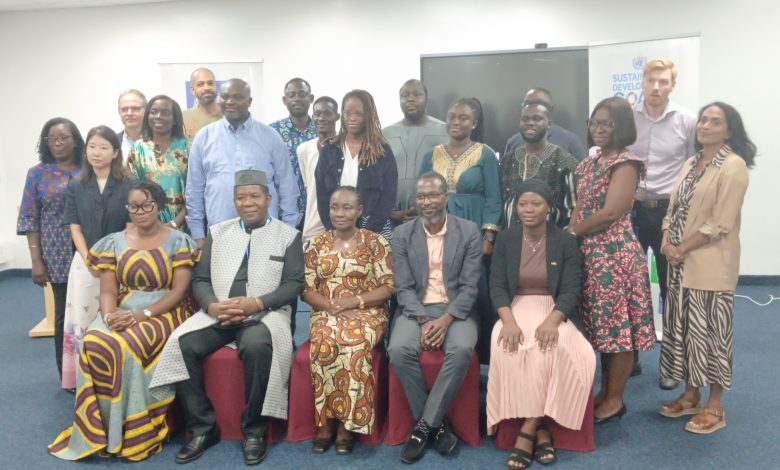
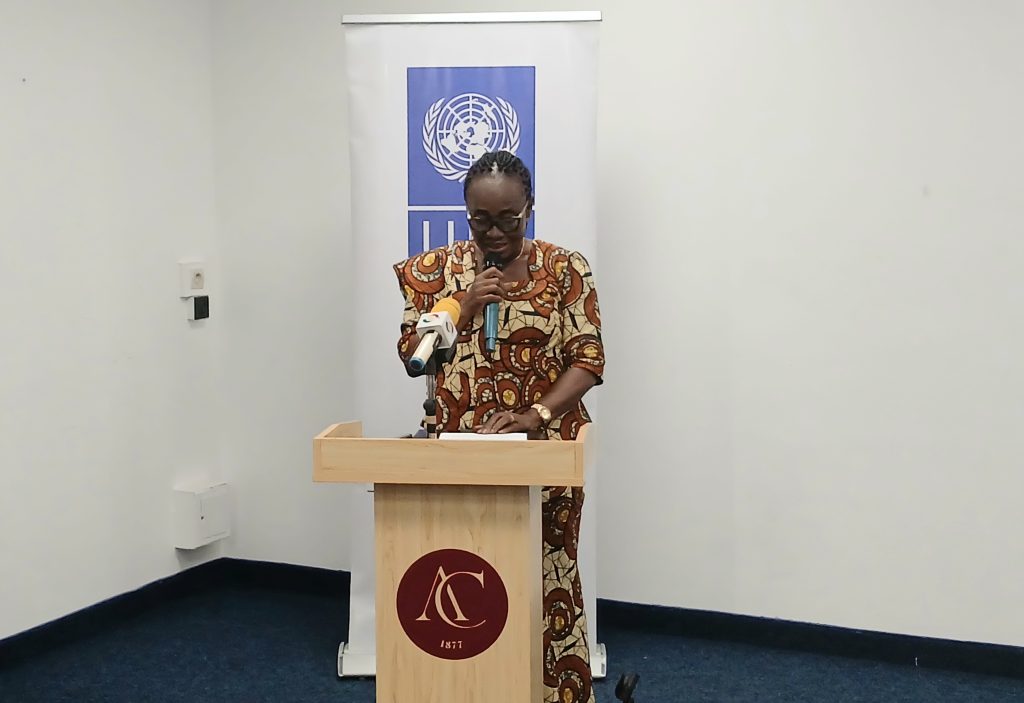
The announcement was made by the Chief Director of the Ministry of Environment, Science and Technology (MEST), Madam Suweibatu Adam, during a Development Partner Institutions Consultation Workshop held at the Accra City Hotel in Accra on Friday.
Addressing representatives of the United Nations, bilateral and multilateral development partners, climate finance institutions and other stakeholders, Madam Adam described the 2025 updated NDC as a “historic milestone” in Ghana’s climate journey and a major shift from isolated climate projects to an integrated national strategy for climate-resilient and low-carbon development.
She explained that the framework, which spans the period from 2025 to 2035, is built around five interconnected strategic pillars aimed at transforming Ghana’s economy while addressing climate change.
According to her, the first pillar focuses on a comprehensive national energy transition, including the development of 1,000 megawatts of clean nuclear baseload power, more than 1,600 megawatts of renewable energy capacity, green hydrogen development and clean cooking solutions.
The second pillar seeks to modernise sustainable transport and infrastructure through a $4.5 billion railway expansion project, the development of an inner-city light rail system in Accra and the deployment of about 1.225 million electric vehicles nationwide.
Madam Adam said the third pillar would drive the development of a circular economy for industry and waste management by transforming sectors such as steel and cement while promoting advanced recycling, waste-to-energy biodigesters and methane capture systems at engineered landfill sites.
She noted that the fourth pillar would leverage nature-based solutions and carbon removal technologies, building on the success of the Ghana Cocoa Forest REDD+ Programme, which has already generated more than $21.7 million in results-based payments.
The fifth pillar, she added, centres on a national adaptation and resilience framework involving a $9.648 billion climate-resilient water infrastructure programme, a $3.155 billion blue economy and coastal resilience initiative to protect Ghana’s 550-kilometre coastline, and the establishment of a climate-resilient health system.
Madam Adam stressed that the investment required for the implementation of the framework should not be viewed as a burden but rather as a major opportunity for economic transformation.
“This is a blueprint for hundreds of thousands of green jobs, enhanced public health, food and water security, and a competitive, decarbonised industrial base,” she stated.
She acknowledged that the government alone could not finance the implementation of the NDC and appealed to development partners for sustained technical and financial support.
Madam Adam assured stakeholders that the government would maintain high standards of transparency, accountability and results-oriented implementation through robust monitoring, reporting and verification systems.
She also pledged continuous engagement with development partners throughout the implementation period to ensure effective collaboration and inclusive outcomes, particularly for vulnerable communities.
The workshop formed part of Ghana’s efforts to engage international partners ahead of the formal submission of the updated NDC framework to the United Nations Framework Convention on Climate Change (UNFCCC).