
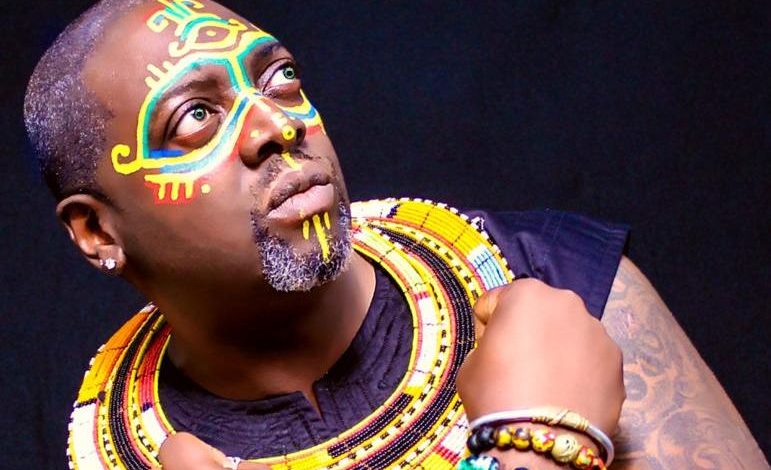
One-on-One with Peter Armand Boyo: The Lion Who Tells His Own Story
The Pan-African actor, filmmaker, and cultural advocate reflects on African storytelling, cinema, and identity on the global stage.
Introduction
African elders say that until the lion learns to write, every story will praise the hunter. In this ICN-GHANA Exclusive interview, the lion takes the pen.
In an intimate, far-reaching conversation, Irodili C. Iroegbu sits down with Peter Armand Boyo—Pan-African actor, filmmaker, Peace Ambassador, cultural activist, and philanthropist—to explore the evolution of African storytelling across Nollywood, Ghallywood, and Hollywood.
From his childhood appearance in Children’s Time to his defining adult role in The Siege, Boyo’s journey echoes another African truth: the river that forgets its source will surely run dry. Grounded in Nigerian heritage and refined by global experience, he embodies a new generation of African creatives—artists who honor tradition while engaging the world on equal terms.
What follows is not just an interview, but a testimony of identity, purpose, and cultural ownership.
Roots, Memory, and the Making of a Storyteller
Irodili: Your artistic journey began in childhood. How did growing up in Nigeria shape your passion for storytelling and performance?
Peter Armand Boyo:
I wouldn’t say I grew up in only one place. My formative years were split between the UK, Nigeria, and the United States, and that experience shaped me deeply as a storyteller. From a young age, I was surrounded by strong characters—humor, struggle, faith, resilience. Stories were everywhere: in family conversations, music, religion, the streets, and everyday life.
Growing up across these environments teaches you to observe closely. You learn to read people, to understand emotions without words. Storytelling wasn’t something I consciously chose early on; it was something I grew into because it was already embedded in how life was lived around me.
Becoming Pan-African Across Borders
Irodili: You’ve built a career that spans Nigeria, Ghana, and Hollywood. How has this shaped your identity as a Pan-African creative?
Boyo:
Nigeria grounded me in culture and emotionally rich storytelling. The UK taught me structure and discipline. The United States expanded my global outlook and reinforced that stories can travel across borders without losing their soul.
Working across Nigeria, Ghana, and Hollywood made me think globally while staying rooted in my African identity. Ghana, in particular, showed me the power of shared African experiences beyond national lines. Hollywood taught me scale and standards—but also that authenticity is non-negotiable. African stories are universal when told honestly, creatively, and with heart.
Nigerian Culture as Cinematic DNA
Irodili: Which aspects of Nigerian heritage most influence your approach to cinema?
Boyo:
Nigerian culture is in my bones. The humor—how people laugh through hardship—has taught me to find light even in dark moments. Spirituality and resilience shape emotional depth. Community is everything. Our stories are rarely about one person alone; they are about family, relationships, and collective experience.
That blend of humor, faith, resilience, and community isn’t just influence—it’s the heartbeat of why I make films.
Defining Moments and Global Ambition
Irodili: What early experiences strengthened your resolve to pursue film globally?
Boyo:
Acting in front of people at six years old—even passing out instead of pretending to faint—ignited something in me. The reaction from the audience was electric. I never stopped wanting to perform.
Later, studying cinematography in New York opened my eyes to film as a global language. I realized that if stories could move people there, they could move people anywhere. That’s when I knew my voice could exist comfortably from Nigeria to Hollywood.
Misconceptions About African Storytelling
Irodili: What does the world still misunderstand about African storytelling?
Boyo:
That it’s niche or exotic. African stories are universal—love, loss, ambition, resilience. Another misconception is that African cinema is simplistic. In truth, it’s layered, inventive, and bold.
My work aims to prove this—not through argument, but through excellence. When African stories are told authentically, assumptions dissolve on their own.
Nollywood and Global Cultural Power
Irodili: How has Nollywood’s global success shaped Africa’s cultural identity?
Boyo:
Nollywood being the second-largest film industry in the world is massive. It represents cultural pride and creative confidence. Our films export humor, values, and lived realities. They show Africa as innovative, resilient, and expressive—on our own terms.
Craft, Challenge, and Transformation
Irodili: Which role challenged you the most creatively?
Boyo:
Greed and Poverty. I had to learn pidgin English on set and inhabit the life of a poor carpenter in the ghetto—completely outside my reality. It demanded deep psychological and emotional work. That role reminded me that acting is about empathy, research, and total commitment.
Discipline, Legends, and Learning
Irodili: What lessons stayed with you from working with legends like Denzel Washington and Bruce Willis?
Boyo:
Preparation. Discipline. Respect for the craft. Watching Denzel showed me how every pause matters. Bruce Willis taught me presence and timing. Talent alone isn’t enough—it’s professionalism and humility that sustain longevity.
Film as Peacebuilding
Irodili: As a Peace Ambassador, how do you use creativity for conflict resolution?
Boyo:
Through film, storytelling, and community work. Via the Derago Rainbow Chocolate Cupcakes Foundation, we supported families and children during COVID-19, combining empathy with action. Storytelling must be paired with real engagement. Art inspires—but action heals.
Pan-African Unity and Cultural Diplomacy
Irodili: How does your work strengthen Pan-African unity today?
Boyo:
By highlighting shared experiences while respecting diversity. Collaboration across borders—Nigeria, Ghana, beyond—helps Africans see themselves reflected and recognized. Unity grows when we tell our stories boldly and together.
Youth, Policy, and the Creative Economy
Irodili: What opportunities exist for African youth, and what should governments do?
Boyo:
Ownership is key—of content, platforms, and intellectual property. Governments must recognize creative industries as economic drivers, provide funding, protect IP, and build infrastructure. When policy supports creativity, culture becomes capital.
Advice to the Next Generation
Irodili: What advice would you give young African creatives?
Boyo:
Take your craft seriously. Be disciplined. Be patient but bold. Protect your identity. The journey isn’t linear—resilience matters more than validation. Success is about impact, not just visibility.
Cultural Diplomacy and Shared Missions
Irodili: How do you view Dr. Jamezany James’ role in Nollywood’s global diplomacy?
Boyo:
Dr. James understands film as both art and diplomacy. His work strengthens Nollywood’s international positioning. In Pan-African work, it’s not about competition—it’s about contribution. I respect his vision and commitment.
Beyond Acting
Irodili: Apart from acting, what other ventures shape your contribution?
Boyo:
Filmmaking, mentorship, fashion advocacy, philanthropy, and cultural activism. From FESTAC Africa to fashion collaborations and youth mentorship, everything I do is about building platforms, nurturing talent, and ensuring African creativity is visible and respected.
Closing Note
Peter Armand Boyo’s story affirms a powerful truth: Africa no longer waits to be interpreted—it speaks for itself. Through film, fashion, philanthropy, and fearless storytelling, he stands among the lions who now write their own histories.
And in doing so, he ensures the hunter’s story is no longer the only one told.
Interview by Irodili C. Iroegbu
ICN-GHANA | XCLUSIVE 9JA