

By Eugene Nyarko Jnr. | Accra
The Ghana Police Service is set to undertake the largest cadet admission exercise in the history of the Police Academy as authorities activate both residential and non-residential training models to accommodate more than 700 cadet officers under Course 54.
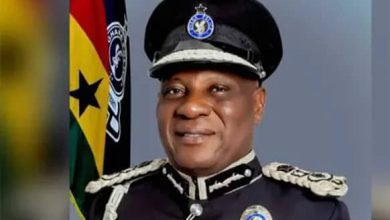
The initiative, being spearheaded by the Inspector-General of Police, Christian Tetteh Yohuno, together with the Police Management Board (POMAB), is aimed at addressing accommodation challenges while ensuring that qualified Chief Inspectors are not denied opportunities for career advancement.
According to the Police Administration, the decision forms part of broader reforms intended to open up senior leadership opportunities for officers who have stagnated in their ranks for years due to limited admission spaces at the academy.
The administration dismissed claims that the arrangement was unusual, insisting that the use of both residential and non-residential training systems had been adopted in the past whenever cadet numbers exceeded available accommodation capacity.
Historical records, it said, show that under former IGP Paul Tawiah Quaye in 2011, similar arrangements were implemented. It also noted that former IGP P. K. Acheampong distributed cadet officers across training institutions in Accra, Winneba and Pwalugu to ease accommodation pressure, despite lower admission figures at the time.
“The immediate past IGP also employed both residential and non-residential models during cadet training exercises. So there is nothing strange about the current arrangement,” a source close to the administration disclosed.
The administration accused sections of the public and media of attempting to create a false impression that the arrangement was problematic, stressing that many officers within the service had rather welcomed the move as a progressive intervention.
“This administration believes opportunities must be created for qualified officers and not restricted because of accommodation limitations,” the source added.
The Police Administration explained that globally, police institutions were increasingly moving away from fully residential training systems, particularly for career progression programmes, which could effectively operate through a blend of residential and non-residential models.
Statistics from previous intakes highlighted the scale of the current expansion. Course 51 admitted 308 officers, Course 52 recorded 344 officers, while Course 53 admitted 432 officers.
Under the current administration, however, all 7,500 Chief Inspectors in the service were allowed for the first time to sit for the Police Academy Entrance Examination.
Following a presidential amnesty granted to candidates who scored between 50 and 52 marks, in addition to those who obtained between 53 and 75 marks, a total of 1,063 officers qualified for admission.
The administration said additional officers promoted as under-cadets, as well as personnel who distinguished themselves in operational and crime-fighting duties, had also been recommended for admission.
Authorities further assured officers that all qualified personnel placed under Courses 54, 55 and 56 would eventually undergo cadet training.
To support the massive intake, additional accommodation facilities have reportedly been secured within Accra, while officers residing within the Police Depot and Tesano enclaves would be allowed to participate as non-residential cadets while fully engaging in all training activities.
The administration said transportation and logistical arrangements were also being put in place to ensure convenience throughout the training period.
In another intervention, the IGP has approved the expansion of academy staff strength, including kitchen staff and support personnel, to adequately cater for the welfare and operational demands of the enlarged intake.
The administration added that fully furnished lecture halls and training facilities had been prepared to ensure effective instruction, discipline and a conducive learning environment during the six-to-nine-month programme.
“At the end of the day, we will not compromise standards as adequate preparations have been made to ensure efficiency, discipline and high-quality training delivery,” it stated.
Meanwhile, the Police Administration strongly rejected allegations of bribery, examination malpractice and irregularities surrounding the recent entrance examinations.
According to the administration, no candidate had officially petitioned the service over the results, insisting that allegations circulating in sections of the media were baseless attempts to undermine the credibility of what it described as a transparent and merit-based process.
“Such allegations have no grounds and should be treated with the contempt they deserve,” the administration stressed.
As preparations intensify for the historic intake, several officers and stakeholders are calling on the public to support what they describe as one of the boldest and most transformational reforms introduced by the current police leadership.