


Story by Eugene Nyarko Jnr. l Accra l Wednesday, October 28, 2026 —
Ghana is targeting an increase in locally manufactured medicines from 30 per cent to 60 per cent of national demand under a new pharmaceutical manufacturing policy aimed at reducing import dependence, attracting investment and creating jobs.
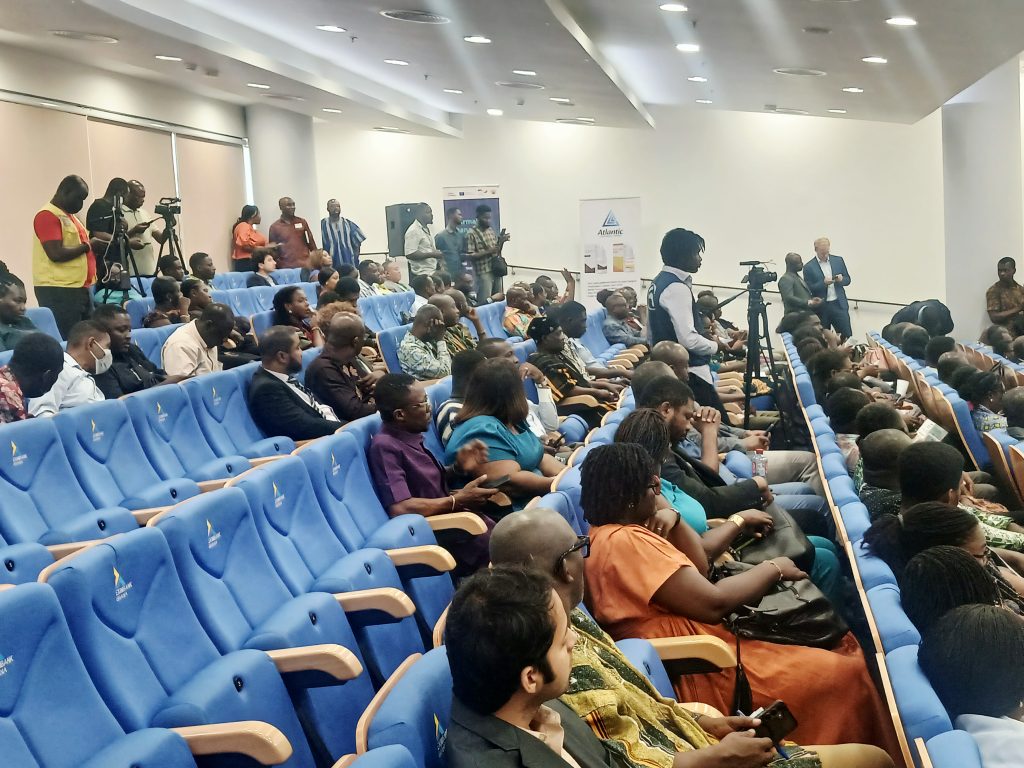
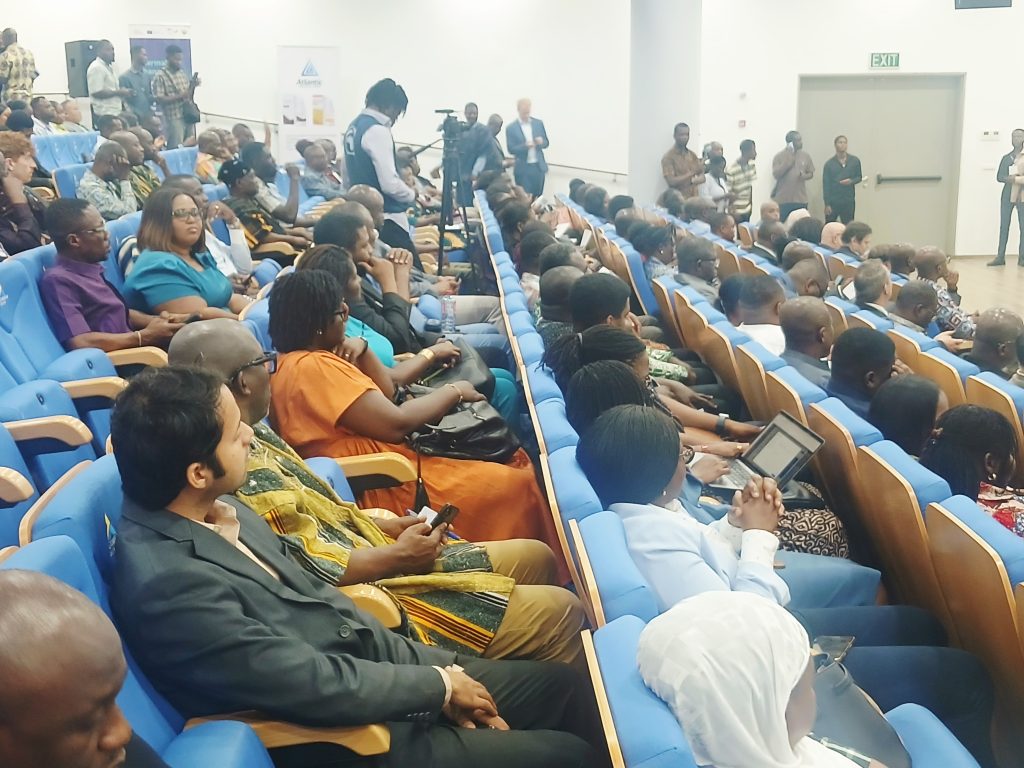
The Minister of Trade, Agribusiness and Industry, Elizabeth Ofosu-Adjare, announced this at the launch of the Ghana Pharmaceutical Manufacturing Policy (GPMP) at the Ghana Exim Bank Conference Auditorium at Africa Trade House in Accra on Wednesday, October 28, 2026.
She said the policy, approved by Cabinet in July 2026, provides a coordinated framework to strengthen local pharmaceutical production, improve competitiveness and position Ghana as a pharmaceutical manufacturing hub for West Africa.
According to the minister, local manufacturers currently supply about 30 per cent of the country’s medicine requirements, with imports accounting for the remaining 70 per cent. Ghana also remains almost entirely dependent on imported vaccines, despite emerging local production initiatives.

She said the situation exposed the country’s healthcare system and economy to external shocks, including disruptions to global shipping, currency fluctuations and rising import costs.
“Medicines are not ordinary goods. A country that cannot produce its own essential medicine leaves its health, economy and sovereignty vulnerable to decisions made elsewhere,” she stated.
Mrs Ofosu-Adjare said the policy was designed to address four major constraints facing local manufacturers: the high cost of imported raw materials, expensive financing, limited product diversification, and gaps in technology and skilled personnel.
She noted that Ghana already had a strong foundation for pharmaceutical manufacturing, including established local companies, universities, research institutions and a Food and Drugs Authority (FDA) with recognised regulatory capacity.
The country’s membership of the African Continental Free Trade Area (AfCFTA), headquartered in Accra, also offered local manufacturers access to a continental market of more than 1.3 billion people.
Four pillars for growth
The minister said the policy would focus on improving product quality and compliance with international standards, strengthening market access through public procurement, mobilising affordable investment capital, and developing the skills and research capabilities needed to expand production.
She said the government would support manufacturers to attain World Health Organisation (WHO) good manufacturing practice certification and, over time, WHO prequalification.
Through public procurement and the National Health Insurance Scheme, the government would give fair preference to quality medicines produced in Ghana, provided they met the required standards.
She stressed that local manufacturers needed not only access to the domestic market but also timely payment for medicines supplied to public institutions.
On financing, Mrs Ofosu-Adjare said the ministry would work with the Development Bank Ghana, Ghana EXIM Bank, the Ghana Investment Promotion Centre (GIPC) and other financial institutions to secure affordable, long-term capital for pharmaceutical businesses.
She encouraged foreign investors to establish joint ventures with Ghanaian companies to facilitate technology transfer and expand production beyond finished medicines and packaging.

The policy also encourages investment in active pharmaceutical ingredients, packaging materials, vaccines and biologics, in collaboration with relevant institutions, including the National Vaccine Institute.
The minister said stronger collaboration between pharmaceutical companies, universities and research institutions would help develop the pharmacists, technicians, engineers and regulatory specialists required by the industry.
She added that trade diplomacy and access to ECOWAS and AfCFTA markets would be used to expand exports of Ghana-made medicines.
Government sets production and export targets
Mrs Ofosu-Adjare said the policy sought to double the share of locally manufactured medicines in the domestic market from 30 per cent to 60 per cent and double the value of pharmaceutical exports to ECOWAS markets.

These targets, she explained, would support President John Dramani Mahama’s broader ambition of achieving at least 70 per cent domestic production of medicines consumed in Ghana under a five-year pharmaceutical self-sufficiency plan.
She said the pharmaceutical initiative formed part of the government’s wider economic transformation agenda, which includes the 24-hour economy and accelerated export development.
According to her, the government’s new economy programme envisages an investment of US$10 billion over four years across seven strategic sectors, including pharmaceuticals.
She said expanding local production would help retain foreign exchange, create skilled employment, particularly for young people, and strengthen the country’s ability to respond to future health emergencies.

Implementation structures established
The minister acknowledged that the success of the policy would depend on effective implementation and announced that the ministry had established a dedicated Pharmaceutical Manufacturing Development Unit to coordinate activities, monitor progress and serve as a contact point for manufacturers and investors.
An inter-ministerial implementation committee involving the ministries responsible for trade, health and finance, the FDA, the National Vaccine Institute, GIPC, the National Health Insurance Authority and industry representatives would also be established to oversee delivery.
The ministry would work with health authorities to translate the government’s commitment to guaranteed state purchasing into practical procurement arrangements that support quality locally manufactured medicines.
Implementation would be guided by annual work plans, measurable indicators and regular reviews by the committee.
Mrs Ofosu-Adjare called on manufacturers to invest in modern facilities and meet the highest quality standards, while urging financial institutions to develop financing arrangements suited to the pharmaceutical industry’s long investment cycles.
She also encouraged regulators and procurement agencies to maintain rigorous quality standards while making their processes faster and more predictable.
She said the ultimate objective was to ensure that Ghana could meet more of its medicine needs domestically while supplying neighbouring countries.
Pharmaceutical hub to support industrial transformation
The Presidential Coordinator for the Ghana Pharmaceutical Hub and Presidential Staffer for Health and Pharmaceuticals, Dr Bernice Makafui Brempong, said the policy provided a strategic framework for tackling longstanding barriers to investment, including financing, infrastructure, raw materials, skills development and investment incentives.

She explained that the Ghana Pharmaceutical Hub, a presidential legacy initiative under the government’s new economy programme, would provide an integrated environment for manufacturers, input suppliers, research facilities and testing services.
Dr Brempong said the policy prioritised industrial parks and special economic zones, including a purpose-built pharmaceutical park, to support industrial transformation.
She disclosed that a proposed second phase of the hub in the Central Region would accommodate the production of active pharmaceutical ingredients, herbal and plant-based medicines, raw materials and packaging.
The development would also include a centre for bioavailability and bioequivalence studies, alongside the production of pharmaceutical-grade inputs such as corn starch, corn syrup and ethyl alcohol.
She said the initiative could strengthen links between agriculture and pharmaceutical manufacturing while creating opportunities for local businesses and skilled professionals.
Dr Brempong also highlighted contract manufacturing and shared production facilities as ways of enabling qualified companies to manufacture medicines without the high initial cost of building their own factories.
She urged pharmaceutical companies to seize the opportunities presented by the policy and called on financial institutions, procurement agencies, research institutions and professional associations to support its implementation.
EU pledges continued support
The European Union Ambassador to Ghana, Rune Skinnebach, welcomed the policy, describing it as an important blueprint for developing a competitive pharmaceutical industry and deepening cooperation between Ghana and its international partners.
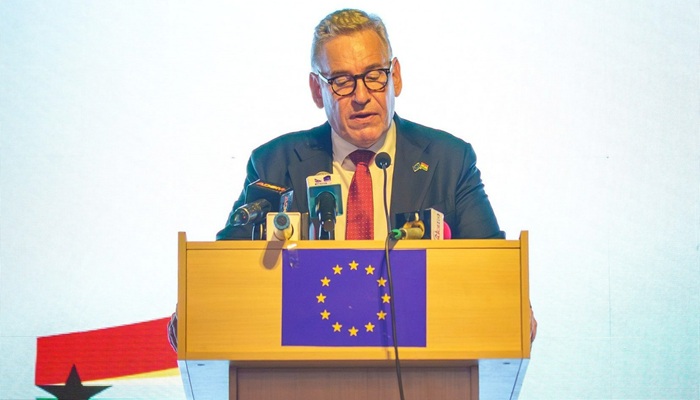
He said the EU had supported the policy development process through technical assistance to the Ministry of Trade, Agribusiness and Industry and the jointly financed PharmaVax Ghana Programme.
Mr Skinnebach said Team Europe had committed financing of up to €40 million to support initiatives aimed at strengthening local pharmaceutical manufacturing capacities in Africa.
He emphasised the importance of effective implementation, trade facilitation, research and development, international partnerships and foreign investment in building an export-oriented industry.
The ambassador also called for stronger intellectual property protection to encourage pharmaceutical innovation and attract investors interested in technology transfer and joint ventures.
He said Ghana’s regulatory institutions, particularly the FDA, would have an important role in maintaining high standards and supporting the country’s growing regional influence.
Mr Skinnebach expressed confidence that access to ECOWAS and AfCFTA markets could enable Ghanaian pharmaceutical manufacturers to expand beyond the domestic market and supply patients across the continent.
The speakers agreed that the policy’s success would ultimately depend on translating its commitments into investment, expanded manufacturing capacity, affordable and quality medicines, increased exports and sustainable employment.