


Story by Eugene Nyarko Jnr. | Accra City Hotel, Accra | July 24, 2026
The Executive Director of Vision for Accelerated Sustainable Development Ghana (VAST Ghana), Mr Labram Musah Massawudu, has called on the government to increase excise taxes on tobacco products and sugar-sweetened beverages to discourage consumption and protect public health.
He also urged the Ministry of Finance to remove taxes imposed on e-cigarettes, arguing that the taxation of the products contradicts Ghana’s public health regulations, which prohibit e-cigarettes.
Mr Massawudu made the call when VAST Ghana, in partnership with the Ghana Revenue Authority (GRA), Tax Justice Network Africa and Global Health Advocacy Incubator, held a strategic meeting at the Accra City Hotel on Friday, July 24, 2026.
The meeting was organised to discuss and present findings from a report titled “Advancing Tobacco Taxation for Improved Public Health in Ghana.”
Speaking to the media, Mr Massawudu said the government’s decision to maintain existing taxes on sugar-sweetened beverages was a positive step but urged further increases in excise tax rates on both sugar-sweetened beverages and tobacco products.
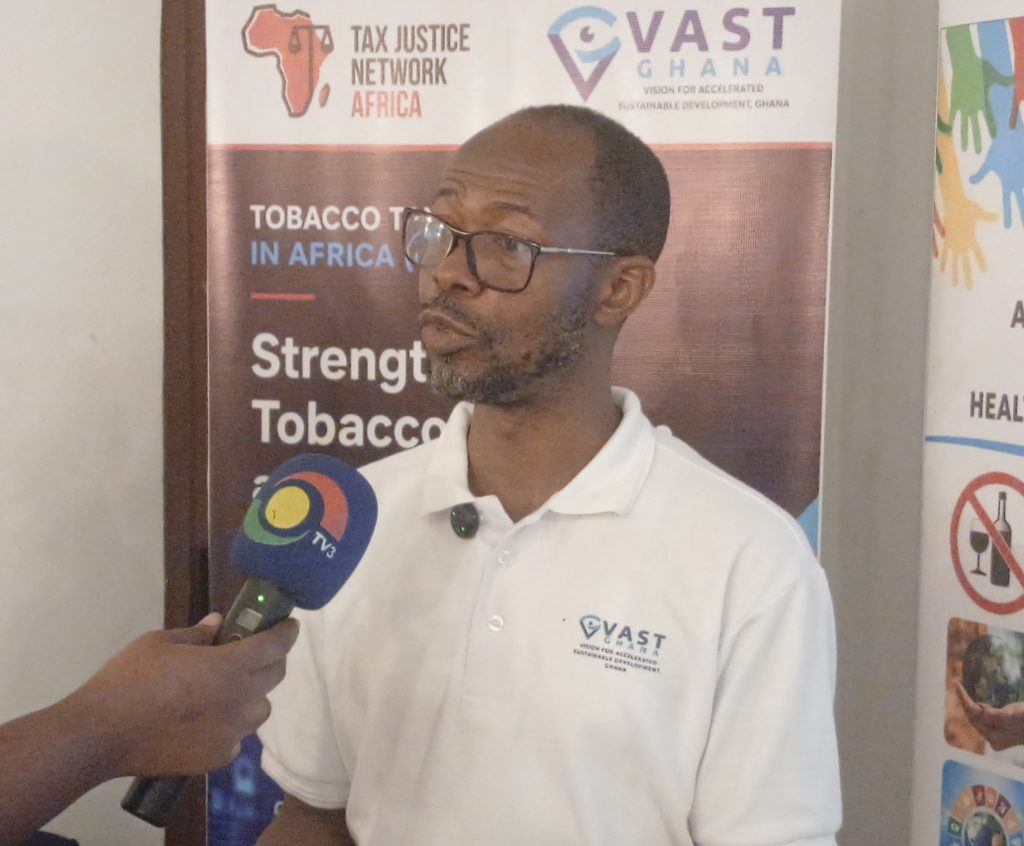
He said tobacco products were currently relatively cheap on the Ghanaian market, making them easily accessible, particularly to young people and poor households.
According to him, increasing the prices of tobacco products through taxation would help discourage consumption among vulnerable groups and reduce the health burden associated with tobacco use.
Mr Massawudu expressed concern about what he described as a regulatory contradiction regarding e-cigarettes.
He said while the Public Health Act of 2012 banned e-cigarettes, the Ghana Revenue Authority was imposing taxes on the products.

“One public health institution is taxing the product and then another public health institution is confiscating it,” he said, stressing the need for Ghana to harmonise its laws and regulations.
He therefore called on the Ministry of Finance to remove the tax imposed on e-cigarettes and ensure that the products remained prohibited in the country.
Mr Massawudu also called for stronger enforcement of laws governing the cultivation and use of tobacco, particularly in areas where raw tobacco was used for cultural and traditional purposes.

He said tobacco cultivation should be properly regulated, with the products either exported or processed under the appropriate regulatory framework instead of being consumed directly.
He, however, said the solution to the health dangers posed by tobacco and alcohol should not necessarily be an outright ban, but rather effective regulation.
He called for measures to protect children, young people, poor households and other vulnerable groups by restricting marketing, preventing products from being made attractive to children and ensuring that prices were high enough to discourage consumption.
Mr Massawudu further advocated stronger regulation of advertising on electronic and digital platforms, noting that while restrictions existed for traditional television and radio, enforcement on digital platforms remained more difficult.

He said effective taxation and regulation, combined with public education, were necessary to reduce the consumption of harmful products and improve public health outcomes.