

Story by Eugene Nyarko Jnr. | Accra | June 3, 2026
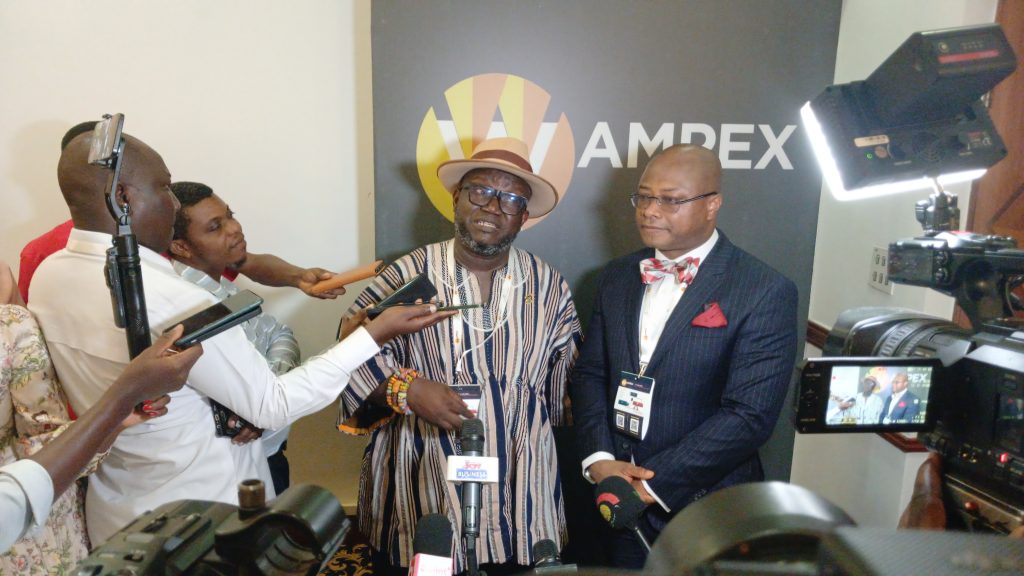
The Chief Executive Officer of the Ghana Chamber of Mines, Ing. Dr. Kenneth Ashigbey, has called for the establishment of a mineral revenue management framework that will ensure mining host communities receive a greater share of the wealth generated from the country’s natural resources.
Speaking at the West African Mining and Power Exhibition and Conference (WAMPEX 2026), held in partnership with the Ghana Chamber of Mines at the La Palm Royal Beach Hotel in Accra on Wednesday, Dr. Ashigbey said mining communities continue to contribute significantly to the country’s economy but receive limited direct benefits from mineral revenues.
He cited data showing that major mining companies, including Gold Fields, AngloGold Ashanti and Ghana Manganese, paid approximately GH¢5.1 billion in taxes in 2025, and questioned how much of that revenue was invested back into the communities where the resources were extracted.
According to him, a similar concern arises from the sale of Newmont’s Akyem Mine to Zijin Mining, which reportedly generated about US$250 million for the government.
“The question is how much of that money went into the Akyem area or into projects that would directly benefit the communities affected by mining activities,” he said.
Dr. Ashigbey noted that although Chamber members have invested more than US$300 million in corporate social responsibility projects over the last decade, sustainable community development requires a more structured and legally backed approach.
He advocated the creation of a framework similar to the Petroleum Revenue Management Act to regulate how mineral revenues are allocated and spent.
The Chamber, he disclosed, is proposing that at least 30 per cent of mineral revenues be directed towards host communities and invested in strategic sectors such as industrialisation, infrastructure and education.
He argued that channeling resources into productive sectors would generate long-term economic benefits rather than funding recurrent expenditures that have little developmental impact.
Dr. Ashigbey also called for a broader interpretation of local content policies, stressing that local participation should extend beyond importation activities to the establishment of industries capable of creating sustainable jobs.
He suggested the development of industries such as activated carbon manufacturing in mining communities including Tarkwa, Ellembelle, Ahafo and Obuasi, using locally available raw materials.
According to him, such industries would continue to create wealth and employment opportunities even after mining operations cease.
On illegal mining, Dr. Ashigbey described the issue as one of the most pressing challenges facing Ghana and the wider West African sub-region.
He revealed that the Ghana Chamber of Mines has engaged a consultant to develop a framework that will facilitate cooperation between large-scale mining companies and artisanal and small-scale miners while supporting government’s formalisation agenda.
He noted that artisanal and small-scale mining accounted for 52 per cent of Ghana’s gold production in 2025 but contributed only about GH¢500,000 in taxes, compared to more than GH¢20 billion paid by large-scale mining companies.
Dr. Ashigbey stressed that formalising the sector would help eliminate illegal mining activities, improve tax collection and increase the overall benefits that Ghanaians derive from the country’s mineral resources.