
Story by Eugene Nyarko Jnr. l IEA, Accra l Tuesday, October 13, 2026 —
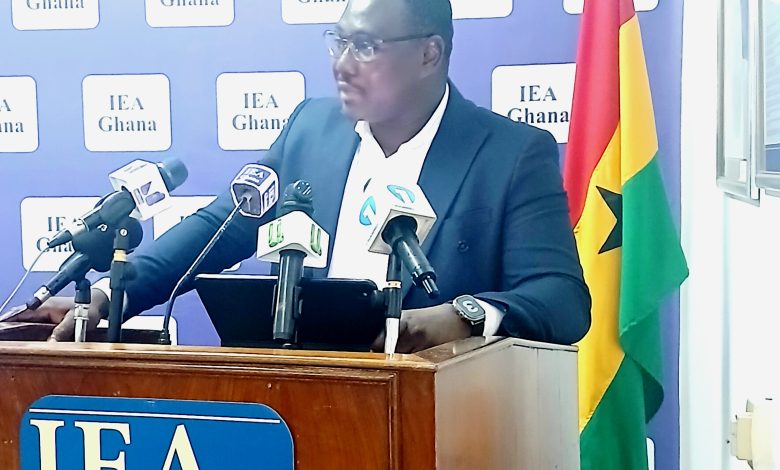
The President of the Ghana Youth Federation (GYF), Sherif Ghali, has called for direct and meaningful youth representation in Ghana’s ongoing constitutional review process, insisting that young people must have a decisive voice in shaping the country’s next Constitution.
He said the youth, who constitute a significant proportion of Ghana’s population and electorate, should not be treated merely as beneficiaries of constitutional reforms but as active participants in the process.
Speaking at the Institute of Economic Affairs (IEA) dialogue on “Views and Reflections: The Prempeh Committee’s Report and Government’s Position on Constitutional Review (Students and Youth Groups)” in Accra on Tuesday, Mr Ghali stressed that the next Constitution must reflect the aspirations, concerns and development priorities of the younger generation.
He cited figures from the 2024 electoral register, which recorded approximately 18.77 million registered voters, noting that about 10 million were between the ages of 15 and 35.
According to him, the figures demonstrate why young people must be adequately represented in discussions and decisions concerning the country’s constitutional future.
Mr Ghali expressed concern about the stringent requirements for amending entrenched provisions of the 1992 Constitution, citing the thresholds of 40 per cent voter turnout and 75 per cent approval in a referendum.
He said such requirements could make constitutional reforms difficult to achieve and called for a review of the amendment process to make it more responsive to the needs and aspirations of Ghanaians.
On the proposed reduction of the minimum age for presidential candidates from 40 to 35 years, he welcomed the initiative but argued that the minimum age should be reduced further to 30 years, in line with recommendations he attributed to the Constitutional Review Commission (CRC).
He maintained that age should not be the only consideration in determining whether young people could assume leadership positions, arguing that competence, integrity and the ability to serve the country should also matter.
Mr Ghali further proposed the allocation of 24 parliamentary seats through proportional representation to promote the inclusion of women, persons with disabilities and young people in Parliament.
However, he cautioned that if the 24 seats were divided equally among the three groups, young people would receive only eight seats out of a proposed 300-member Parliament, representing less than three per cent of the total membership.
He therefore called for a clearly defined youth quota to ensure that young people would not be disadvantaged in the implementation of the proposed reforms.
The GYF President disclosed that the federation had written to the Attorney-General’s Ministry to advocate youth representation on the committee responsible for implementing the constitutional review recommendations but had yet to receive a response.
He said the absence of a guaranteed place for youth representatives could undermine efforts to ensure that their concerns were reflected in the final reform proposals.
Mr Ghali also called for measures to reduce the cost of political campaigns, including campaign spending limits, to make political participation more accessible to young people and other groups with limited financial resources.
He argued that the high cost of contesting elections continued to create barriers for capable young people who wished to enter public office.
On national development, he urged political leaders to establish a long-term development framework that would survive changes in government and prevent successive administrations from abandoning projects initiated by their predecessors.
He said continuity in national planning was essential to ensuring that public resources were used efficiently and that development initiatives produced lasting results.
As part of the federation’s efforts to contribute to the constitutional review process, Mr Ghali announced that the GYF would organise district-level youth dialogues over the following 30 days.
The discussions, he said, would enable young people across the country to express their views, identify their priorities and consolidate their recommendations for submission to the implementation committee and Parliament before the relevant bills were laid.
He encouraged young people to study the CRC report and the government’s position paper to understand the proposed changes and participate meaningfully in the national conversation.
Mr Ghali also referred to the provision requiring a petition supported by 10 per cent of registered voters to initiate a constitutional amendment, arguing that young people could play a leading role in mobilising citizens around reforms they considered necessary.
He urged the youth to move beyond discussions on social media and become actively involved in the formal processes through which constitutional changes could be pursued.
“The 1992 Constitution was written for us. The next one must be written by the young people,” he said.