
GHANA COFFEE WEEK LAUNCHED: INDUSTRY LEADERS CALL FOR RENEWED INVESTMENT, HEALTH AWARENESS AND YOUTH PARTICIPATION

Story by Eugene Nyarko Jnr. l Accra l November 17, 2025
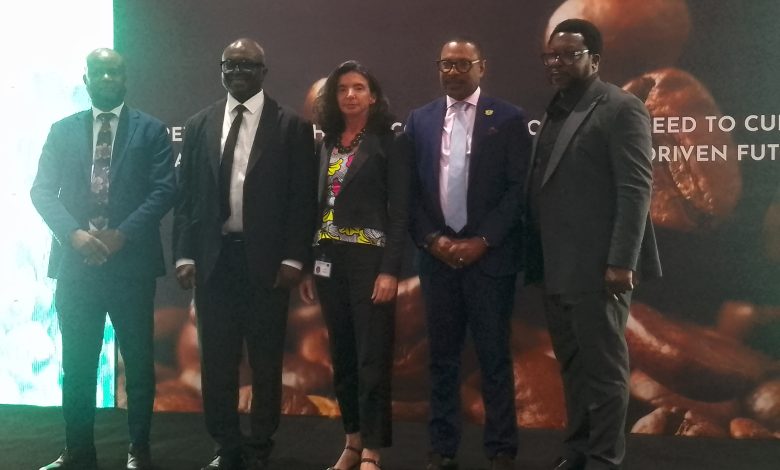
The 2025 Ghana Coffee Week was officially launched at the Palms by Eagles Hotel, Airport-Accra, with a renewed call for national investment, increased consumption, and the revitalization of Ghana’s coffee sector under the theme: “Revitalizing Ghana’s Coffee Sector: From Seed to Cup Towards a Sustainable, Inclusive, and Value-Driven Future.”
The week-long celebration, organized with support from the International Trade Centre (ITC), European Union, OACP, ACRAM, Ghana Coffee Federation, Cocobod, private sector actors and financial institutions, brought together stakeholders from across the coffee value chain.
Speaking during a press interview, Mr. Samuel Adimado, President of the Ghana Coffee Association, underscored the economic and health benefits of coffee, describing it as “one of the strongest antioxidants in the food value chain.”
“Drinking coffee has a lot of health benefits. Coffee will not harm you, and everybody should develop the culture of taking a cup of Ghanaian coffee a day,” he said. “Taking a cup of Ghanaian coffee is a contribution to promoting the agricultural economy of Ghana.”

He explained that Ghana’s Robusta coffee variety remains highly resilient and presents a strategic solution to climate-induced losses in traditional cocoa-growing areas.
“Robusta survives in harsh conditions — high temperatures and limited water. This makes it a vital tool for rural economic improvement and poverty reduction,” he noted.
Mr. Adimado stressed that revitalizing the sector aims to make coffee farming and processing more attractive to investors, entrepreneurs, and the youth. He applauded the 24-Hour Economy Secretariat’s inclusion of coffee under its agricultural corridor initiative, highlighting its potential to drive economic activity around the clock.
Week-Long Activities
The celebration includes a tour of coffee-growing communities in the Eastern Region, women-focused exhibitions under the Women in Coffee platform, barista training on innovative coffee recipes, and a grand durbar at the Nyaniba Estate to showcase actors across the full coffee value chain — from farmers and roasters to baristas and exporters.
According to Mr. Adimado, the event seeks to “unravel economic opportunities in coffee” and attract investors, consumers, and development partners to strengthen the sector.
COFFEE FEDERATION OF GHANA HIGHLIGHTS NATIONAL IMPACT

Also addressing the media, Madam Ivy Cynthia Osei-Sampah, Executive Secretary of the Coffee Federation of Ghana and Ghana’s focal person for ACRAM, outlined the extensive work being done to rebuild the country’s coffee industry.
She revealed that coffee currently grows in 10 out of 16 regions, with thousands of farmers mobilized and trained in land preparation, agronomy, harvesting, post-harvest management, and processing.
“Farmers have been trained using techniques from the Cocoa Research Institute. Coffee requires careful picking. If you strip the branch, you kill the nodes and lose next year’s fruits,” she explained.
Madam Osei-Sampah added that farmers now receive free seedlings from Cocobod’s Seed Production Unit, with over one million seedlings distributed annually over the past three years.
She emphasized that the Federation is working with the Department of Cooperatives to structure farmer groups into legally recognized cooperatives to enhance access to finance and promote aggregation for consistent supply to buyers and exporters.
On the economic potential of coffee, she said:
“Globally, coffee is bigger than cocoa. Climate change is reducing cocoa-growing areas, but robusta thrives in Ghana’s warmer climate. Coffee can replace cocoa in areas lost to climate change.”
She further highlighted the health benefits, noting that coffee boosts alertness, strengthens the immune system, and contains antioxidants linked to longevity and the prevention of certain diseases.
A CALL TO NATIONAL ACTION
Both leaders emphasized that domestic coffee consumption is growing rapidly, and with Ghana’s 24-Hour Economy vision, coffee provides the ideal stimulant for productivity, especially among young professionals and night-time workers.
The 2025 Ghana Coffee Week, they said, is an opportunity for government, investors, and citizens to rediscover Ghanaian coffee — not only as a beverage, but as a viable economic enterprise capable of transforming rural livelihoods, attracting youth into agriculture, and positioning Ghana competitively in the global coffee market.