


Story by Eugene Nyarko Jnr. l Accra l Thursday, September 3, 2026 —
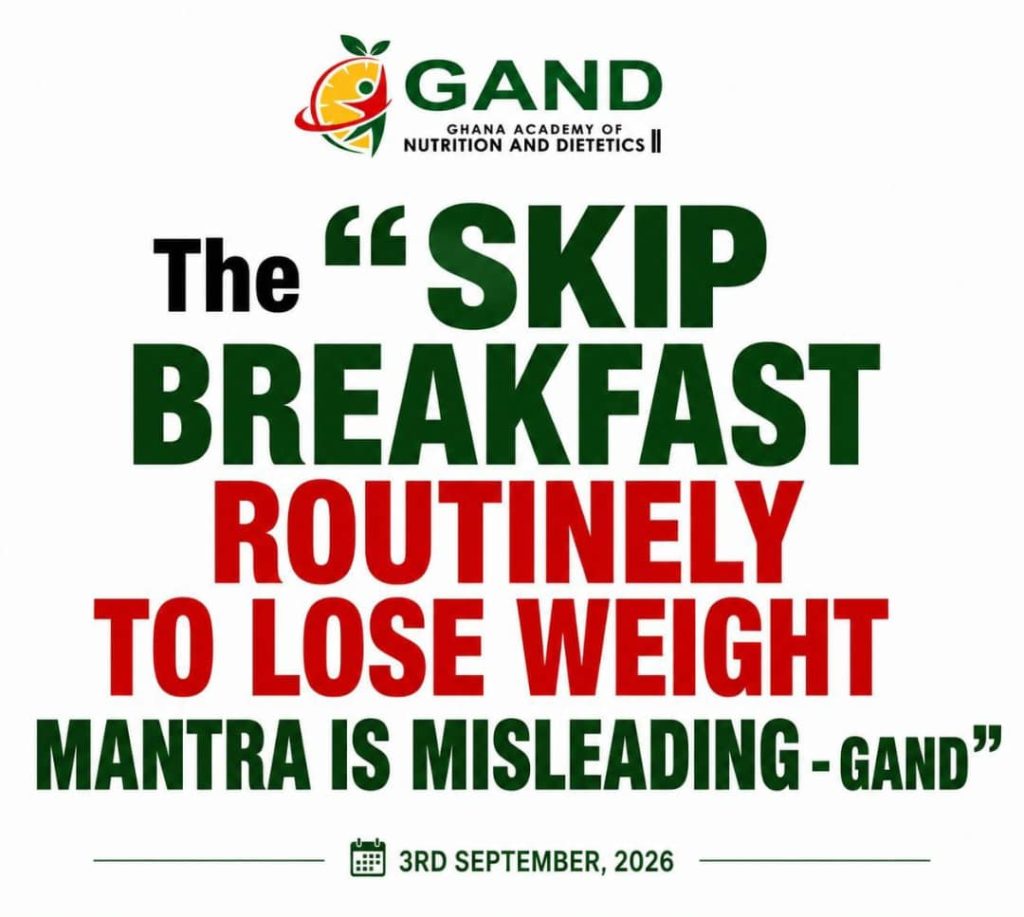
The Ghana Academy of Nutrition and Dietetics (GAND) has cautioned the public against the blanket recommendation that people should skip breakfast as a strategy for losing weight.
According to the Academy, current scientific evidence does not support the claim that routinely omitting breakfast is necessary or universally effective for successful weight loss.
In a position statement issued on the subject, GAND said research into the relationship between breakfast consumption and weight management had produced mixed findings.
It explained that while some short-term intervention studies had found that people assigned to skip breakfast consumed fewer calories and experienced a small reduction in body weight, the differences were modest and the studies were generally of relatively short duration.
The Academy further noted that reviews of randomised trials had found no meaningful differences in body weight, body mass index, body fat or waist circumference between people who were assigned to eat breakfast and those who skipped it.
It said observational and longer-term studies had, however, frequently found that people who habitually skipped breakfast were more likely to have overweight or obesity, with some studies reporting greater weight gain over time.
GAND cautioned that such observational findings did not prove that skipping breakfast caused weight gain, stressing that the relationship between breakfast and body weight was complex.
The Academy also urged the public to consider overall health rather than focusing solely on weight changes.
It said evidence had shown that although breakfast skipping might be associated with a small reduction in body weight in some studies, it had also been associated with increased levels of low-density lipoprotein (LDL) cholesterol.
Additionally, the Academy said observational research had linked habitual breakfast skipping with cardiovascular disease, type 2 diabetes and mortality.
It stressed, however, that those associations did not prove that breakfast skipping directly caused the health conditions, but said they warranted caution before breakfast omission was promoted broadly as a weight-loss or health strategy.
GAND said factors such as the quality of food consumed, how breakfast fitted into the rest of the day’s meals, an individual’s health status, appetite patterns, medication use and overall weight-management goals should all be considered.
It therefore recommended that individuals seeking to lose weight consult Registered Dietitians and Nutrition Professionals to develop meal plans that were nutritionally adequate, practical, sustainable and suited to their individual needs.
Ghanaian context
The Academy said the Ghanaian context was particularly important in discussions about breakfast.
It noted that local studies had shown that breakfast could make an important contribution to the energy and nutrient intake of children and adolescents.
Research had also indicated that, for some young people in Ghana, missing breakfast could be a result of limited food availability rather than a deliberate decision to lose weight or improve health.
GAND consequently called for public nutrition messages on breakfast to be communicated with sensitivity to individual circumstances and socioeconomic realities.
Academy’s position
The Ghana Academy of Nutrition and Dietetics stated unequivocally that it did not support the general recommendation that “if you want to lose weight, you should skip breakfast.”
It said current evidence did not indicate that skipping breakfast was necessary for successful weight loss and emphasised that the decision to eat or skip breakfast should be considered within the context of an individual’s overall diet, health, lifestyle and weight-management plan.
The Academy urged the public to seek professional guidance and counselling from Registered Dietitians and Nutrition Professionals on dietary and weight-management matters.