
Story by Eugene Nyarko Jnr. l Movenpick Hotel, Accra l Wednesday, September 2, 2026 —
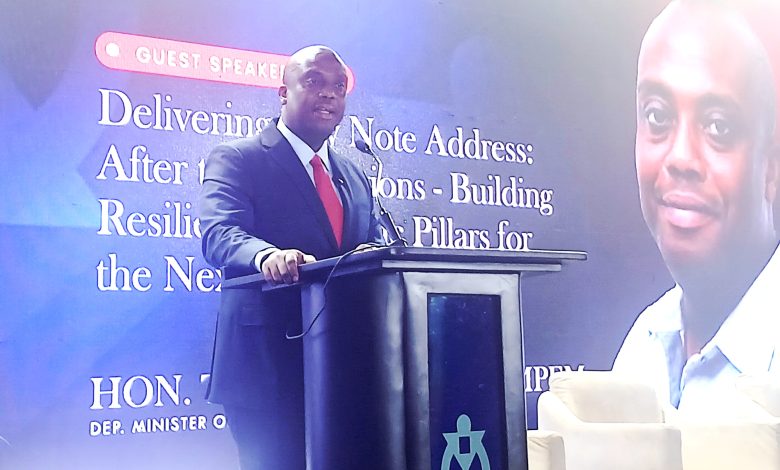
The Deputy Minister of Finance, Hon. Thomas Nyarko Ampem, has called for a decisive shift from macroeconomic stabilisation to productive investment, job creation and broad-based prosperity to consolidate Ghana’s economic recovery.
He said the country had made significant progress in restoring macroeconomic stability but must ensure that the gains reached factories, farms, markets, businesses and households.
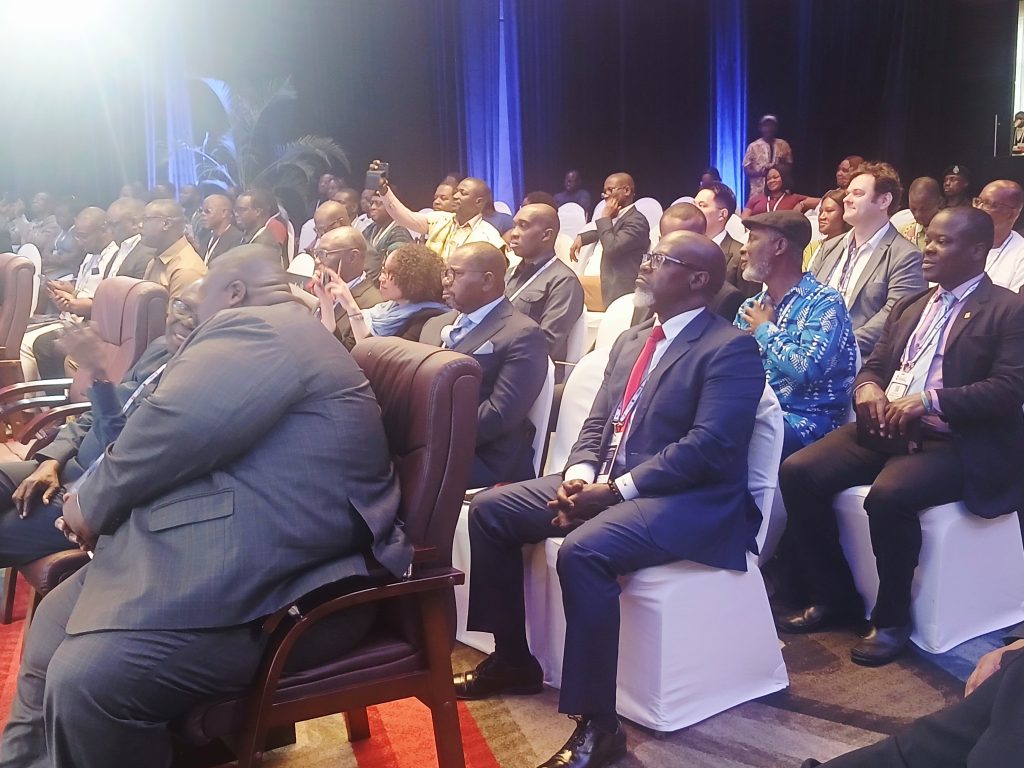
Mr. Ampem made the call when he delivered the keynote address on behalf of the Minister of Finance, Dr. Cassiel Ato Forson, at the inaugural extended session of the Ishmael Yamson and Associates Business Round Table (BRT) in Accra.
The Executive Dialogue, panel discussion and networking brunch was held under the theme, “After the Corrections: Building Resilient Economic Pillars for the Next Decade.”
He said Ghana had recently emerged from a period of severe economic distress characterised by high inflation, pressure on the currency, unsustainable public debt and limited access to international capital markets.
According to him, real Gross Domestic Product (GDP) expanded by six per cent in 2025 and 6.4 per cent in the first quarter of 2026.
He said inflation had declined from 23.8 per cent in December 2024 to 4.6 per cent in July 2026, while gross international reserves stood at approximately US$12.9 billion by June, equivalent to about five months of import cover.
Mr. Ampem also said Ghana’s risk of external and overall debt distress had moved from high to moderate.
He said the International Monetary Fund (IMF), in completing the sixth and final review of Ghana’s US$3 billion Extended Credit Facility programme in July, had recognised the country’s progress in macroeconomic stabilisation and debt sustainability.
He, however, cautioned against complacency.
“We must not become prisoners of our own good numbers. In fact, macroeconomic stability matters, but it is not enough,” he said.
Mr. Ampem said the next phase of economic management must convert stability into sustained inclusive growth through value addition, productivity enhancement and job creation.
Five pillars
He outlined five pillars that should guide Ghana’s economic transformation over the next decade.
They include stronger economic buffers, a productive economy, a stronger private sector, stronger institutions and growth that Ghanaians can feel.
On resilience, he said Ghana must build stronger reserves, sustainable debt, fiscal buffers, energy security and food security to enable the economy to withstand future shocks.
He said the Ghana Accelerated National Reserve Accumulation Programme (GANA) was aimed at building sufficient reserves to cover 15 months of imports by 2028.
He added that the debt-to-GDP ratio had declined from 61.8 per cent in 2024 to 45 per cent in June 2026.
On energy security, he said government was building a 1,200-megawatt state-owned gas-fired thermal power plant, which he described as the largest power plant built in Ghana since independence.
Mr. Ampem said Ghana must also change what it produced, how much it produced and how productively it produced it.
He called for stronger connections between agriculture and agribusiness, mining and domestic value chains, energy and industry, technology and enterprise, and skills and jobs.
He said government’s new economy programme, expected to be implemented from 2027, would seek to build a more productive, diversified and competitive economy.
The programme, he said, would focus on macroeconomic stability; commercial agriculture, agribusiness and business; energy-sector reforms and investment; critical minerals and value addition; cotton, textile and garment industries; tourism, culture and creative arts; and pharmaceutical manufacturing hubs.
Mr. Ampem said lower interest rates were creating improved conditions for private-sector investment but warned that cheaper credit must translate into productive activity.
He said the 91-day Treasury bill yield had fallen from 26 per cent in December 2024 to 4.9 per cent in August 2026, while the Ghana Reference Rate declined from 29.3 per cent to 10.6 per cent.
Average lending rates, he said, had also declined from 30.25 per cent in December 2024 to 15.8 per cent in July 2026.
Private-sector credit growth had accelerated from 17.7 per cent in July 2024 to 43.9 per cent year-on-year in July 2026.

“Cheaper credit must become productive credit. We need finance for production, innovation, exports and long-term investment,” he said.
Strong institutions
Mr. Ampem said Ghana could not build a 10-year economy with four-year thinking.
He called for institutions strong enough to enforce fiscal rules, commitment controls, procurement rules and debt limits across political cycles.
“Ghana should never again require a crisis before discovering fiscal discipline,” he said.
He said government would provide stability, predictability, infrastructure, efficient regulation and fiscal discipline, while businesses must respond with investment, innovation, productivity, exports and jobs.
Mr. Ampem said Ghana had been given “another chance” following the recent economic corrections and must use the breathing space created by lower inflation, reduced interest rates and improved reserves to define the next decade.

“We have stabilised the present. Now we must secure the future,” he said.
He said Ghana must build an economy that was productive, diversified, disciplined and resilient enough to withstand future shocks.
“When the next shock comes, and it will, Ghana will bend, but Ghana will not break,” he said.