

Story by Eugene Nyarko Jnr. | Accra City Hotel, Accra | July 24, 2026
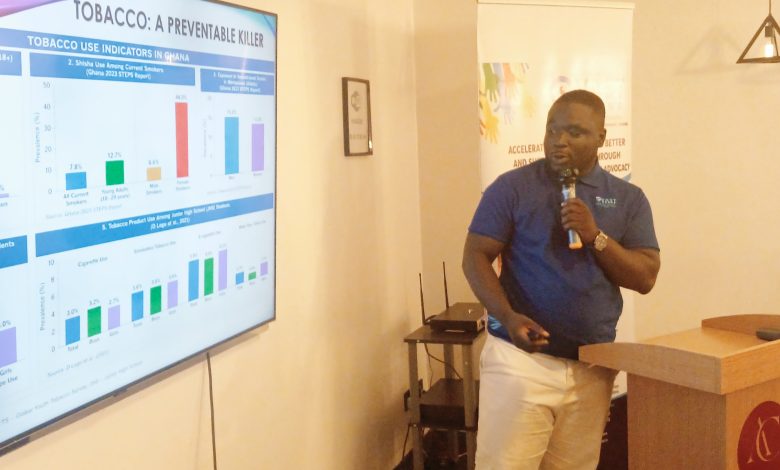
The Policy and Research Manager at Vision for Accelerated Sustainable Development Ghana (VAST Ghana), Mr Godfred Tweneboah Kodua, has raised concerns about the increasing use of tobacco-related products among young people in Ghana.
He said although the overall prevalence of tobacco smoking in the country might appear relatively low, the situation among children and young people required urgent attention.
Mr Kodua made the observation during a strategic meeting on the findings of a report titled “Advancing Tobacco Taxation for Improved Public Health in Ghana,” held at the Accra City Hotel on Friday, July 24, 2026.
The meeting was organised by VAST Ghana in partnership with the Ghana Revenue Authority (GRA), Tax Justice Network Africa and Global Health Advocacy Incubator.

Mr Kodua said Ghana was experiencing an increasing burden of non-communicable diseases (NCDs), including cancers, diabetes and hypertension.
He identified tobacco use, unhealthy diets, alcohol consumption, physical inactivity and air pollution as five major risk factors contributing to the growing NCD burden.
According to him, VAST Ghana reviewed available research, including World Health Organisation reports and health surveys, to understand the current tobacco situation in Ghana.
He said available data showed that current tobacco smoking prevalence was about 4.8 per cent, but warned that the figure did not fully reflect the growing use of emerging tobacco and nicotine products among young people.

Mr Kodua cited research indicating that about 8.8 per cent of students between the ages of 13 and 15 were using e-cigarettes.
He also expressed concern about the use of shisha among young people, particularly girls.
He said the increasing use of such products among children and adolescents could create a serious public health challenge if not urgently addressed.
Mr Kodua further warned that exposure to tobacco smoke and other harmful substances affected not only people who directly consumed the products but also those exposed to the environment in which they were used.

He said people could be exposed to harmful particles from tobacco and other products even when they were not actively smoking.
According to him, exposure to such toxins could contribute to systemic inflammation, damage to DNA and the development of diseases such as cancer, diabetes and hypertension.
He said the health consequences of tobacco use should therefore be considered a wider public health problem rather than an issue affecting only smokers.
Mr Kodua called for stronger measures to protect children and young people from exposure to tobacco and related products, as well as increased public education and effective regulation to reduce consumption.