
By Eugene Nyarko Jnr.
Alisa Hotel, Accra | Wednesday, August 26, 2026
The World Bank has urged Ghana to sustain its recent macroeconomic gains while undertaking critical reforms in the transport sector to unlock economic growth, create jobs and make the recovery more inclusive and resilient.
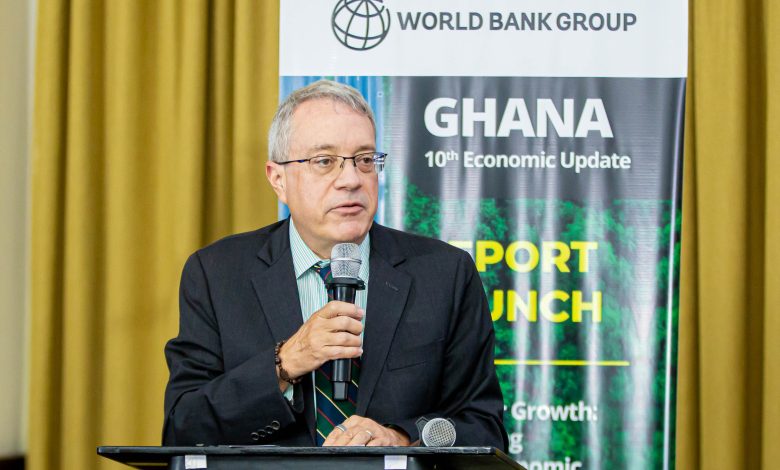
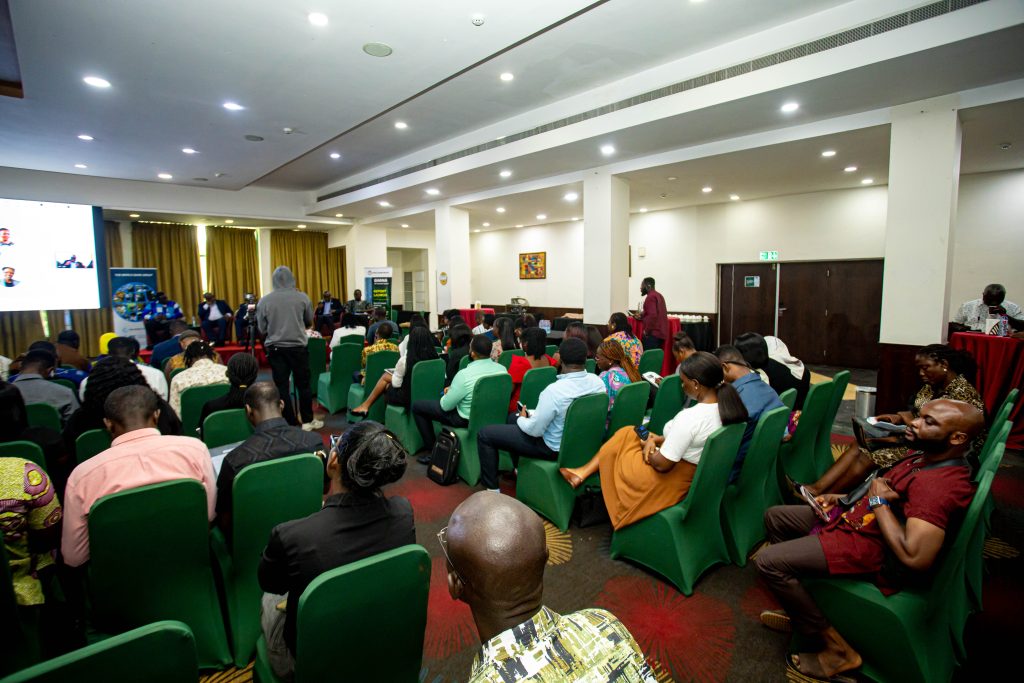
The call was made by Robert Taliercio, World Bank Division Director for Ghana, Sierra Leone and Liberia, at the launch of the 10th Ghana Economic Update, held at the Alisa Hotel in Accra on Wednesday.
The report, titled “Reset for Growth: Sustaining Macroeconomic Recovery and Unlocking Transport for Transformation,” assesses Ghana’s economic recovery following the 2022 crisis and highlights the reforms needed to consolidate the gains and address structural weaknesses.
Mr Taliercio said Ghana was at a “genuine inflection point”, with the recovery from the crisis being “real and measurable”, but cautioned that the key challenge was whether the gains could be sustained.
According to him, Ghana’s economy grew by 6.0 per cent in 2025, the fastest pace since 2019, before accelerating to 6.4 per cent in the first quarter of 2026.
He said headline inflation had fallen sharply from 23.2 per cent in February 2025 to 3.2 per cent by March 2026, the lowest level since 1999, although it had subsequently risen to 4.6 per cent.
He further noted that Ghana had successfully concluded its International Monetary Fund (IMF) Extended Credit Facility programme, while the country recorded a primary surplus of 2.5 per cent of GDP in 2025, exceeding the 1.5 per cent target.
Public debt, he said, had also declined from 70.3 per cent of GDP in 2024 to 49.0 per cent at the end of 2025, while international reserves had been rebuilt on the back of a strong trade surplus, particularly record gold export receipts.
Mr Taliercio commended the government for the difficult decisions that had contributed to the economic gains, but stressed that Ghana was “not out of the woods”.
He said the fiscal surplus had been achieved largely through expenditure compression, with capital spending 38 per cent below budget, a situation he described as unsustainable over the medium term.
The report, he said, therefore called for stronger domestic revenue mobilisation to sustain fiscal consolidation.
Mr Taliercio also expressed concern about the extent to which the economic recovery was translating into improved living standards, noting that 56.4 per cent of Ghanaians remained in poverty and spatial disparities were widening.
He said the structure of economic growth also posed a challenge because the sectors driving expansion had limited capacity to absorb the growing number of young people entering the labour market.
“Growth is led by sectors with limited employment absorption relative to its growing young population entering the labour market in the next decade,” he said, stressing the need for urgent structural reforms.
The World Bank projects Ghana’s economy to grow by 4.8 per cent in 2026, converging to about five per cent over the medium term, provided fiscal discipline is maintained and external debt restructuring is completed.
Mr Taliercio identified several risks to the outlook, including prolonged conflict in the Middle East, which could disrupt global trade and push up energy and production costs.
He also warned that Ghana’s heavy reliance on gold and cocoa exports left the economy vulnerable to commodity price fluctuations that could affect the exchange rate, inflation and public finances.
Domestic pressures in the energy and agricultural sectors were also highlighted, particularly challenges affecting state-owned enterprises.
He said delays in the Energy Sector Recovery Programme were costing Ghana approximately US$1 billion annually, while financial and operational inefficiencies at the Ghana Cocoa Board (COCOBOD) continued to affect farmers and public finances.
He welcomed amendments to the COCOBOD Act approved by Parliament and called for their swift implementation.
The World Bank official further urged Ghana to strengthen climate resilience in infrastructure planning, citing recent flooding as evidence that climate-related risks were already affecting the country.

Transport sector key to transformation
The 10th Ghana Economic Update places particular emphasis on the transport sector, which Mr Taliercio described as a growth, competitiveness and jobs issue, rather than merely an infrastructure concern.
He said Ghana’s transport sector was operating significantly below its potential.
Of the country’s estimated 94,200-kilometre road network, only 27 per cent is paved, while more than half of the network is in fair to poor condition, with feeder roads particularly affected.
The railway system has also suffered a major decline, with operational rail lines falling from 947 kilometres in 1960 to only 160 kilometres by 2020.
Population access to rail services, he said, had dropped from nearly 30 per cent to less than one per cent over the same period.
Mr Taliercio said fragmented institutional responsibilities within the transport sector further undermined effective planning and implementation.
He said the economic cost of the transport deficiencies was significant, with road safety incidents alone estimated to cost Ghana 2.1 per cent of GDP annually, equivalent to approximately US$4.55 billion.
The World Bank report identifies six priority areas for transforming the sector.
These include operationalising the Road Maintenance Trust Fund, developing a unified National Transport Sector Strategy, and pursuing freight-led railway revitalisation along the Western and Eastern corridors.
Other priorities are treating road safety as a fiscal and public health emergency, incorporating climate-resilient design standards into the government’s “Big Push” infrastructure programme, and extending Ghana’s digital single window to Takoradi and inland terminals.
Mr Taliercio said the World Bank was already supporting efforts to improve connectivity through the US$500 million Ghana Market Access and Connectivity Project.
The project is expected to rehabilitate approximately 1,050 kilometres of feeder roads through performance-based maintenance contracts, particularly in areas where poor connectivity constrains agricultural productivity and rural livelihoods.
The World Bank is also supporting efforts to operationalise the Road Maintenance Trust Fund to provide a more sustainable mechanism for financing road maintenance.
Mr Taliercio said the government’s “Big Push” programme reflected significant ambitions and that the World Bank supported its vision.
He, however, cautioned that the expected economic returns would depend on reforms in maintenance financing, institutional coordination and governance.
“Building roads without maintaining them simply accelerates the cycle of degradation we are trying to break,” he said.
He reaffirmed the World Bank’s commitment to supporting Ghana’s macro-fiscal anchors and structural reforms aimed at making the country’s economic recovery more inclusive, job-intensive and resilient.
The 10th Ghana Economic Update is expected to contribute to ongoing public policy discussions on how Ghana can consolidate its economic recovery while addressing the structural constraints limiting broader-based growth.