

GHANAIAN ARTIST SHARON DEDE PADIKI SETS GUINNESS WORLD RECORD WITH 54.33 SQUARE METER LEAF PRINT MASTERPIECE


Story by Eugene Nyarko Jnr. l Accra l February 19, 2026
Ghanaian visual artist, Sharon Dede Padiki, has officially been certified by the Guinness World Records as the first and current record holder for the Largest Leaf Print Painting in the world.
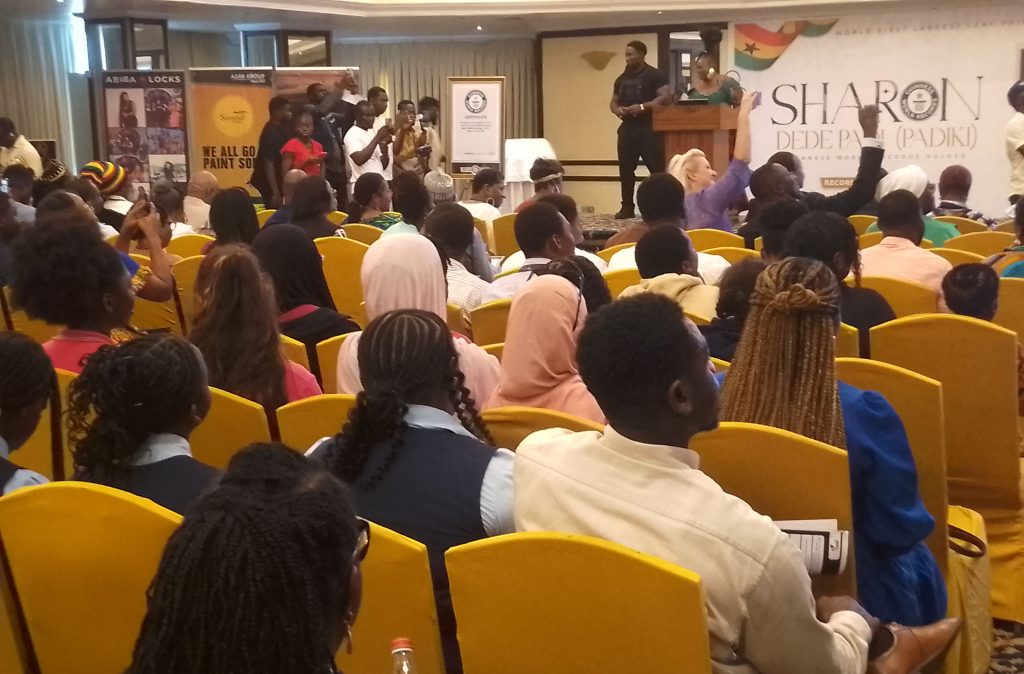
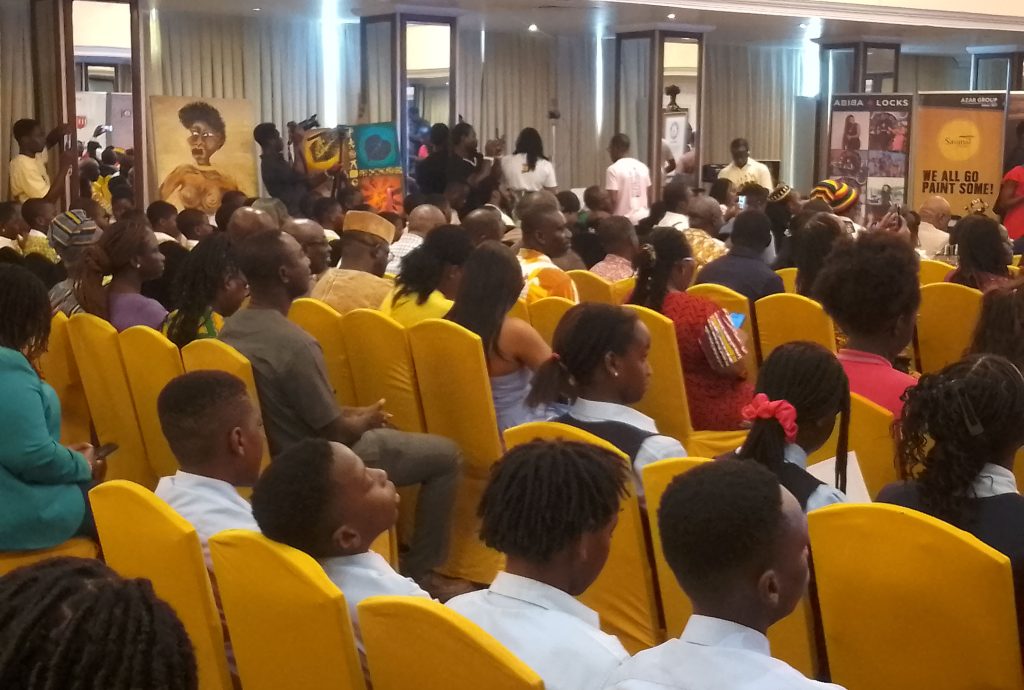
The announcement was made during a press launch held at the La Palm Royal Beach Hotel, Adae Kesie Hall, in Accra, where the celebrant described the achievement as one grounded in humility, teamwork and national pride.
According to Padiki, the monumental artwork spans an extraordinary 54.33 square meters. While the title is based on measurement, she emphasized that the project represents far more than size.
“Beyond its dimensions, it tells the story of our history, identity and culture through every individual leaf print,” she stated. From the delicate imprint of neem leaves to bold plantain impressions, each print symbolizes a distinct region and cultural heritage across Ghana.
Journey to the Record
Padiki revealed that the journey began after weeks of reviewing numerous record categories before selecting the largest leaf print painting challenge. Following approval from Guinness World Records, she assembled a dedicated team to execute the ambitious project.
A truckload of leaves was sourced from the Cocoa Research Institute of Ghana—an institution close to her heart, as her late mother once served there as a doctor in entomology.
After procuring paints and materials and carefully studying Guinness guidelines, Padiki placed the first leaf print on canvas on December 28, 2024. By the following day, approximately 39 square meters had been completed.
However, the process took an unexpected turn when Guinness World Records updated the category requirements after the initial submission. This necessitated an extension of the work. The project was subsequently relocated to the National Theatre of Ghana after space constraints at the National Museum of Ghana.
On July 3, the extended sections were completed, bringing the total size to 54.33 square meters and securing the record.
“This achievement was not accomplished in isolation,” she noted, expressing gratitude to her team, supporters and institutions that contributed to the process.
Environmental and Cultural Message
Beyond its record-breaking status, the artwork advocates for environmental conservation and sustainable practices. Padiki described Ghana’s vegetation as “silent oxygen-giving guardians,” warning of the devastating impact of illegal mining (galamsey) and deforestation through charcoal production.
She explained that the leaf prints collectively form Ghana’s national flag—not merely for aesthetic appeal, but as a symbol of unity and the indispensable role plants play in Ghana’s cultural and economic life.
“Consider life without mango, plantain, maize, cocoa, rice or cassava,” she said. “Our cuisine, traditions and even medical practices would be fundamentally altered.”
Padiki added that many of the plants featured in the artwork are shared across Africa, making them Pan-African emblems that connect Ghana to the broader continent.
Tourism and Educational Vision
Describing the record as a “launchpad,” Padiki announced plans to collaborate with the Ministry of Foreign Affairs and the Ministry of Tourism, Culture and Creative Arts to install the piece at a designated tourist site under the Black Star Experience initiative.
She believes a Guinness World Records-certified monument of this scale presents a compelling attraction for global visitors and will strengthen Ghana’s cultural footprint internationally.
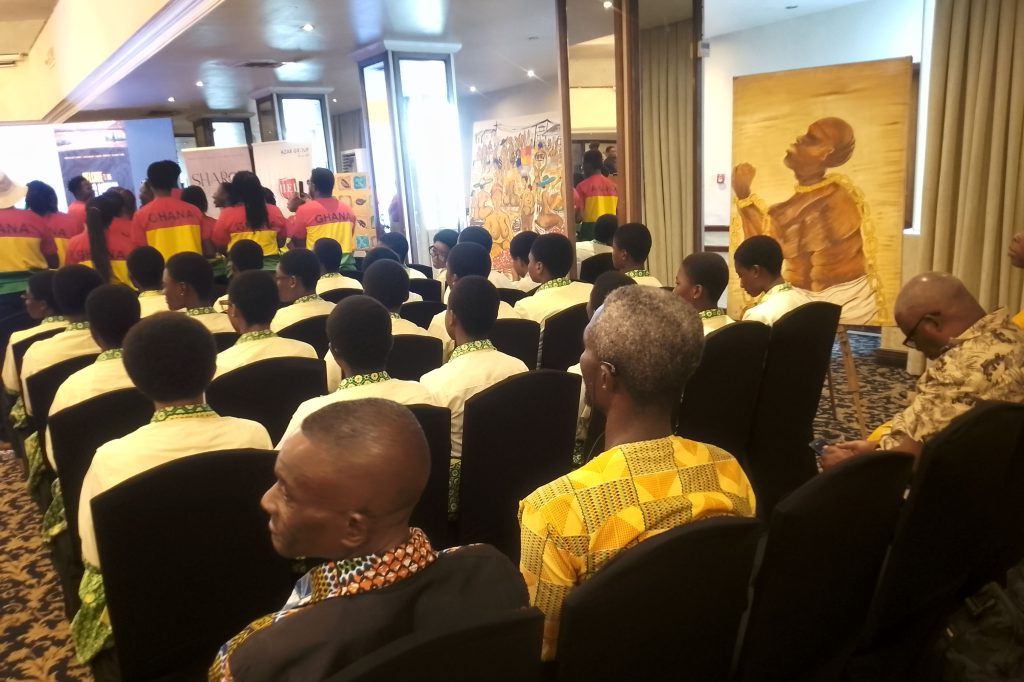
Additionally, she announced the launch of her foundation, aimed at strengthening art education initiatives for Ghanaian children, particularly those in underserved communities, orphanages and among street-connected youth. The foundation seeks to nurture artistic talent and create sustainable career pathways in visual arts.
She called on government ministries, traditional authorities, diplomatic missions, corporate institutions and individuals to partner in advancing the initiative.
Padiki extended appreciation to Guinness World Records for the validation, her team for their dedication, the National Theatre and National Museum for their support, and UNESCO for technical guidance.
“The plants that surround us carry stories and sustain our culture—past, present and future. Let us consciously protect and value them,” she urged.
The record-setting masterpiece stands not only as an artistic triumph but also as a powerful reminder of Ghana’s botanical heritage and the urgent need to safeguard it for generations to come.