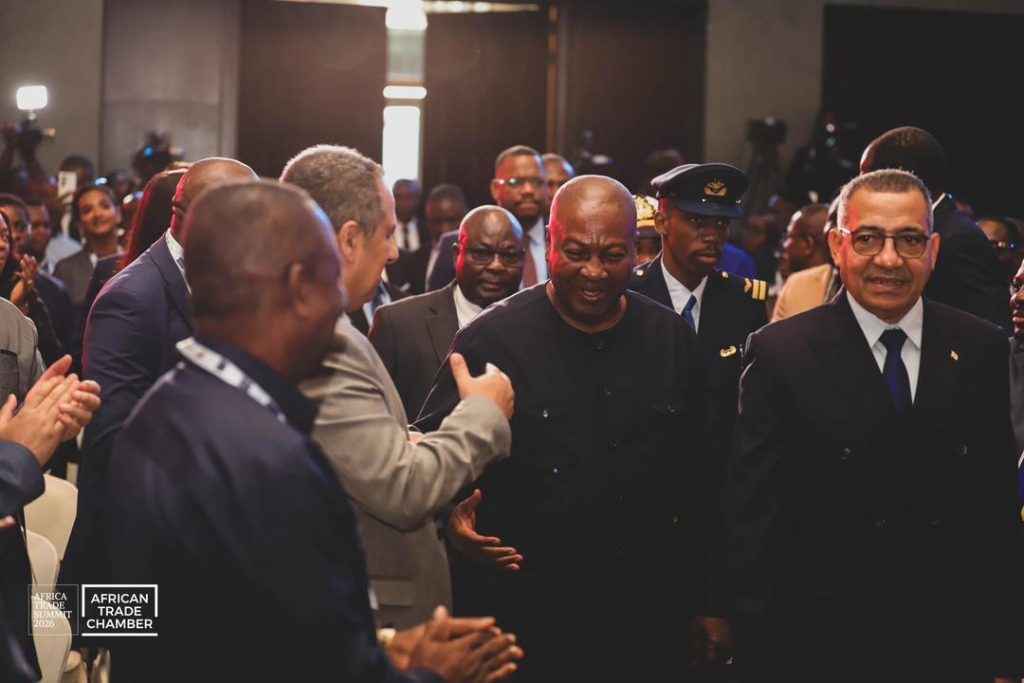

Story by Eugene Nyarko Jnr. l Accra l Jan. 28, 2026
President John Dramani Mahama has called for bold and coordinated financing strategies to accelerate Africa’s industrialisation, stressing that economic independence remains the continent’s most urgent unfinished task.
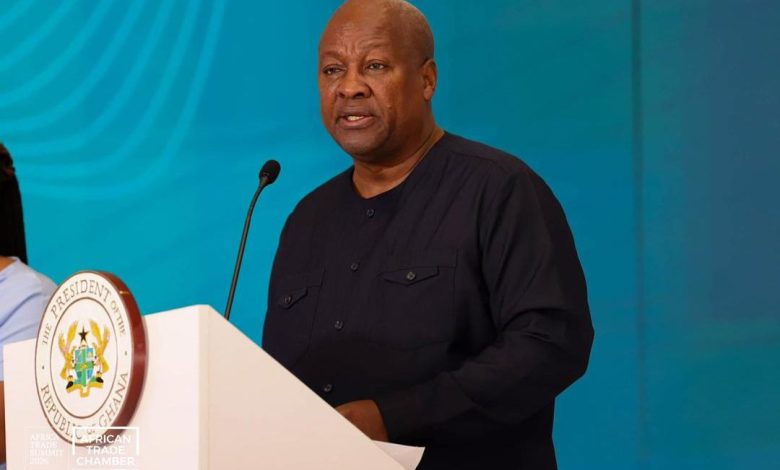
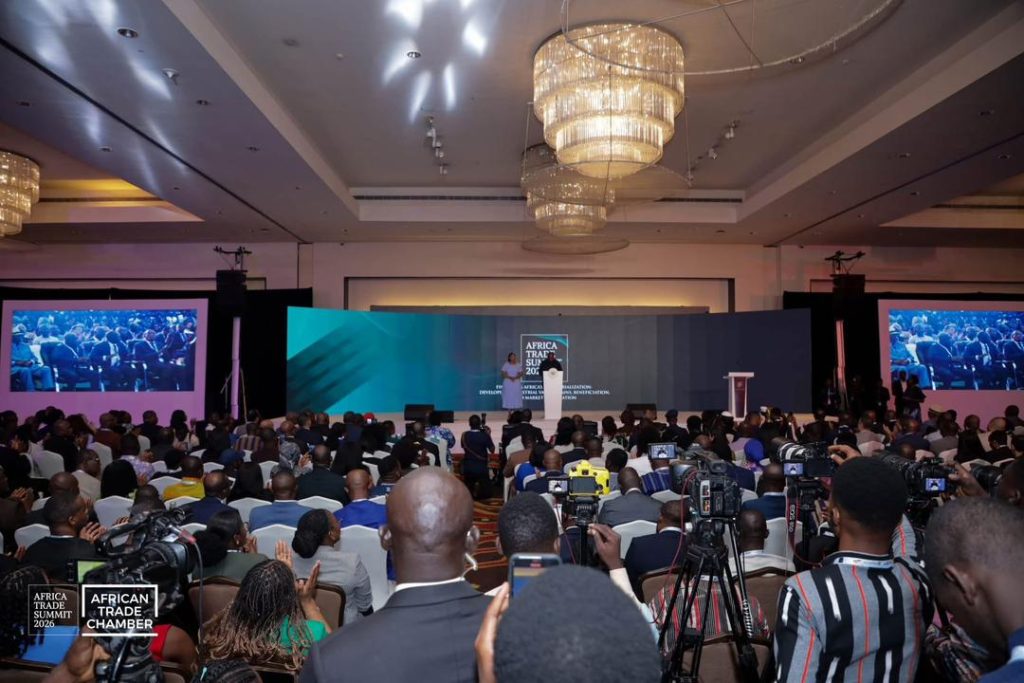
Delivering the keynote address at the Africa Trade Summit 2026 at the Kempinski Gold Coast City Hotel in Accra, under the theme “Financing Africa’s Industrialisation: Developing Industrial Value Chains, Beneficiation and Market Integration,” Mr. Mahama said Africa can no longer rely on an economic model that exports raw materials while importing finished goods.
“Africa stands at a historic turning point. Political freedom without economic transformation is incomplete,” he said, noting that industrialisation is not optional but essential for sustainable prosperity, job creation and economic resilience.
He observed that despite its vast resources, Africa accounts for less than two per cent of global manufacturing, with many economies still trapped in low-productivity primary production. This, he said, has contributed to unemployment and the migration of millions of young Africans in search of opportunities abroad.
Financing the Industrial Agenda
Mr. Mahama identified access to long-term, affordable finance as the central challenge to Africa’s industrial ambition, particularly for small and medium-sized enterprises. He cited shallow financial markets, high interest rates and debt pressures as major constraints.
To address these, he urged African countries to mobilise domestic resources more effectively through improved revenue collection, stronger public financial management and action against illicit financial flows. He also called for the strategic deployment of Africa’s institutional capital, including pension funds, insurance funds and sovereign wealth funds, using instruments such as industrial bonds, infrastructure funds and blended finance vehicles.
Development finance institutions like Afreximbank and the African Development Bank, he said, must be empowered to crowd in private capital, while governments should create stable and transparent policy environments to attract investors through public-private partnerships and risk-sharing mechanisms.
Value Addition and Beneficiation
- The President emphasized that Africa’s industrialisation must be anchored in beneficiation and value addition, pointing to cocoa, oil, textiles and minerals as sectors where the continent captures only a fraction of global value.
He highlighted Ghana’s efforts to transition from a commodity-export model to a value-added economy, with a focus on agro-processing, manufacturing and industrial clusters linked to its natural advantages.
Regional Integration and AfCFTA
Mr. Mahama stressed that industrialisation cannot succeed within fragmented national markets, advocating the development of regional value chains supported by integrated transport, energy and digital infrastructure.
He described the African Continental Free Trade Area (AfCFTA) as a game changer, creating a single market of over 1.3 billion people, but cautioned that its success depends on deliberate alignment with industrial policy, infrastructure investment and enterprise development.
“AfCFTA will not automatically industrialise Africa. It must be linked to production, not just trade,” he said, calling for the reduction of non-tariff barriers, simplified customs procedures and improved logistics.
Shared Responsibility
He underscored that Africa’s industrial transformation is a collective responsibility, requiring leadership from governments, investment and innovation from the private sector, long-term financing solutions from financial institutions, and alignment from development partners.
Concluding, Mr. Mahama urged African leaders and partners to move “from declarations to delivery,” envisioning an Africa with integrated supply chains, competitive factories and shared prosperity.
Quoting Ghana’s first President, Dr. Kwame Nkrumah, he said: “We face neither East nor West; we face forward,” urging the continent to face forward towards industrial strength, value addition and economic integration.