
Youth Platform Demands Full Disclosure of CRC Report, Clear Roadmap for Reforms

Story by Eugene Nyarko Jnr. | Press Center, Accra | April 21, 2026
A Youth Platform on Constitutional Reform has called on President John Dramani Mahama to immediately release the full report of the Constitution Review Committee (CRC) and provide a clear, time-bound roadmap for constitutional reforms.
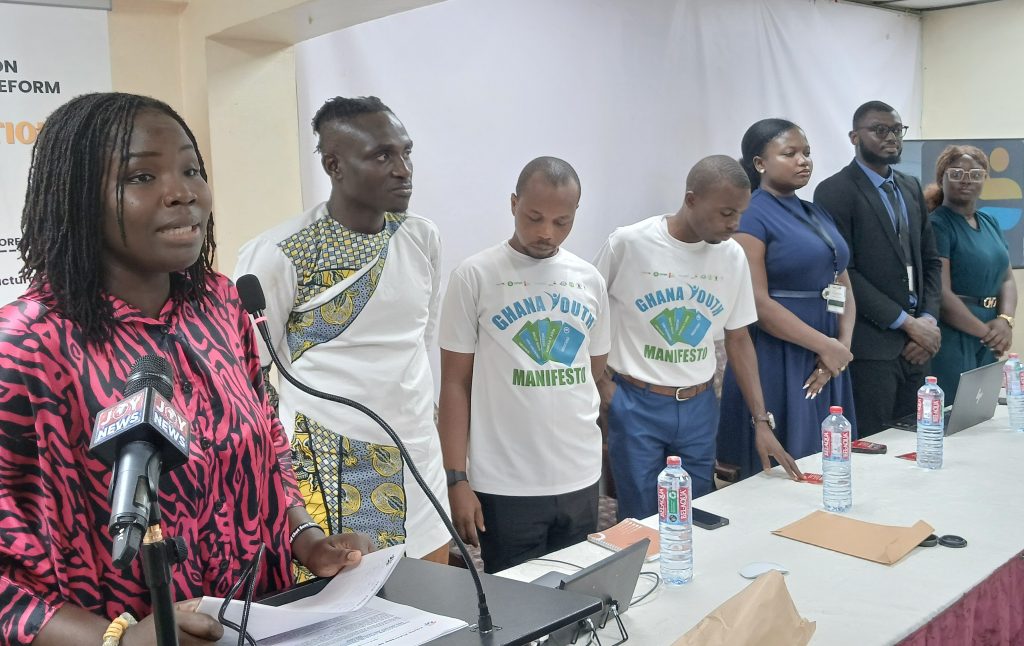
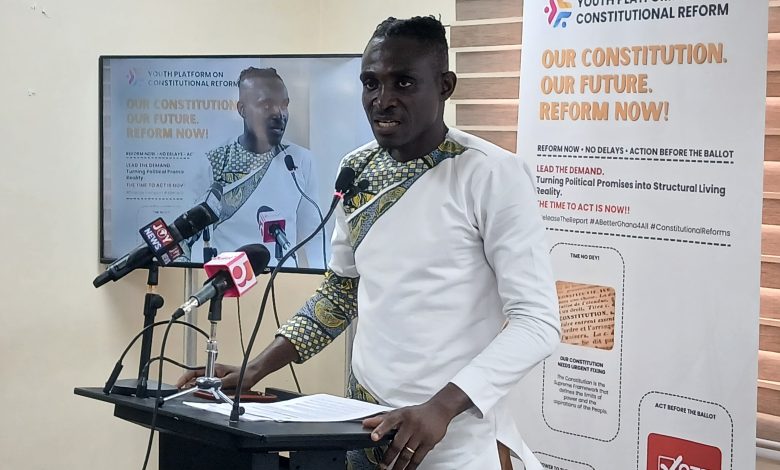
The call was made in a statement delivered by Kirchuffs Atengble, Director of Policy and Research at the Democracy Hub, during a press conference at the Accra International Press Centre. The event was organised by the Africa Center for Governance Studies, the Youth Platform on Constitutional Reform, and the Ghana Youth Federation.
The Platform said its position follows the publication of summary recommendations of the CRC under the theme “Transforming Ghana: From Electoral Democracy to Developmental Democracy.” While acknowledging the work of the eight-member committee established in January 2025, the group expressed conditional support for several of its proposals but raised concerns about the process, timeline, and the risk of non-implementation.
Among the recommendations the Platform supports are reducing the minimum age for presidential candidates from 40 to 30 years, capping ministerial appointments, and prohibiting Members of Parliament from simultaneously serving as ministers or deputy ministers. It also backed proposals to extend presidential and parliamentary terms from four to five years, allow dual citizens to contest parliamentary elections, and guarantee public participation in the legislative process.

The Platform further endorsed reforms in party financing and internal democracy, including abolishing the delegate system in favour of full membership voting, establishing an independent regulator of political parties, and creating a democracy fund. On the judiciary, it supported measures to reduce the concentration of administrative powers in the office of the Chief Justice, as well as proposals to deepen decentralisation through the election of Metropolitan, Municipal and District Chief Executives (MMDCEs) on a non-partisan basis.
However, the Platform stressed that its support remains conditional, citing the lack of detailed legal reasoning, transitional provisions, and precise constitutional language in the summary document.
“The release of the full report is the precondition for any further engagement by this platform and by the Ghanaian public,” Mr. Atengble stated.
The group warned that Ghana’s history of stalled constitutional reforms—referencing the experience of the Fiadjoe Commission—demonstrates the risk of inaction. It noted that electoral timelines and shifting political priorities could derail the process if concrete steps are not taken promptly.
According to the Platform, the window for meaningful reform is limited and must be utilised before the next election cycle gains momentum.
The Platform outlined four key demands: the immediate publication of the full and abridged CRC report; the establishment of a multi-stakeholder constitutional reform implementation committee within one week; the inclusion of substantive youth representation in decision-making processes; and the creation of a cross-party parliamentary oversight committee to monitor progress and ensure accountability.
It also cautioned the government against issuing a white paper on the CRC recommendations before completing a structured national consultation, warning that premature policy positioning could undermine public trust and weaken cross-partisan consensus.
“The youth of Ghana are prepared to participate actively in every stage of this process… What we are not prepared to do is wait indefinitely while a viable reform movement is allowed to pass,” the statement emphasised.
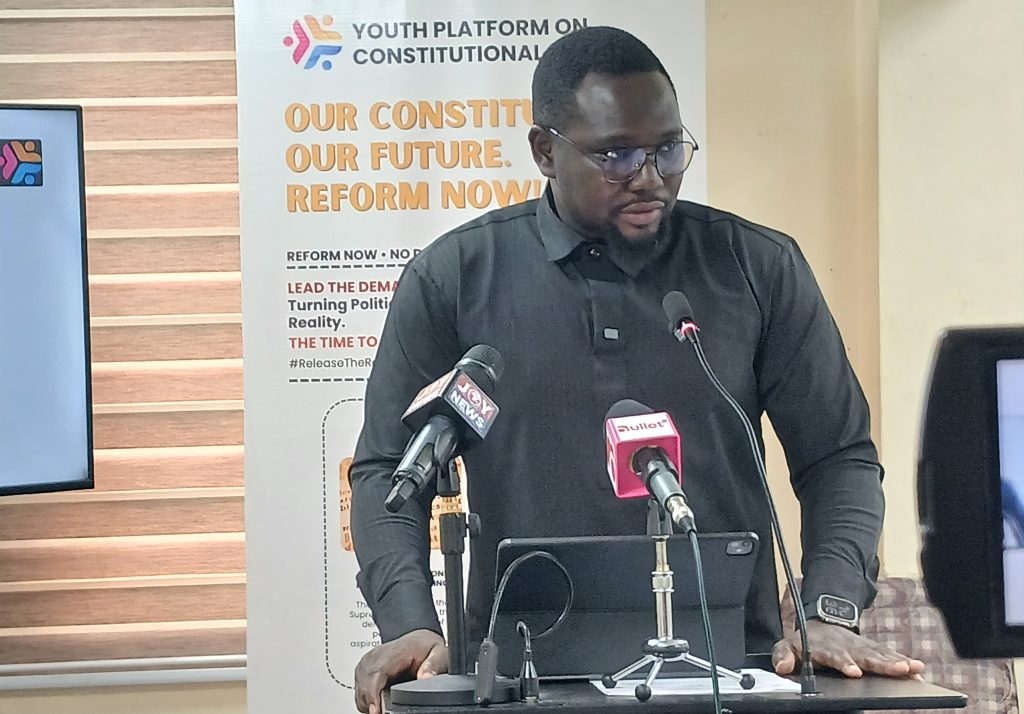
In a supporting statement, the President of the Ghana Youth Federation, Sherif Ghali, formally endorsed the Platform’s position, describing it as grounded in “institutional logic” rather than sentiment.
Mr. Ghali stressed that any credible constitutional reform process must meet minimum standards of transparency, procedural integrity, and structured participation, adding that the release of the full CRC report is essential for legitimacy and informed national engagement.
He further underscored the importance of a properly sequenced process, warning that premature government policy positions could introduce bias, weaken consensus, and undermine trust in the reform process.
“The youth of Ghana bring scale, legitimacy, and technical capacity to this process,” he said, pledging the Federation’s readiness to contribute through consultations, policy input, civic mobilisation, and institutional collaboration.
Mr. Ghali concluded that the current moment presents a critical opportunity for reform and urged authorities to act with urgency, transparency, and precision to avoid repeating past failures.