
Story by Eugene Nyarko Jnr. | Accra | June 3, 2026
The Ghana Chamber of Mines has renewed calls for a structured mineral revenue management framework that will channel a significant portion of mining proceeds directly into host communities to drive industrialisation, infrastructure development and job creation.
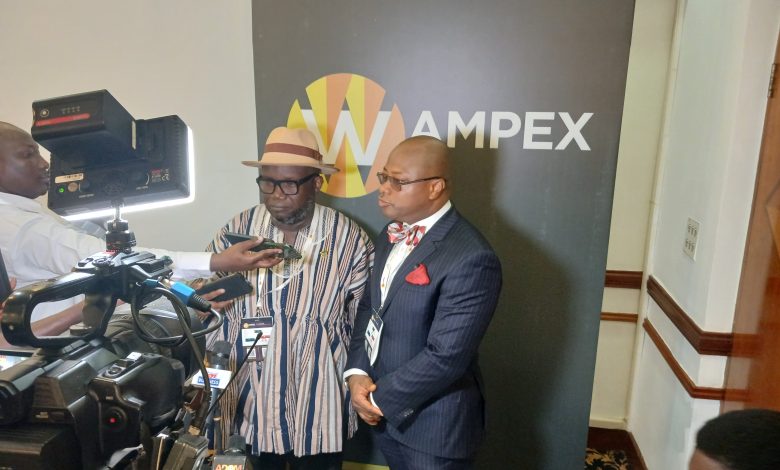
Speaking at the West African Mining and Power Exhibition and Conference (WAMPEX 2026), held in partnership with the Ghana Chamber of Mines at the La Palm Royal Beach Hotel in Accra on Wednesday, Chief Executive Officer of the Chamber, Ing. Dr. Kenneth Ashigbey, said mining communities deserve a greater share of the wealth generated from their natural resources.
According to him, major mining companies including Gold Fields, AngloGold Ashanti, GIADEC’s associated operations and Ghana Manganese collectively paid about GH¢5.1 billion in taxes in 2025, yet questions remain about how much of those revenues found their way back into the communities where the resources were extracted.
He cited the Akyem Mine transaction involving Newmont and Zijin Mining, which generated approximately US$250 million for the state, and questioned how much of the proceeds benefited the Akyem area or supported development initiatives within the Ministry of Lands and Natural Resources.
Dr. Ashigbey noted that although members of the Chamber invested more than US$300 million in corporate social investments over the past decade, community development would remain limited without a dedicated legal framework similar to the Petroleum Revenue Management Act.

“We have been advocating that at least 30 per cent of mineral revenues should be directed into host communities,” he stated.
He explained that the funds should be tied to strategic national priorities such as industrialisation, infrastructure and education rather than being spent on recurrent or non-developmental activities.
According to him, aligning both government allocations and mining companies’ corporate social investments with clearly defined development priorities would create long-term economic benefits for mining districts.
The Chamber is also advocating stronger local content policies that move beyond import substitution to the establishment of sustainable industries in mining communities.
Dr. Ashigbey suggested that industries such as activated carbon manufacturing could be established in mining areas including Tarkwa, Ellembelle, Ahafo and Obuasi, using locally available raw materials such as coconut and palm kernel shells.
He said such industries would continue creating jobs and generating export revenue long after mineral resources are exhausted.
The CEO disclosed that the Chamber has already worked with stakeholders to develop standards that enable mines to procure locally manufactured cables and is also promoting the local production of grinding media used by mining companies.
He noted that these initiatives would support value addition, create employment opportunities and stimulate economic growth in host communities.
On illegal mining, Dr. Ashigbey described the issue as a major challenge confronting not only Ghana but the entire West African sub-region.
He said the Chamber had engaged a consultant to develop a framework that would allow large-scale mining companies and artisanal and small-scale miners to coexist while supporting government efforts to formalise the sector.
He noted that artisanal and small-scale mining accounted for about 52 per cent of Ghana’s gold production in 2025 but contributed only about GH¢500,000 in taxes, while the large-scale mining sector, which produced 48 per cent of output, contributed more than GH¢20 billion in taxes and other payments.
Dr. Ashigbey stressed that formalising the artisanal and small-scale mining sector would help curb illegality, increase state revenues and ensure that miners contribute meaningfully to national development.
Meanwhile, President of the Ghana Chamber of Mines, Michael Edem Akafia, called for the adoption of international best practices to tackle illegal mining sustainably.

Drawing comparisons between Peru and Chile, he noted that while Peru continues to struggle with illegal mining, Chile has successfully minimised the problem through strong traceability systems.
Mr. Akafia said Ghana could adopt similar tracing mechanisms, supported by technologies such as blockchain, to track the origin of gold and prevent illegally mined minerals from entering formal markets.
He explained that an effective tracing system would deny illegal miners access to financial and commercial networks, removing incentives for unlawful operations.
According to him, such a system could achieve for gold what the Kimberley Process accomplished for the diamond industry by helping eliminate illicit trade and enhancing transparency.
Mr. Akafia also revealed that discussions are ongoing between the mining industry and government regarding the release of portions of large-scale mining concessions for small-scale mining activities.
However, he stressed that any concession relinquishment would be linked to a broader formalisation framework to ensure proper regulation and accountability.
He argued that the significant gap between gold production and tax revenues from the artisanal and small-scale mining sector contributes to the loss of economic rents that should accrue to the state.
Mr. Akafia maintained that bringing artisanal miners into the formal economy would increase tax compliance, improve regulation and generate additional revenue for national development.
He said the formalisation agenda remains one of the most effective pathways to addressing illegal mining while ensuring that Ghana derives maximum benefit from its mineral resources.