
By Eugene Nyarko Jnr. | Accra | Wednesday, February 4, 2026
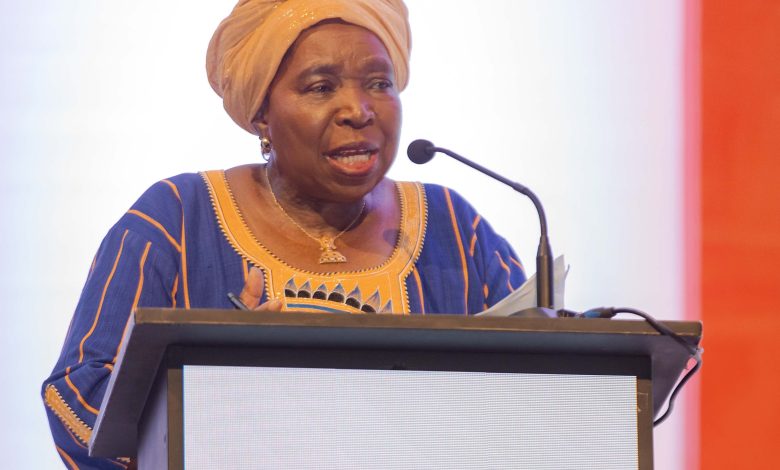
Chairperson of the Africa Prosperity Network (APN) Advisory Council, H.E. Dr. Nkosazana Dlamini-Zuma, has stressed that Africa’s development and long-term prosperity must be driven by Africans themselves, with women and youth playing a central role.
She made the call while delivering her welcome address at the Africa Prosperity Network Dialogue (APD) 2026, held in Accra on Wednesday.
The three-day dialogue, which runs from February 4 to 6, is being held under the theme “Empowering SMEs, Women and Youth in Africa’s Single Market: Innovate. Collaborate. Trade.” It has brought together heads of state, policymakers, business leaders, innovators and civil society actors to explore practical strategies for strengthening intra-African trade, entrepreneurship and youth empowerment within the framework of the African Continental Free Trade Area (AfCFTA).
Dr. Dlamini-Zuma described the APN as “the boardroom of Africa,” noting that it provides a platform where African-led ideas are transformed into action and where the continent’s prosperity narrative is shaped by Africans.
She underscored the importance of empowering small and medium-sized enterprises (SMEs), women and young people as a prerequisite for the success of Africa’s single market and continental integration agenda.
“The Africa we want—a continent that is integrated, prosperous and peaceful—must harness the full potential of women and youth,” she said, warning that without their empowerment, Africa’s development ambitions would remain unattainable.
Highlighting structural challenges, Dr. Dlamini-Zuma noted that although youth account for about 60 per cent of Africa’s population, unemployment remains persistently high. She added that while women contribute nearly half of the continent’s gross domestic product, they continue to face systemic barriers in accessing finance and participating fully in trade networks.
According to her, empowering young entrepreneurs could create up to 50 million jobs by 2030, while closing the gender gap in trade could boost intra-African trade by as much as 15 per cent annually.
She called for the deliberate integration of women- and youth-led enterprises into regional value chains, increased investment in skills development and expanded access to digital technologies. She also urged governments to simplify trade regimes, remove tariff and non-tariff barriers, and design cross-border payment, logistics and digital trade systems that are accessible to small businesses, not only large corporations.
On innovation, Dr. Dlamini-Zuma emphasized that Africa must actively contribute to the development of artificial intelligence rather than remain a passive consumer, ensuring that African data and knowledge inform the continent’s technological future.
She further called for deeper continental unity and the removal of artificial borders to enhance trade and mobility, citing Botswana, Namibia and Zambia as examples of countries implementing borderless trade arrangements without compromising security.
“The true measure of success for this dialogue will not be the eloquence of our discussions, but the courage of our implementation,” she said. “If we empower SMEs, women and youth, innovate with purpose and collaborate across borders, we will ignite hope and demonstrate to African youth that their future lies on this continent, not in dangerous journeys abroad.”