
Buah Outlines Major Gains in Forest Restoration, Land Reforms and Fight Against Illegal Mining

Story By Eugene Nyarko Jnr. l Accra l Tuesday, January 27, 2026
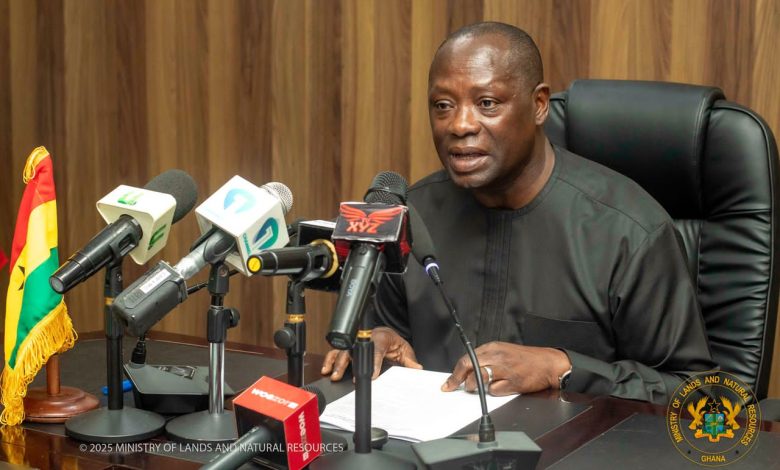
The Minister for Lands and Natural Resources, Mr. Emmanuel Armah-Kofi Buah, has revealed significant progress made by his ministry in restoring Ghana’s forests, reforming land administration, and combating illegal mining, popularly known as galamsey.
Speaking during a working visit by the Vice President of the Republic of Ghana, Prof. Jane Naana Opoku-Agyemang, to the Ministry of Lands and Natural Resources, Mr. Buah said the sector he inherited a year ago was confronted with severe environmental degradation and systemic challenges.
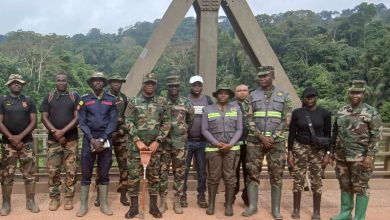
According to the Minister, Ghana has 288 forest reserves, of which 44 had been completely destroyed, while nearly 16 per cent of the country’s forest cover built over a century was lost within just eight years. He disclosed that about 5,500 hectares—equivalent to over 7,500 football fields—of forest reserves had been degraded, with Ashanti, Western and Western North regions being the most affected. Nine forest reserves were previously classified as “red zones” due to armed illegal mining activities.
To address the crisis, Mr. Buah said the government launched the Tree for Life Reforestation Initiative in March 2025, targeting the planting of 30 million seedlings. He announced that over 28 million seedlings were planted in the first year alone, while 340 hectares of degraded mined lands have been reclaimed in partnership with the private sector. He added that all nine red-zone forest reserves have now been reclaimed and secured.
The Minister also highlighted improvements in forest governance, noting that Ghana became the first African country to obtain a Forest Law Enforcement, Governance and Trade (FLEGT) licence, allowing the export of legally sourced timber to the European Union. Law enforcement units of the Forestry Commission have been retooled, while illegal timber operations are being tackled through a newly integrated timber monitoring system.
On land administration, Mr. Buah described the sector as a “nightmare” at the time he assumed office, citing delays, missing records and weak protection of public lands. He announced that Cabinet has approved a comprehensive review of all public lands sold, with transactions that failed to follow due process to be cancelled. He said the government is committed to naming and sanctioning officials who abuse public land trust.
He further disclosed that 70 per cent of internally generated funds retained by the Lands Commission have been restored to support the full digitalisation of land records and services within the next two years. This, he said, would allow Ghanaians to access land services remotely. In addition, 36 new Lands Commission offices have been opened, with plans to establish offices in all 110 metropolitan and municipal areas.
Turning to the mining sector, the Minister painted a grim picture of polluted rivers in the south-western basin, including the Ankobra, Pra and Tano rivers. He revealed that turbidity levels in some water bodies exceeded 1,000 NTUs, making water treatment impossible and forcing the shutdown of treatment plants. He cited weak law enforcement, low prosecution rates and corruption as major contributors to the crisis.
To reverse the trend, Mr. Buah said the government adopted a five-pillar strategy: stakeholder engagement, regulatory reform, strengthened law enforcement, reclamation, and alternative livelihoods. As part of regulatory reforms, over 255 small-scale mining licences have been revoked, while reviews of large-scale mining operations are ongoing. He announced the complete overhaul of the Minerals and Mining Act, including the introduction of District Mining Committees and a new medium-scale mining licence regime.
He reaffirmed government’s stance of no mining in forest reserves and water bodies, noting the revocation of LI 2462. He also revealed the establishment of the National Illegal Mining Management Secretariat (NIMoS), the seizure and redistribution of over 1,300 water pumps to farmers, and the legal acquisition of more than 1,100 excavators seized from illegal miners.
The Minister further announced the registration and tracking of over 1,800 heavy-duty mining machines imported into the country within six months, ensuring strict monitoring of their use. He also highlighted the Blue Water Guards Initiative, which deploys trained youth to protect river bodies.
Mr. Buah concluded that Ghana’s efforts in climate change mitigation are gaining global recognition, with the country set to receive US$20 million in emission reduction payments and an additional US$30 million in climate support this year.
“The world is taking notice of the efforts we are making to protect our forests, our lands and our water bodies,” he said.