
Ghana Water Limited Calls for National Partnership to Combat Siltation Threat to Water Supply

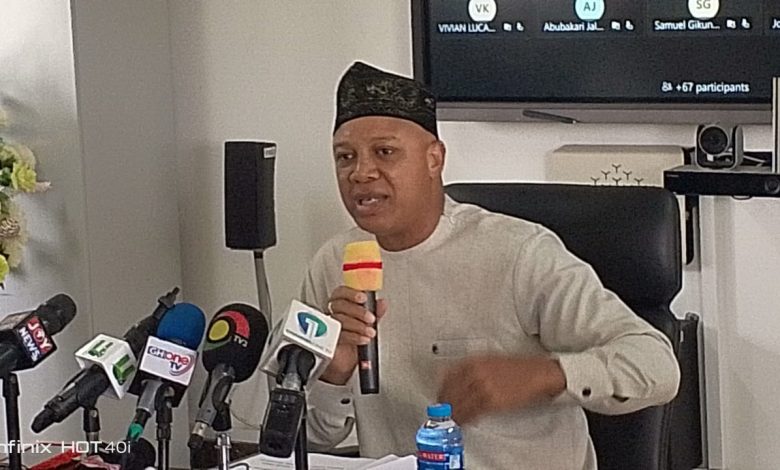
Accra, Ghana – October 20, 2025:
Ghana Water Limited (GWL) has raised a major alarm over the growing threat of siltation to the country’s raw-water sources, warning that without urgent collective action, Ghana risks spending more to produce less potable water each year.
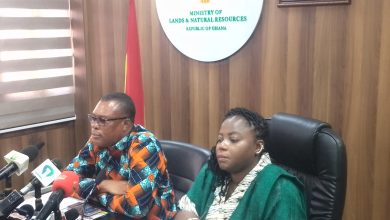
Speaking at a press conference in Accra on Monday, the Managing Director of GWL, Mr. Adam Mutawakilu, said the rate at which rivers and reservoirs are silting up has surpassed the capacity of existing treatment plants to cope efficiently. He therefore called for a coordinated national effort to protect and restore priority catchment areas feeding key water systems across the country.
“Ghana’s raw-water sources are silting up faster than our plants were built to handle. After heavy rains, turbidity at several major intakes spikes to levels that make conventional treatment difficult, costly, and sometimes temporarily impossible,” Mr. Mutawakilu stated.
“If we don’t act at the source, we will spend more each year to produce less water,” he cautioned.
Costly Operations and Impact on Supply
The GWL Managing Director revealed that emergency dredging has become a recurring cost burden. “At Owabi last year, dredging cost about GHS 64 million; at Mampong, about GHS 13.8 million,” he disclosed, adding that such interventions, while necessary, often require plant downtime that disrupts water supply to communities.
Mr. Mutawakilu listed several heavily affected systems, including Anyinam, Kibi, and Osino on the Birim River; Daboase and Sekyere Hemang on the Pra River; Bonsa on the Bonsa River; Kwanyako on the Ayensu; Odaso and Konongo in the Ashanti Region; Dalun in the Northern Region; Jambusie in the Upper West; and Kpeve and Agordome in the Volta Region.
He explained that siltation increases chemical usage, damages equipment, and inflates energy consumption. “At Barekese, Odaso and Konongo, chemical costs have increased by about 400% due to a necessary shift from alum to more efficient but expensive polymers,” he said.
24-Month Catchment Recovery Plan
To tackle the problem sustainably, GWL has proposed a 24-month Catchment Recovery Plan aimed at stabilising eight priority rivers. The plan includes riverbank re-vegetation, targeted dredging at intake points, and coordinated land-use enforcement in collaboration with relevant government agencies and local communities.
“We propose an upstream solution – a joint plan that restores abstraction capacity, reduces treatment challenges, lowers specific energy per cubic metre, and extends asset life,” Mr. Mutawakilu explained.
He called on Corporate Ghana, development partners, and District Assemblies to co-fund the initiative, offering options for companies to adopt and sponsor specific river catchments.
During a question-and-answer session, he revealed that the average cost of desilting a major intake stands at around GHS 3 million, depending on the depth and volume of silt involved. “For instance, desilting Barekese involves about six million cubic metres of silt, which is no small task,” he said, adding that published figures from the Ministry of Sanitation and Water Resources put desilting costs at about GHS 150 per cubic foot.
Commending Government Efforts
Mr. Mutawakilu commended the Government of Ghana for its ongoing interventions to protect water bodies. He highlipghted the Blue Water Guard surveillance initiative under the Ministry of Lands and Natural Resources, led by Hon. Emmanuel Kofi Buah, which targets illegal mining activities degrading river systems.
He also acknowledged the Ministry of Sanitation and Water Resources, headed by Hon. Kenneth Gilbert Adjei, for its close collaboration with GWL, as well as President John Dramani Mahama’s leadership through the National Anti-Illegal Mining Operations Secretariat (NAIMOS). The initiative, he said, has helped track and regulate excavators used in mining, reducing illegal operations and improving water quality in some catchments.
“These actions are yielding encouraging signs. In some areas, we’ve seen noticeable improvements in surface turbidity. But the riverbeds remain heavily silted, and without sustained desilting, our pumps will continue to struggle,” he noted.
Call for Collective Action
The GWL boss emphasized that water security is a shared responsibility.
“Water security begins at the source. If we protect the source, our plants will do the rest,” Mr. Mutawakilu said. “Let us act with urgency and purpose—together—to keep Ghana’s taps running.”
He assured that GWL will transparently report progress on all interventions, enabling partners and the public to track tangible improvements in plant performance and supply reliability.
By Eugene Nyarko Jnr.