
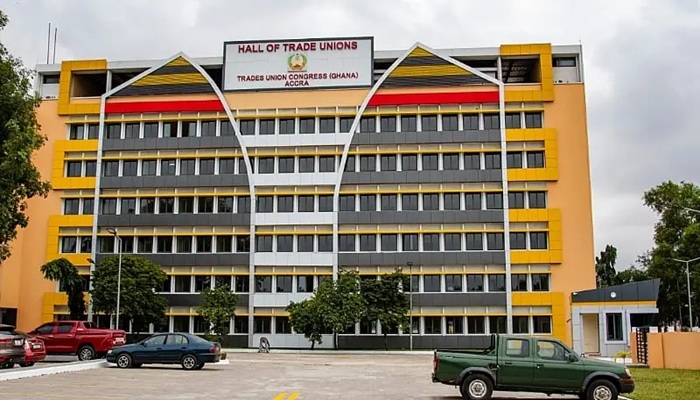
The Ghana Employers’ Association (GEA) and the Trades Union Congress (TUC) have jointly called for urgent and coordinated reforms to boost productivity, create jobs, and drive inclusive economic growth, warning that Ghana’s current transformation path is too slow and uneven.
In a joint statement referencing findings from the Ghana Statistical Service and the International Labour Organisation’s Productivity Ecosystems for Decent Work Project, the two organisations stressed that exchange rate volatility, unstable prices, and limited access to credit continue to undermine enterprise competitiveness and job security.
“We therefore call for a coordinated macroeconomic policy framework that supports domestic production and expands access to capital,” the statement said, noting that macroeconomic stability must be at the core of Ghana’s growth strategy.
The partners urged a shift from low-employment extractive industries towards productive sectors such as manufacturing, agro-processing, health, education, utilities, transport, and digital services.
They proposed tailored sectoral action plans backed by public–private collaboration, targeted financing, industrial clusters, and infrastructure investment to unlock new opportunities.
At the enterprise level, GEA and TUC recommended productivity audits, innovation adoption, and support programmes to help micro, small, and medium enterprises (MSMEs) remain competitive.
They also called for a national wage–productivity adjustment model, integrating sector-specific data into wage negotiations and minimum wage reviews, to ensure that fair pay reflects real productivity growth while safeguarding business sustainability.
“Special efforts must be made to address the existing gender gap,” the groups added, urging the promotion of performance-based pay systems in both the public and private sectors to reward efficiency, innovation, and output.
On the country’s youth unemployment challenge, they called for reforms in Technical and Vocational Education and Training (TVET), including workplace-based learning, industry-driven curricula, expanded apprenticeship schemes, and stronger labour market intermediation services to improve job matching and career guidance.
With over 80 per cent of Ghana’s workforce in the informal economy, the partners stressed that inclusive growth cannot be achieved without formalisation reforms.
They endorsed the National Roadmap for transitioning informal businesses and workers into the formal sector to improve resilience and productivity.
Reaffirming their role as social partners, TUC and GEA urged the Ghana Statistical Service to release timely, disaggregated productivity data to guide collective bargaining, wage setting, and investment planning.
They also called for stronger social dialogue platforms to sustain momentum for reforms.