
By Eugene Nyarko Jnr. l Accra l Tuesday, January 13, 2026
The Trades Union Congress (TUC) has strongly opposed government plans to introduce private sector participation (PSP) in the Electricity Company of Ghana (ECG) and the Northern Electricity Distribution Company Limited (NEDCo), insisting that such a move amounts to outright privatization and must be halted.
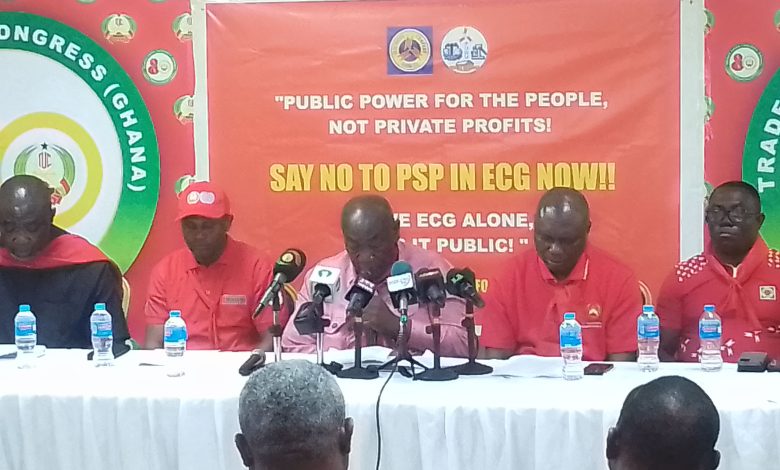
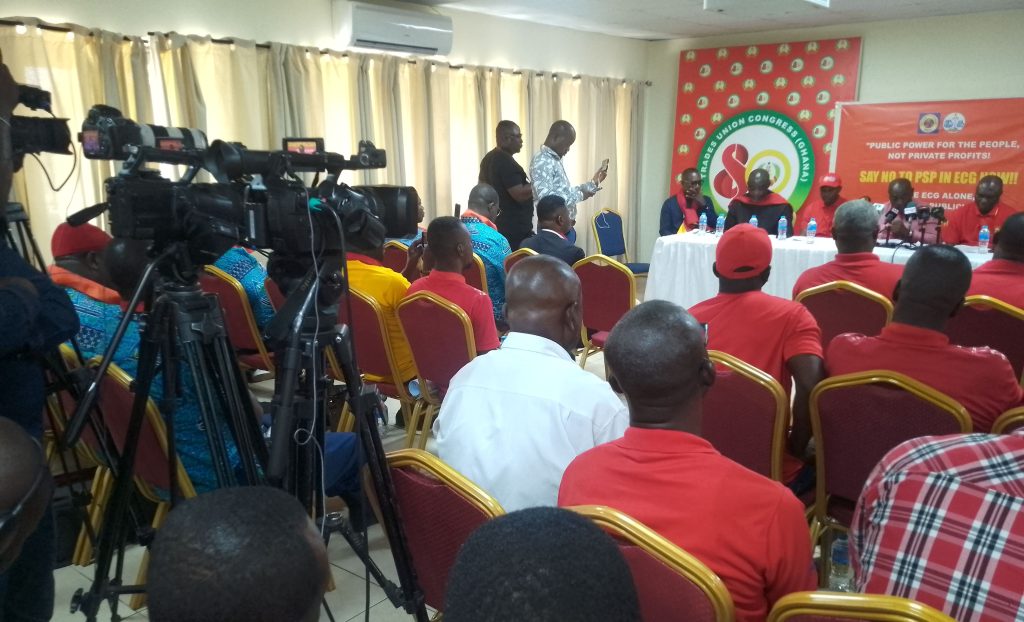
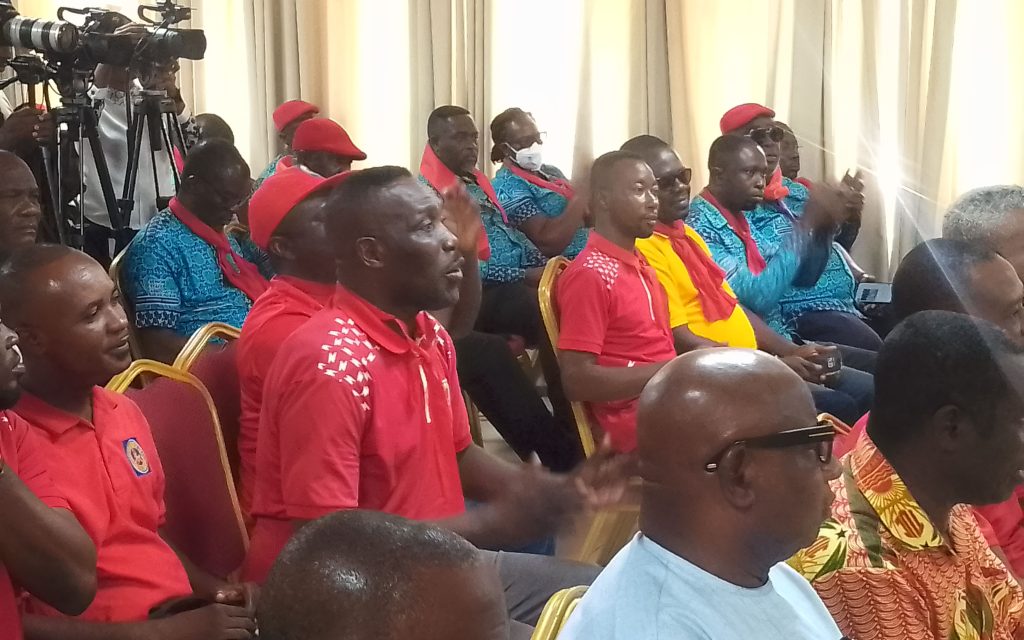
Addressing a press conference at the TUC Head Office in Accra under the theme “Public Power for the People, Not Private Profits! Say No to PSP in ECG Now!! Leave ECG Alone, Keep it Public!”, the TUC General Secretary, Mr. Joshua Ansah, called on government to suspend all arrangements toward privatizing the two state-owned electricity distribution companies.
Mr. Ansah said the Ministry of Energy and Green Transition has initiated processes to appoint a transaction adviser to oversee PSP in ECG and NEDCo, with proposals reportedly recommending multiple concession arrangements that would hand over full operational control of the companies to private entities. He described this as a “dismantling” of ECG and NEDCo, stressing that privatization and so-called private sector participation are “one and the same.”
The TUC based its opposition on Ghana’s past experiences with privatization and, more importantly, on the recent performance of ECG and NEDCo under a six-month management–union turnaround programme implemented between July and December 2025.
According to Mr. Ansah, verified performance data show that ECG’s average monthly revenue collection rose from about GH¢900 million to a record GH¢1.75 billion during the period—an increase of more than 90 percent. This improvement, he said, has enabled regular payment to power generators, reduced threats of plant shutdowns by independent power producers, and contributed to improved power supply stability nationwide.
He noted that the gains have been publicly acknowledged by key government officials, including the Minister of Finance during the 2026 Budget presentation, the Majority Leader in Parliament, the Minister of Energy and Green Transition, and the International Monetary Fund (IMF) Resident Representative in Ghana.
On NEDCo, the TUC General Secretary acknowledged longstanding challenges, particularly high distribution losses in the northern sector. However, he said recent reforms have yielded measurable improvements, with losses in Tamale and other areas reduced significantly, and overall distribution losses declining from over 31 percent in late 2024 to about 27.9 percent in 2025. He emphasized that nearly 60 percent of NEDCo customers are lifeline consumers who pay subsidized tariffs, making revenue challenges partly structural.
Mr. Ansah rejected claims that ECG and NEDCo are irredeemably inefficient, arguing that recent reforms demonstrate that Ghanaian public utilities can deliver improved performance when properly supported, managed, and held accountable. He said ECG and NEDCo are “much stronger today than they were six months ago,” and warned against “changing a winning team.”
The TUC further argued that even the PSP technical committee’s own analysis shows that private sector participation does not automatically lead to efficiency gains and would still require government guarantees and support—raising the question of why similar support cannot be extended to the existing public utilities.
Among its demands, the TUC called for an extension and comprehensive review of the turnaround programme, an immediate halt to all privatization actions, the establishment of stakeholder boards for ECG and NEDCo, clearer performance deliverables for management, strengthened ministerial oversight, competitive and transparent procurement of generation capacity, reforms to sanctions under the Public Utilities Regulatory Commission framework, and an end to political interference in the energy sector.
In conclusion, Mr. Ansah described ECG and NEDCo as critical national strategic assets essential to Ghana’s economic development, energy security, national sovereignty, and social equity. He said privatization is neither viable nor sustainable, and warned that the TUC and its affiliates will “fiercely resist” any attempt to privatize ECG or NEDCo, while remaining open to constructive engagement with government in the national interest.