
Dr. Audrey Smock Amoah Urges West African Leaders to Champion Fairness and Transparency in Resource Governance

FOR IMMEDIATE RELEASE
Date: October 14, 2025
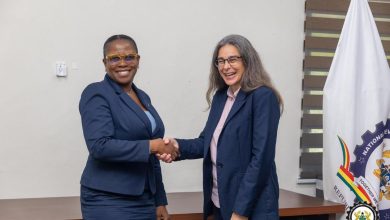
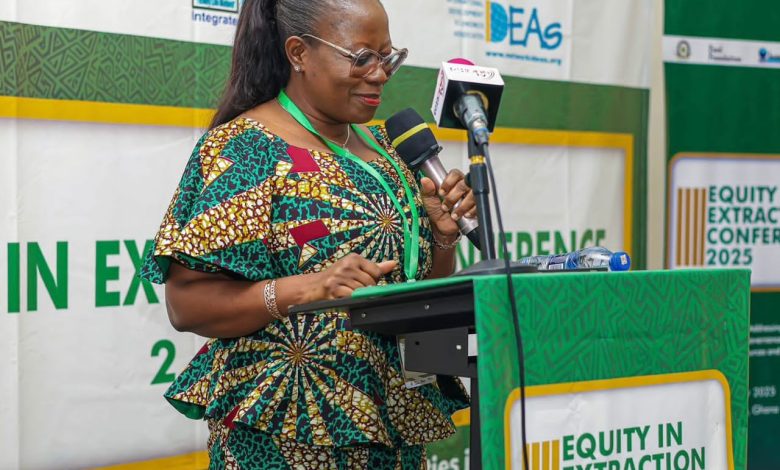
Accra, Ghana — The Director-General of the National Development Planning Commission (NDPC), Dr. Audrey Smock Amoah, has called for a new era of fairness, transparency, and sustainability in the governance of West Africa’s natural resources.
Delivering the keynote address at the opening of the High-Level West Africa Conference on Equity in Extraction, held in Accra from October 14 to 16, 2025, Dr. Amoah urged leaders across the region to ensure that Africa’s vast mineral wealth directly benefits its people.
She noted that Africa remains richly endowed with natural resources — from gold, bauxite, manganese, and diamonds to emerging critical minerals such as lithium, cobalt, and nickel — yet the benefits of extraction continue to elude local communities.
Citing data from the African Development Bank and the World Bank, Dr. Amoah observed that while natural resources contribute significantly to West Africa’s GDP and export earnings, “those living atop resource-rich lands are often the most marginalized, bearing the brunt of environmental destruction while receiving the least benefit.”
Referencing a 2015 address by former President John Dramani Mahama at the Africa Mining Vision Conference in Addis Ababa, she reiterated that Africa’s natural wealth must be a blessing, not a curse. “We must add value, create jobs, and ensure that our people benefit directly from the wealth beneath our soil,” she said.
Dr. Amoah lamented that, according to UNDP studies, only about 15 to 20 percent of mining revenues stay within local economies — a disparity that perpetuates inequality and weakens governance. Using Ghana’s ongoing battle with illegal artisanal mining (galamsey) as a case study, she warned of the severe environmental and social consequences of weak regulation.
“Our rivers are turning toxic, farmlands are being destroyed, and food crops are contaminated with mercury and other poisonous chemicals,” she said. “These environmental and social costs deepen poverty, erode trust in institutions, and widen rural–urban inequality.”
She stressed that addressing such challenges demands not only economic reforms but also moral responsibility and institutional integrity. “Equity in extraction is not just a technical or economic goal; it is a moral and developmental imperative,” she asserted.
According to her, equity must translate into reinvesting resource revenues into essential public goods such as schools, hospitals, roads, and jobs for the youth, while ensuring that women and local communities actively participate in every stage of the extractive process — from exploration to benefit-sharing.
Dr. Amoah also called for environmental stewardship, intergenerational justice, and strong legal and institutional frameworks to ensure accountability across the extractive sector.
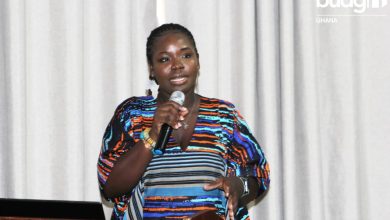
In his remarks, Mr. Emmanuel Kuyole, Programme Officer at the Ford Foundation, highlighted the instability of global commodity prices, especially for minerals, which undermines consistent revenue generation and community development. He warned that the capital-intensive nature of extractive industries often concentrates wealth in the hands of a few, exacerbating inequality.
“When revenues are invested in health, education, and other social services, they can have a transformative impact on inequality,” Mr. Kuyole said. “However, this requires strong governance systems and a firm commitment to transparency and accountability.”
The three-day conference, jointly organized by the Integrated Social Development Centre (ISODEC) and International Development Economics Associates (IDEAs) in partnership with the NDPC, brought together government officials, civil society leaders, private sector representatives, and academics to chart a fairer and more inclusive future for Africa’s extractive industries.
Credit: Eugene Nyarko Jnr.